



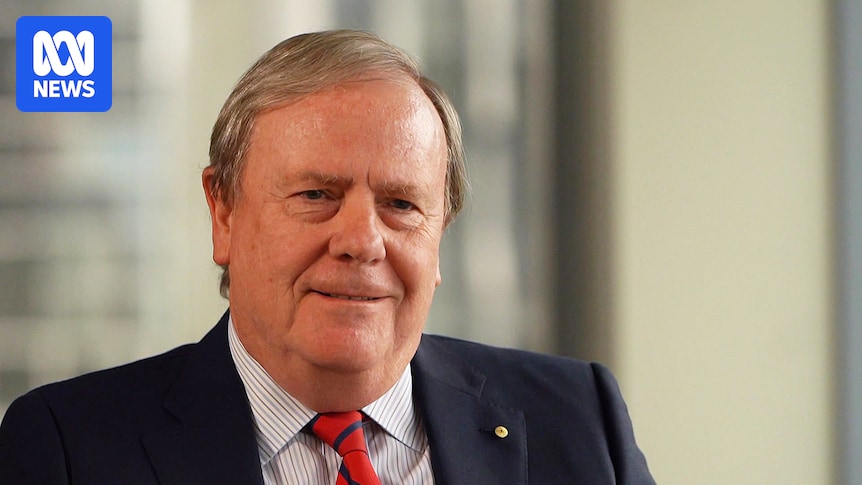
The Australian stock market saw a slight uptick today, with the ASX 200 index edging higher by 0.1% to 8,601 points. This modest gain comes amid a broader discussion on Australia’s declining birth rate, as former Treasurer Peter Costello urges the government to address the issue.
Market snapshot data indicates that while the ASX 200 experienced a minor rise, the Australian dollar remained flat at 66.00 US cents. In contrast, the S&P 500 and Nasdaq indices in the United States showed gains of 0.3% and 0.2% respectively, reflecting a positive sentiment in global markets.
Economic Concerns: Fertility Rates and Financial Stability
Peter Costello, the architect of the early 2000s ‘baby bonus’ policy, has reignited the debate on Australia’s fertility rates, which have fallen to a record low of 1.48 births per woman. Costello’s iconic call to “have one for the country” highlighted the need for policies that encourage higher birth rates to balance demographic changes.
Research from the e61 Institute underscores the complexity of this issue. The institute’s findings reveal that more Australian women are choosing not to have children, and those who do are having fewer. This trend is contributing to a long-term decline in the fertility rate, with significant implications for the country’s economic future.
Ali Yasin Vergili of the e61 Institute stated: “About two-thirds of the fertility decline is attributed to a rising share of women not having children, while one-third comes from mothers having fewer children.”
Historical Context and Policy Implications
The ‘baby bonus’ policy, introduced in 2004, temporarily boosted birth rates by providing financial incentives to new parents. However, the fiscal cost per additional birth was significant, estimated at $50,000 in 2004 dollars. Despite its initial success, the policy was eventually phased out, and birth rates have since declined.
Costello’s recent comments suggest that a renewed focus on fertility could be crucial for Australia’s demographic and economic stability. He argues that without intervention, the country may face a future where deaths outnumber births, impacting workforce size and economic growth.
Market Movements and Economic Indicators
In other economic news, the Australian Bureau of Statistics (ABS) reported an increase in private investment, which grew by 2.9% in the September quarter. This growth was driven by significant investments in machinery and equipment, particularly in data centers across New South Wales and Victoria.
Treasury Secretary Jenny Wilkinson described the rise in private investment as “very pleasing,” emphasizing its importance for sustaining economic growth and enhancing future productivity.
Jenny Wilkinson stated: “Private investment is a really important part of growth… It’s very pleasing to see the increase in private investment that took place in the September quarter.”
Global Market Trends and Local Impacts
Globally, markets have shown resilience with the S&P 500 and Nasdaq indices posting gains. However, the FTSE index in the UK saw a slight decline of 0.1%. Commodity prices also showed mixed results, with Brent crude rising by 0.5% to $62.75 per barrel, while spot gold remained flat at $4,206 per ounce.
In the currency markets, the Australian dollar’s stability at 66.00 US cents reflects ongoing investor interest, influenced by expectations of a US interest rate cut and recent Australian GDP figures.
Future Outlook: Balancing Growth and Demographics
The interplay between economic growth and demographic trends remains a critical issue for policymakers. As Australia navigates its economic recovery, addressing fertility rates and ensuring sustainable population growth will be essential for long-term stability.
Costello’s call for renewed focus on fertility policies highlights the need for a comprehensive approach that balances economic incentives with broader social support systems. As the government considers its options, the challenge will be to implement measures that effectively encourage higher birth rates without imposing undue financial burdens.
Meanwhile, the ASX’s modest rise reflects a cautious optimism among investors, buoyed by positive global market trends and domestic economic indicators. As the conversation around fertility and economic growth continues, the implications for Australia’s future remain a focal point for both policymakers and the public.