



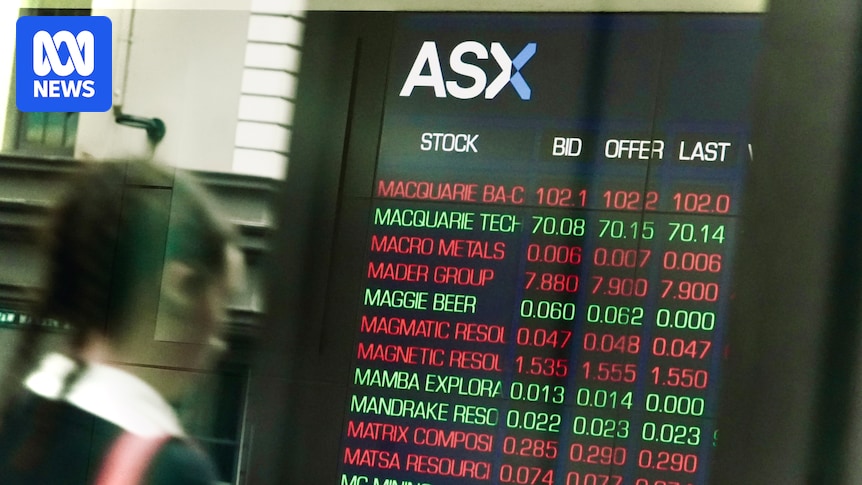
If history is any guide, Helen Lofthouse may well have picked the perfect moment to pull off her Houdini trick at the national stock market operator. In April, the Australian Securities Exchange (ASX) will “go live” with the first stage of its new automated technology to settle share trades. This transition marks a significant milestone after a decade marred by technology failures, unplanned outages, management upheaval, and substantial financial losses that have severely damaged the organization’s reputation.
Even Lofthouse’s departure announcement was mired in controversy. On Tuesday night, heavyweight Australian biotech CSL announced the sudden departure of its chief executive Paul McKenzie. The notice, lodged immediately after the close of trading, was designed to give investors plenty of time to digest the shock before trading resumed the next day. However, due to an extension to trading times that few knew about, CSL shares took an immediate hit as trading resumed 10 minutes after the announcement, well after normal trading ended on Tuesday. The confusion over the percentage decline of CSL shares, even on the ASX website, further exacerbated the situation.
The Rise and Fall of ASX’s Technological Ambitions
There was a time when the ASX was a global trailblazer. In the 1980s, it was a loose amalgamation of state-based exchanges owned by stockbrokers. Eventually, they amalgamated and demutualised, and in the late 1990s, ASX was listed on its own stock exchange, a model replicated globally. However, its recent performance has prompted formal investigations and regulatory ultimatums, threatening to strip ASX of its monopoly.
The first real cracks appeared a decade ago when the ASX’s settlement systems could no longer handle the volume and complexity of trades. In 2015, ASX began searching for a replacement for its ageing CHESS system. By 2017, ASX set the world abuzz by announcing it would use blockchain technology on an industrial scale to underpin its transactions. However, insiders say the project was a disaster from the beginning, with an overly ambitious timeline and little consideration for other service providers.
“The independent report has found significant gaps and deficiencies in ASX’s program delivery capabilities and that there are significant challenges in the technology design,” said Joe Longo of ASIC.
Regulatory Pressure and Market Competition
As a key component of Australia’s financial infrastructure, the exchange is overseen by the Australian Securities and Investments Commission (ASIC) and the Reserve Bank of Australia. Both were appalled at the ineptitude revealed by an independent review conducted by Accenture. The patched-up 25-year-old CHESS system was long past its use-by date, and despite talk of using parts of the abandoned blockchain project, the system suffered repeated outages.
Last June, ASIC launched a sweeping investigation, citing “ongoing concerns over ASX’s ability to maintain stable, secure and resilient critical market infrastructure”. The SNAFUs continued, with one notable incident involving a mix-up between TPG Telecom and a similarly named private equity group, resulting in a significant market value loss for TPG Telecom.
“I am very concerned about it. Very disappointed. And from a regulatory perspective, everything is on the table,” stated Mr. Longo.
Future Prospects and Challenges
The regulator, considering the approval of a rival exchange, has been in talks with CBOE Australia, the local offshoot of the Chicago-based financial trading giant. This move is designed to ensure market efficiency amidst intensifying global competition for capital. Lofthouse, who inherited a deeply troubled organization, apologized for the errors, but the damage was done. Her replacement, who has yet to be named, faces an uphill battle rebuilding confidence in the institution.
By the time Lofthouse leaves ASX in May, the new systems will have been in place for just a few weeks. Any hiccups will be her successor’s problem, as the organization attempts to navigate a path forward amidst regulatory scrutiny and potential competition.