

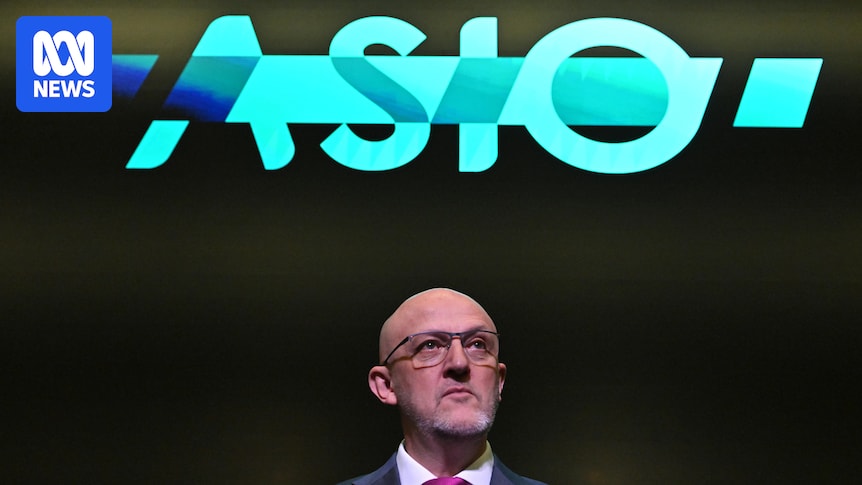
The recent terror attack at Bondi Beach, which resulted in the tragic loss of 15 lives, has cast a spotlight on the Australian Security Intelligence Organisation’s (ASIO) surveillance capabilities. The attackers, a father and son duo, Naveed and Sajid Akram, had not been under active surveillance by the nation’s intelligence agencies despite earlier assessments. This has prompted a nationwide call for a review of intelligence practices and coordination among agencies.
Prime Minister Anthony Albanese acknowledged the oversight, stating that “quite clearly” ASIO and other agencies missed critical warning signs between 2019 and the present. This has led to discussions at federal and state levels about integrating criminal intelligence into assessments for gun licence applications, which currently rely solely on criminal history.
Intelligence Gaps and Missed Opportunities
Naveed Akram, 24, was previously assessed by ASIO in 2019 due to his associations with a Sydney-based Islamic State group cell. However, little information is available about his activities or those of his father between that assessment and the recent attack. Prime Minister Albanese has called for a thorough examination of how intelligence systems operate and interact across Commonwealth and state agencies.
The federal government has highlighted record-level funding for ASIO and the Australian Federal Police. However, security analysts, like Chris Taylor from the Australian Strategic Policy Institute, warn of the “grim reality” that there are more persons of interest than can be effectively monitored. Taylor emphasized the vast number of potential threats, noting the significant number of Australians who joined ISIS in the past decade.
“I think people can potentially underestimate the sheer scale of that breadth of people of interest,” said Chris Taylor.
Challenges in Intelligence Gathering
Taylor, a former senior national security official, explained that assessments are often made at specific points in time, which can lead to gaps in ongoing surveillance. He highlighted the need for additional “intersection points” to bring individuals back into focus as potential threats evolve.
Meanwhile, former Home Affairs secretary Mike Pezzullo suggested a Commission of Inquiry to evaluate whether counter-terrorism resources and frameworks are adequate. This inquiry would also examine the impact of rising antisemitism and the elevated terror threat level since October 2023.
Former ASIO director-general Dennis Richardson cautioned against jumping to conclusions about intelligence failures, emphasizing the need for a comprehensive review of the facts.
“There may well have been a failure, or there may well have been a combination of failures. Equally, it is possible that ASIO made the right judgements at the right time,” Richardson noted.
Investigating the Akram Duo
The junior Akram was under ASIO’s scrutiny from October 2019 to April 2020 due to his connections with radical figures like Wisam Haddad and IS youth recruiter Youssef Uweinat. Despite these associations, ASIO found no evidence of an ongoing threat at that time. The lack of subsequent monitoring raises questions about intelligence awareness of Naveed and Sajid Akram’s activities leading up to the attack.
Security expert Greg Barton emphasized the need to understand how Naveed Akram’s radicalization went undetected. He questioned whether Akram had distanced himself from extremism only to return to it later, potentially influencing his father.
“The question is: did he walk away from Islamic State extremism and come back to it after a few years because of somebody else?” Barton asked.
Home Affairs Minister Tony Burke acknowledged a significant shift in Naveed Akram’s risk profile, which may have been overlooked.
Data and Intelligence Coordination
Chris Taylor suggested that advancements in data science could enhance intelligence capabilities, particularly in generating new leads from existing data. He proposed examining whether moments like Sajid Akram’s gun licence application could have triggered further investigation.
The Akram duo’s travel to Mindanao, a known terror hotspot, where they reportedly received military training, will also be scrutinized. Taylor and Barton both highlighted the importance of monitoring such travel patterns, which should have raised red flags.
“If somebody was paying attention, that would be a dashboard of flashing red lights and bells,” Barton said.
Adapting to New Threat Patterns
The attack by the father-son pair presents a unique challenge for intelligence agencies accustomed to dealing with organized terror cells or lone wolf actors. The dynamics of familial radicalization can differ significantly, often evading traditional surveillance methods.
The Lowy Institute notes that family-based threats can mobilize quickly and with greater secrecy, complicating detection and response efforts. This pattern has been observed in past attacks, such as the Boston Marathon bombing and the Charlie Hebdo shooting.
As Australia grapples with the aftermath of the Bondi attack, the need for a comprehensive review of intelligence practices and inter-agency cooperation becomes increasingly apparent. The findings from upcoming inquiries could shape the future of national security and counter-terrorism strategies.