




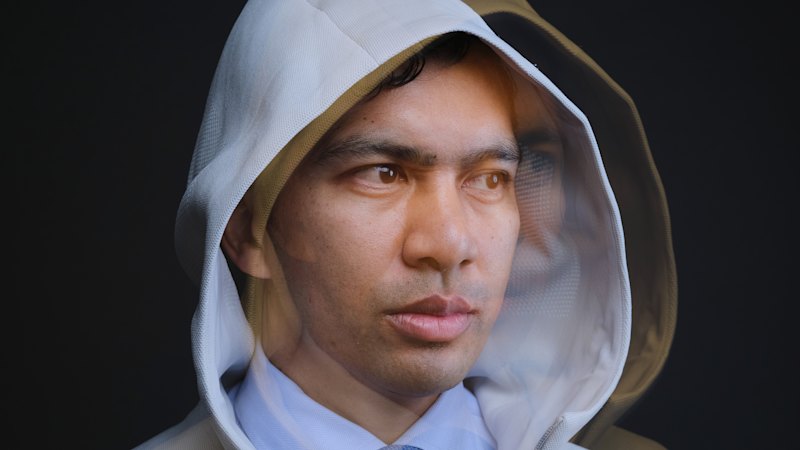
Before Aron D’Souza launched his audacious challenge to the International Olympic Committee, he was a young boy working in his grandmother’s Chinese restaurant in suburban Melbourne. The restaurant, named Hai King, was where D’Souza first learned the value of charm and hard work. His early experiences behind the cash register, with its manual bell, foreshadowed the charismatic and ambitious figure he would become.
Today, D’Souza is a multifaceted entrepreneur, known for his controversial ideas and ventures. Trained as a lawyer, he has navigated the realms of venture capitalism, tech entrepreneurship, and global networking. His latest venture, the Enhanced Games, proposes a radical shift in sports by allowing athletes to use performance-enhancing drugs under medical supervision. This concept, which has been dubbed the “steroid Olympics,” challenges the traditional norms of athletic competition and has sparked significant debate.
The Genesis of the Enhanced Games
In June 2023, D’Souza announced the creation of the Enhanced Games, a sporting event where athletes could legally use substances banned by the World Anti-Doping Agency, such as human growth hormone and anabolic steroids. The idea was to create a platform where athletes could push the boundaries of human potential, competing not for national glory but for personal achievement and substantial financial rewards.
The Enhanced Games promises to pay athletes $250,000 for winning an event and $1 million for breaking a world record. D’Souza envisions this as more than just a sporting event; he sees it as a transformative moment in human history. “To reach beyond our present limitations is not merely a right,” he co-wrote in the First Declaration on Human Enhancement, “but a sacred duty.”
Controversy and Criticism
The announcement of the Enhanced Games was met with skepticism and criticism from various quarters. Travis Tygart, CEO of the US Anti-Doping Agency, dismissed it as “a clown show,” while Brent Nowicki, executive director of World Aquatics, called it “a farce.” Critics argue that the games are unsafe and undermine the integrity of sport.
Despite the backlash, the Enhanced Games gained momentum. By early 2024, high-profile investors like Peter Thiel and Christian Angermayer had committed funds, and athletes began to express interest. Australian swimmer James Magnussen was among the first to sign on, attracted by the financial incentives.
Support and Investment
The Enhanced Games received a significant boost when Donald Trump Jr. announced his investment, framing the event as a celebration of excellence and innovation. “This is about American dominance on the world stage,” he said, aligning the games with the values of the MAGA movement.
Christian Angermayer, a biotech billionaire and co-founder of the games, sees the event as a societal shift. “It’s really like a change of the view on a certain topic,” he remarked, comparing it to the reintroduction of psychedelics in medicine.
Historical Context and Ethical Concerns
The Enhanced Games taps into a long-standing debate about the role of enhancement in sports. Historically, the use of performance-enhancing drugs has been fraught with ethical and health concerns. Critics argue that the games could encourage unsafe practices and send a dangerous message to young athletes.
“Justifying the event on commercial grounds is exploitative and callous – it sends a despicable message to the community and young people.” – Australian Olympic Commission
However, Maximilian Martin, CEO of the Enhanced Games, insists that the event is safe and legal. Athletes will only use clinically approved substances under strict medical supervision. “There will be strict medical oversight,” he assures, emphasizing the personalized approach to each athlete’s regimen.
The Future of Sports and Society
As the Enhanced Games prepares for its debut in May 2026 in Las Vegas, it raises questions about the future of sports and human enhancement. Will this event redefine the boundaries of athletic achievement, or will it exacerbate existing ethical dilemmas?
For D’Souza, the games represent a personal and professional triumph. He sees himself as part of a select group of innovators shaping the future. “Superhumanity is the only thing that matters now,” he declares, embracing a vision of a world where human potential is maximized through enhancement.
The Enhanced Games may challenge traditional sports, but it also reflects broader societal trends towards technological and biological enhancement. As these debates continue, the world will watch closely to see if D’Souza’s vision becomes a reality or remains a provocative experiment in the annals of sports history.