




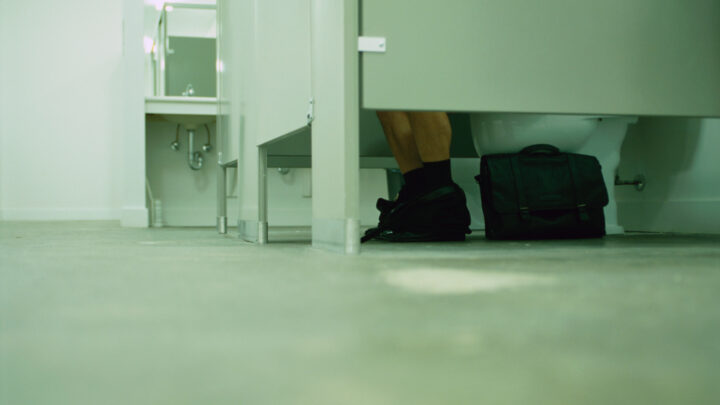
The age-old question of whether to sit or not to sit on public toilet seats continues to perplex many. Driven by hygiene concerns coupled with the fear of encountering the unseen and the unknown, people often find themselves grappling with the decision of how to tackle nature’s call in a public restroom.
Recently, Dr. Poonam Desai shared her insights, adding a dose of wisdom to the ongoing discourse about what’s acceptable in the often intimidating realm of public restrooms and the common practice of avoiding direct contact with toilet seats. According to Dr. Desai, the fear of contracting diseases directly from toilet seats might be exaggerated. However, she emphasizes the unpleasantness of sitting on surfaces tainted by others’ urine and feces.
“Many people tend to hover or even sit on top of the toilet seat, leading to splashing of urine and feces on the toilet seat,” she said. “It’s not very likely that you contract a disease by directly sitting on the toilet seat, it is kind of gross to sit on other people’s feces or urine.”
The Hygiene Debate: To Sit or Not to Sit?
Dr. Desai advocates for a two-step approach to toilet seat hygiene: wiping the seat and using a toilet seat cover before sitting down. “I personally tend to wipe the toilet, put a toilet seat cover and then sit on the toilet,” Dr. Desai explained. She highlights that hovering over the toilet seat can cause strain in pelvic muscles and lead to incomplete emptying.
“So if you want to not only be sanitary but also protect your pelvic muscles, it’s probably better for you to sit on the toilet seat,” she advised.
Furthermore, Dr. Desai suggests that if everyone used toilet seat covers, there would be less contamination on the seats. She concludes with a straightforward hygiene rule: “My general rule — wipe it down, put a toilet seat cover.”
Beyond the Seat: The Importance of Flushing Practices
Adding to the conversation, Dr. Karl Kruszelnicki, a well-known science communicator, emphasizes the importance of flushing practices. He warns against flushing toilets with the lid up, as it can lead to the dispersal of bacteria and water vapor.
“If you flush the toilet with the lid up, a polluted plume of bacteria and water vapor just erupts out of the flushing toilet bowl,” he noted. “And some could even settle on your toothbrush!”
Dr. Karl humorously concluded, “I guess that’s one way to get the males in your house to put the toilet lid down.”
Implications for Public Health and Personal Hygiene
In a world where hygiene awareness is paramount, these experts’ insights provide valuable tips for navigating public and private bathrooms. Whether it’s wiping down the seat or closing the lid before flushing, a few extra steps can go a long way in promoting a cleaner and healthier bathroom experience.
As public awareness of hygiene continues to grow, these practices could become more widely adopted, potentially reducing the spread of germs in shared spaces. The move represents a shift towards more conscientious hygiene habits, which could have broader implications for public health.
While the advice provided by Dr. Desai and Dr. Karl is insightful, it is essential to remember that this article is of a general nature and does not take into account personal health requirements or existing medical conditions. It is not personalized health advice and should not be relied upon as such. Before making any health-related decisions, individuals should determine if the information is appropriate for their situation and seek professional medical advice.