
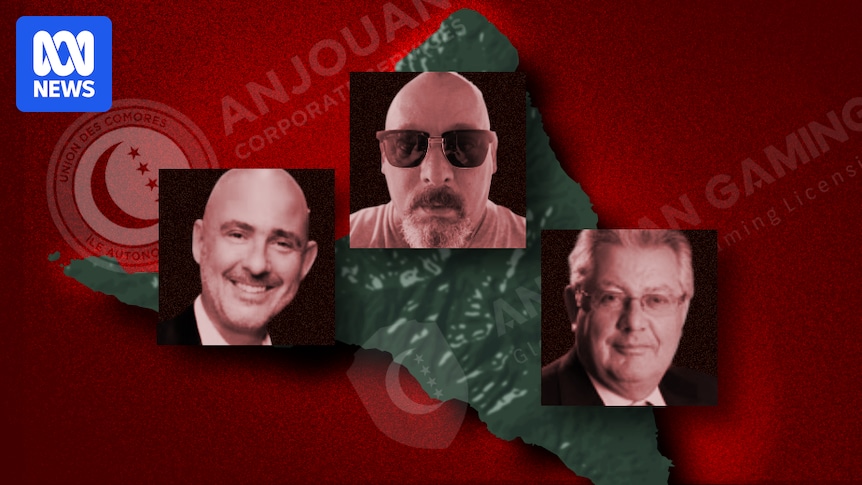
At first glance, the tiny African island of Anjouan appears to be a classic offshore secrecy haven. With no corporate taxes, minimal bureaucracy, and limited oversight, it offers ideal conditions for businesses aiming to avoid scrutiny. The island hosts a variety of financial entities, including banks, insurance brokers, and cryptocurrency exchanges, as well as a thriving black-market gambling industry. However, there’s a significant issue: none of the licences issued—whether financial or gambling—hold any legitimate value.
Local authorities have declared that the island’s regulators are “fictitious entities” operating “illegally.” Despite this, a network of companies continues to sell hundreds of these worthless licences, likely generating millions in annual fees from banks and casinos.
Anjouan’s Dubious Regulatory Framework
Anjouan is one of three semi-autonomous islands comprising the Comoros Union, a sovereign nation off Africa’s east coast. In the late 1990s, Anjouan declared independence from its neighboring islands, leading to the creation of the Anjouan Offshore Finance Authority (AOFA). However, the AOFA struggled for legitimacy from the start. In 2007, the Comoros’s vice-president accused it of being involved in “money laundering operations.” A subsequent World Bank mission reported that the creation of offshore banks in Anjouan was illegal under Comoros law.
Following the reunification of the Comoros, the AOFA was officially stripped of its status as a recognized regulator by banking laws passed in 2013 and 2015. Despite this, the AOFA has continued to maintain a public register of licensed companies, signing up more than 50 banks, insurance companies, brokers, and gambling sites since its official dissolution.
“They … have in reality no physical or legal existence in the territory of the Union of the Comoros,” said Ait-Ahmed Djalim, a Comoros Central Bank official, in 2020.
Black Market Casinos Targeting Australians
Despite warnings from Comoros authorities, online casinos continue to operate under Anjouan licences. One such casino, Leon Casino, proudly displays its Anjouan licence, even though it has been identified as an illegal operation by Australian officials. It does not hold an Australian gambling licence and offers several banned products, including virtual slot machines and in-play sports betting.
Leon Casino has engaged in high-profile marketing efforts, sponsoring Australian UFC fighters and hosting VIP events. However, there is no indication that the influencers or sponsored fighters were aware of the casino’s illegal status at the time. The casino continues to target Australian customers with local payment options, including credit card, Pay ID, Apple Pay, Google Pay, and cryptocurrency.
Under scrutiny, Leon’s payment options began to unravel. Two vendors, including MiFinity, disappeared from the casino’s website hours after receiving inquiries from the ABC.
The Mystery Operators Behind Anjouan’s Licences
The legitimacy of the Anjouan Offshore Finance Authority (AOFA) is further undermined by its lack of transparency and accountability. Its website features a misspelled email address and no government officials are listed as involved in its operations. Businesses seeking licences are directed to Anjouan Corporate Services, which also lacks transparency, listing no directors or board members on its website.
Historical records reveal the involvement of British individuals in the operations of Anjouan Corporate Services. A 2007 speech by the Comoros’s vice-president identified a British man, Ronnie Dvorkin, as connected to the company. Dvorkin’s son, Adam Dvorkin, has since been seen representing the company at international conferences.
Further complicating the situation is the presence of a sister company, Anjouan Licensing Services, which claims to have issued over 1,300 gambling licences. Like Anjouan Corporate Services, it operates under the dubious authority of the AOFA.
Anjouan Licensing Services could be making up to 22 million euros a year, charging around 17,000 euros per licence annually.
The Costa Rica Connection
Records show that Anjouan Licensing Services has ties to a Costa Rican company, Fast Offshore, run by Canadian Ron Mendelson. Fast Offshore assists companies in applying for gambling licences in several jurisdictions, including Anjouan. Mendelson has published numerous articles promoting Anjouan as an ideal location for online casinos, highlighting its low costs and quick setup process.
Mendelson’s connections to the Anjouan licensing industry were further evidenced by his interactions with Elliot Sorsky, the CEO of Anjouan Corporate Services, at a global gambling conference.
Despite the ongoing operations and international connections, attempts to reach Mendelson, Fast Offshore, and the individuals involved in Anjouan Corporate Services for comments have been unsuccessful.
The situation in Anjouan highlights the challenges of regulating offshore financial activities and the ease with which fraudulent operations can exploit legal loopholes. As authorities in Comoros and other countries continue to issue warnings, the future of Anjouan’s licensing industry remains uncertain, with potential legal and economic consequences looming on the horizon.