
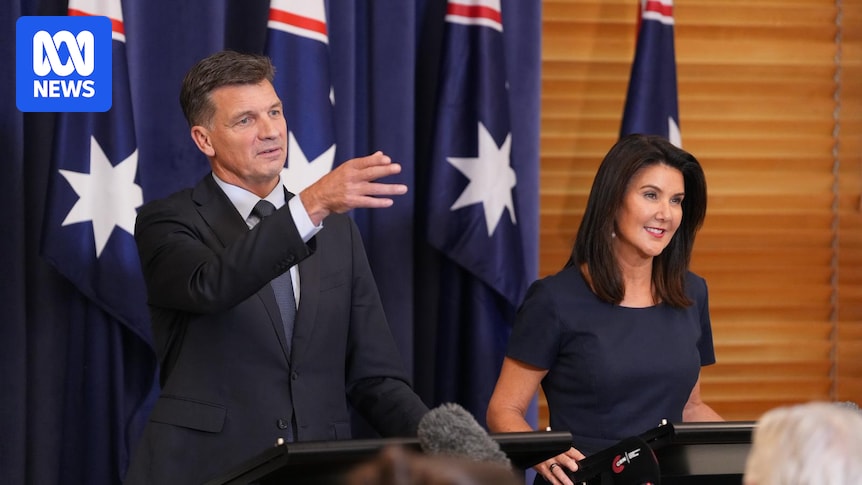
The Liberal Party in Australia is in search of its ideological center, and it appears to have rediscovered a familiar anchor: migration. Angus Taylor, a prominent figure within the party, has advocated for closing the door to those who do not embrace “Australian values.” This echoes former Prime Minister Tony Abbott’s sentiments that past immigration policies better safeguarded social cohesion. The underlying message is unmistakable: national identity is once again at the forefront of conservative politics.
The debate over what constitutes ‘Australian values’ is less about enforcement and more about definition. What exactly is social cohesion, and who determines when it has failed? The Australian values statement, which temporary and permanent visa applicants must sign, highlights principles such as freedom of speech, freedom of religion, commitment to the rule of law, equality of opportunity, and the concept of a “fair go.” These principles are foundational to liberal democracy, yet the proposal to make adherence to this statement a binding visa condition raises practical questions: What constitutes a breach?
Migration as an Economic Lever
For over two decades, successive Australian governments, both Coalition and Labor, have utilized migration as a tool for economic growth. According to the Australian Bureau of Statistics (ABS), net overseas migration surged to approximately 429,000 in 2023–24 before dropping to around 306,000 in 2024–25. Labor has indicated a target of about 225,000 migrants per year, while leaked Coalition plans suggest a lower target of around 170,000.
International education remains one of Australia’s largest export sectors, and migrants constitute a significant portion of the workforce in health care, aged care, construction, and technology.
The role of migration in addressing skills shortages and demographic aging is crucial. It drives population growth, which in turn fuels housing demand, consumption, and tax revenue. However, these intake settings have rarely been accompanied by necessary structural reforms.
Infrastructure and Integration Challenges
If housing supply fails to keep up with population growth, it reflects planning and infrastructure bottlenecks. Congested hospitals point to funding issues and workforce distribution challenges. Heavy reliance on overseas-trained professionals highlights gaps in domestic education and vocational training. Reducing migration without addressing these constraints risks shrinking the labor pool while leaving structural inefficiencies unaddressed.
Simultaneously, Australia is in a global competition for mobile talent. Young and bright individuals worldwide are not static; they evaluate visas, wages, infrastructure, and lifestyle options across countries. For many migrants, settling in Australia is no longer a permanent decision by default; it is subject to revision based on changing circumstances.
Global Context and Political Realignment
This debate is unfolding amid a broader global climate where migration has become a central issue for right-wing populism. In the United States, far-right narratives about cultural replacement and border “invasion” have reshaped domestic politics and influenced international discourse. The globalization of American-style nativist rhetoric has normalized harsher language about migrants in allied democracies.
The Liberal Party’s repositioning reflects a broader ideological current sweeping across the West, where migration is often framed as a crisis rather than a systems-management issue.
Decades of reactive border politics have not resolved structural drivers; instead, they have amplified them. The same pattern risks repeating in Australia. Highlighting these tensions does not diminish Australia’s appeal as one of the most stable and livable societies globally. However, if migration is central to national growth, Australia must continually upgrade its infrastructure and systems to support integration.
Political Strategy vs. Policy Reform
Beyond the citizenship test, Australia lacks comprehensive civics education for new arrivals. Many migrants come from political systems without democratic participation or gender equality norms, yet Australia provides limited structured pathways for understanding its institutions. Recognition of overseas qualifications is inconsistent, and English language programs vary in quality and duration. Professional and social networks often rely on existing family ties, school connections, and class, limiting access for new arrivals.
If social cohesion is the goal, execution has been lacking under governments of both political persuasions. Aging democracies globally face a demographic contradiction: they need migrants economically while politically resisting them. This tension is increasingly visible in Australia’s political recalibration.
The Future of Migration Policy
The rhetoric of “Australian values” offers clarity amid party division and electoral uncertainty. It signals strength to a conservative base concerned about cultural change and positions migration as a site of decisive action. However, social cohesion is not primarily threatened by visa holders misunderstanding freedom of speech. It is strained when infrastructure lags behind growth, housing affordability collapses, and public services are stretched.
If migration becomes the organizing narrative of conservative renewal, it risks serving as a proxy for economic frustration rather than a solution.
Shutting the door on migration may project control and consolidate parts of the Liberal base amid competition from One Nation. It may also mirror a transnational populist strategy that reframes complex economic pressures as a cultural threat. However, it does not address deeper questions such as increasing productivity, modernizing education and training, and funding infrastructure at scale.
The critical question for the Liberal Party is whether tightening migration is a governing strategy or merely a political one. If the strategy is primarily defensive, aimed at securing a conservative base amid global right-wing momentum, it risks narrowing Australia’s long-term economic options for short-term political gain. Social cohesion cannot be secured through slogans or elevated visa conditions; it depends on institutions capable of supporting a diverse and growing society.
If migration is treated as a cultural fault line rather than an economic system embedded in national growth, the debate will remain contentious, and structural reform will remain unfinished. Cohesion will continue to be invoked without being clearly defined.