
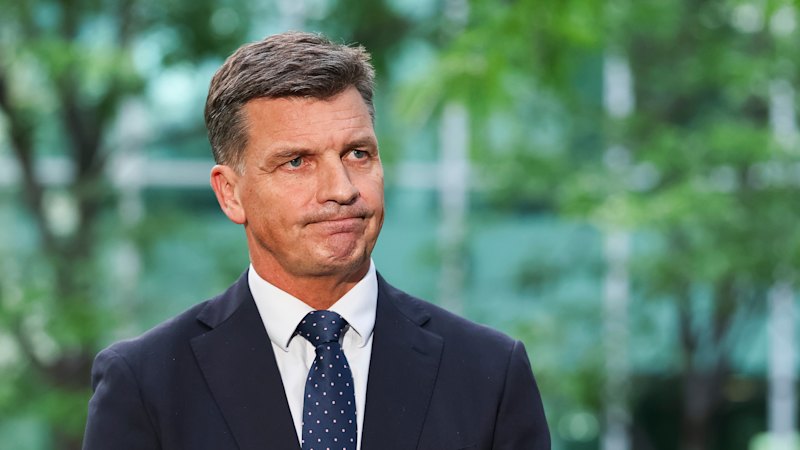
Foreign Minister Penny Wong is set to challenge Angus Taylor’s Liberal Party on its stance towards Pauline Hanson’s contentious remarks about Muslims, as Taylor opens the possibility of a preference deal with One Nation in an upcoming byelection. This political maneuvering comes at a crucial time, just over two weeks after Taylor assumed leadership of the opposition.
In a recent interview, Taylor emphasized his party’s unique position in addressing Australian values and cultural issues, alongside economic policies that he claims One Nation cannot match. “Restoring our standard of living, protecting our way of life, and celebrating our great nation is not fringe at all. I think it’s mainstream,” he remarked, highlighting a vision that he believes neither the Labor Party nor One Nation can offer.
Wong’s Motion to Censure Hanson
The political landscape is set to be tested as Wong plans to introduce a Senate motion this week to censure Hanson for her recent statement claiming there were no “good” Muslims. This statement has ignited widespread criticism and raised questions about Hanson’s capability to lead a major party. The motion will aim to reaffirm Australia’s multicultural foundations and call for an end to divisive rhetoric.
Labor Senator Ellie Whiteaker has articulated the party’s strategy to challenge the opposition’s alignment with One Nation, questioning how far the Liberals will go to outflank Hanson on the far right. “We know the Liberals are racing to outflank Pauline Hanson on the far right but how low will they go?” Whiteaker stated.
Internal and External Reactions
Hanson’s remarks have not only caused a stir within her own party but have also led to dissent among her supporters. Notably, Barnaby Joyce, a high-profile recruit, has distanced himself from her views. Meanwhile, right-wing Nationals Senator Matt Canavan and Liberal Deputy Leader Jane Hume have both condemned Hanson’s comments, with Hume describing them as abhorrent.
Taylor, while expressing disagreement with Hanson, has opted for a more diplomatic tone, aiming to attract conservatives who might be considering One Nation. “I’ve made clear that there are [positions] that Pauline and One Nation have taken that I absolutely don’t agree with,” Taylor stated, emphasizing his commitment to respecting potential One Nation voters.
Implications for the Upcoming Byelection
One Nation is emerging as a formidable contender in the forthcoming Farrer byelection, a seat vacated by former Liberal leader Sussan Ley. The contest is expected to be a complex four-way race, with preferences playing a critical role. Taylor has not ruled out directing preferences to One Nation over Labor and a left-wing independent, a move reminiscent of past Liberal strategies.
Frontbencher Andrew Hastie has voiced openness to placing One Nation ahead of Labor, reflecting a shift from John Howard’s 2001 decision to place One Nation last on Liberal preference tickets. This potential shift underscores the evolving dynamics within the Coalition as it seeks to reclaim support from One Nation.
Looking Ahead
The developments surrounding Taylor’s leadership and the potential One Nation deal are set to test the Liberal Party’s ability to navigate complex political waters while maintaining its core values. As the byelection approaches, the party’s decisions will likely have significant repercussions on its future direction and voter base.
With Wong’s motion and the broader debate on multiculturalism and national identity, the coming weeks will be pivotal in shaping the political discourse in Australia. Observers will be keenly watching how Taylor balances the need to appeal to conservative voters without alienating the broader electorate.