




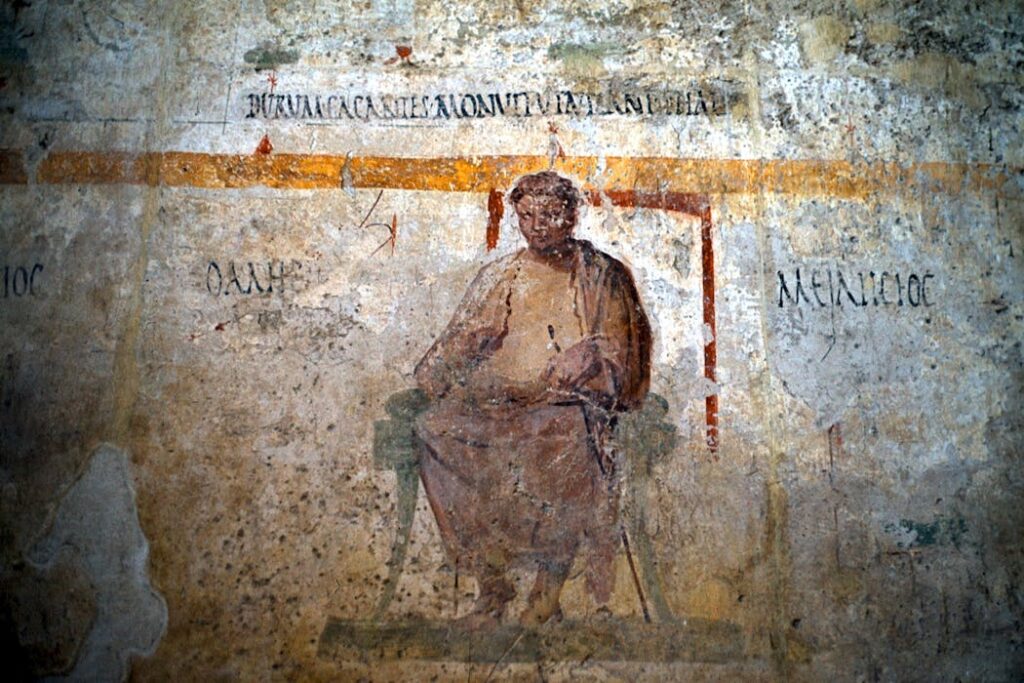
Ancient scientists, often dismissed as relics of a bygone era, have much to teach us about misinformation—a challenge that has only intensified with the advent of social media and artificial intelligence. Greek philosopher Thales of Miletus, considered the West’s first scientist, believed the Earth floated on water, while Roman encyclopedist Pliny the Elder suggested bizarre remedies like chicken brains for snakebites. Despite their seemingly outdated ideas, these thinkers grappled with issues remarkably similar to those we face today: distinguishing truth from fiction.
Here are five lessons from ancient Greek and Roman science that remain relevant in our modern world, particularly in combating misinformation.
Start with Observations
One of the fundamental principles shared by ancient scientists was the importance of observation. Almost every scientific text from antiquity emphasizes the need to collect data before drawing conclusions. For instance, Marcus Manilius, a 1st-century CE author, highlighted the meticulous observations made by his predecessors in astronomy. They documented the night sky’s patterns, observing stars’ movements to build their knowledge.
Manilius and his contemporaries urged their readers to gather evidence and remain skeptical of claims lacking data. This emphasis on empirical evidence is a cornerstone of scientific inquiry, underscoring the value of data-driven conclusions in an era rife with misinformation.
Think Critically
Critical thinking was another essential skill advocated by ancient scientists. The anonymous author of The Aetna, a text on volcanoes, warned readers about potential misinformation from other authors and individuals. Whether these sources intended to deceive or were simply misinformed, the text encouraged scrutiny of their claims, urging readers to rely on their senses and reasoning.
This ancient advice remains pertinent today, as we navigate a landscape where even well-meaning sources can be inaccurate. By fostering critical thinking, ancient scientists equipped their audiences to question and analyze information before accepting it as truth.
Acknowledge What You Don’t Know
Admitting the limits of one’s knowledge was another lesson from antiquity. Roman philosopher Lucretius, in his work On the Nature of Things, proposed multiple explanations for solar eclipses, acknowledging the need for more evidence to determine the most likely cause. He argued that eliminating theories without sufficient evidence was “unscientific.”
This humility in admitting uncertainty is a valuable trait, as it fosters trustworthiness. Lucretius and his peers recognized that those who claim certainty without evidence could be persuasive yet misleading. By acknowledging their limits, ancient scientists demonstrated intellectual honesty, a principle that remains crucial in today’s information landscape.
Science as Part of Culture
Ancient thinkers understood that science was intertwined with culture. A medical text from the school of Hippocrates, On the Sacred Disease, explored epilepsy’s causes, arguing against its supernatural origins. Greek doctors were divided on disease causes, reflecting the cultural beliefs influencing scientific interpretations.
This recognition that science is not isolated from cultural influences is vital today. Understanding the cultural context of information helps us evaluate its validity and biases, a lesson that Greek and Roman scientists imparted to their readers.
Science is for Everyone
Ancient scientists believed that science was accessible to all. Marcus Manilius emphasized the importance of a “teachable mind,” suggesting that interest and willingness to learn were more crucial than innate talent. Similarly, the Aetna author asserted that “science is no place for genius.”
By democratizing knowledge, ancient scientists encouraged their audiences to engage with scientific inquiry, emphasizing the role of education and curiosity in understanding the world. This inclusive approach laid the groundwork for modern scientific thought and remains relevant as we strive to make science accessible to diverse audiences.
The lessons from ancient Greek and Roman scientists offer timeless wisdom in navigating misinformation. By prioritizing observation, critical thinking, humility, cultural context, and inclusivity, these thinkers laid the foundations for a scientific approach that remains essential in our quest for truth in a complex world.