



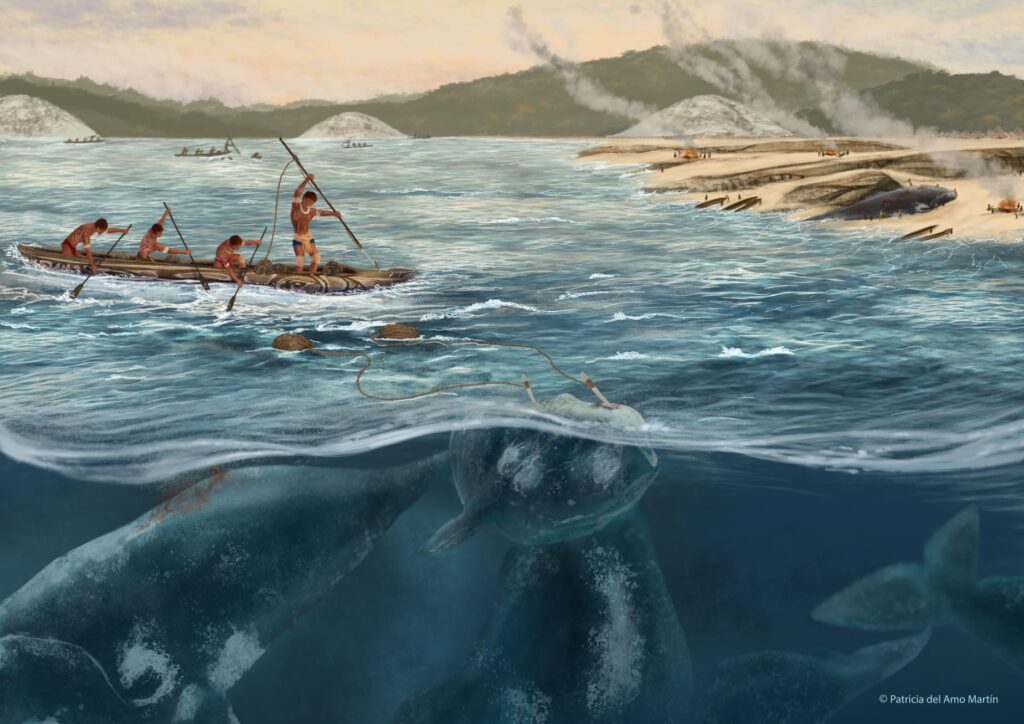
New research has unveiled that Indigenous communities in southern Brazil engaged in large-whale hunting as far back as 5,000 years ago, challenging previous assumptions about the origins of whaling. This groundbreaking study, conducted by the Institute of Environmental Science and Technology at the Universitat Autònoma de Barcelona and the Department of Prehistory of the UAB, places these practices in Babitonga Bay, Santa Catarina state, significantly earlier than the documented whaling activities of Arctic and North Pacific societies.
The discovery stems from the analysis of whale bones and tools found in sambaquis, ancient shell mounds along Brazil’s coast. These findings suggest that early whaling was not exclusive to the Northern Hemisphere, prompting a reevaluation of historical narratives regarding maritime cultures.
Uncovering the Past: Sambaquis and Their Secrets
The sambaquis, monumental shell mounds created by Holocene societies, have preserved a wealth of archaeological evidence, including bones, tools, and burials. Many of these sites have been lost to urban development, making museum collections crucial for research. The Museu Arqueológico de Sambaqui de Joinville houses a significant collection of cetacean bones and tools from the Babitonga region, described by researchers as a rare archive.
The study, led by Krista McGrath and André Colonese, utilized advanced techniques such as zooarchaeology, typological analysis, and ZooMS (Zooarchaeology by Mass Spectrometry) to identify cetacean remains, even when fragmented or reshaped into tools. The results revealed a diverse array of marine life, including southern right whales, humpback whales, blue whales, sei whales, sperm whales, and dolphins. Notably, many bones displayed cut marks indicative of butchering.
Revisiting Sambaqui Society: Beyond Shellfish Collectors
For years, sambaqui peoples were primarily viewed as shellfish collectors and fishers. However, this research argues for a broader understanding of their maritime culture, highlighting their sophisticated technology, collective cooperation, and ritual practices tied to large marine animals. The presence of large whale-bone harpoons, some of the largest found in South America, suggests intentional hunting rather than opportunistic scavenging.
“The data reveals that these communities had the knowledge, tools, and specialized strategies to hunt large whales thousands of years earlier than we had previously assumed,” says Krista McGrath, lead author of the study.
This perspective shift is echoed by André Colonese, who notes, “This research opens a new perspective on the social organization of the Sambaqui peoples. It represents a paradigm shift; we can now view these groups not only as shellfish collectors and fishers, but also as whalers.”
Ecological Insights and Conservation Implications
The study’s findings also carry significant ecological implications. The abundance of humpback whale remains suggests a broader historical distribution than the current main breeding areas off Brazil. Co-author Marta Cremer highlights the importance of these findings for conservation efforts:
“The recent increase in sightings in Southern Brazil may therefore reflect a historical recolonization process, with implications for conservation. Reconstructing whale distributions before the impact of industrial whaling is essential to understanding their recovery dynamics.”
Understanding the historical distribution of whales can inform current conservation strategies, offering a baseline for recovery efforts and helping to set realistic expectations for the future.
Broader Implications for Research and Heritage
This research not only reshapes our understanding of early maritime life but also underscores the importance of revisiting museum collections with modern techniques. As original sites are lost, these collections become invaluable for uncovering the past. The findings also enhance public understanding of Indigenous history along Brazil’s coast, portraying these communities as organized maritime specialists with a deep connection to the ocean.
The study’s results are published in the journal Nature Communications, offering a new lens through which to view the rich history of Brazil’s coastal societies and their enduring legacy.