


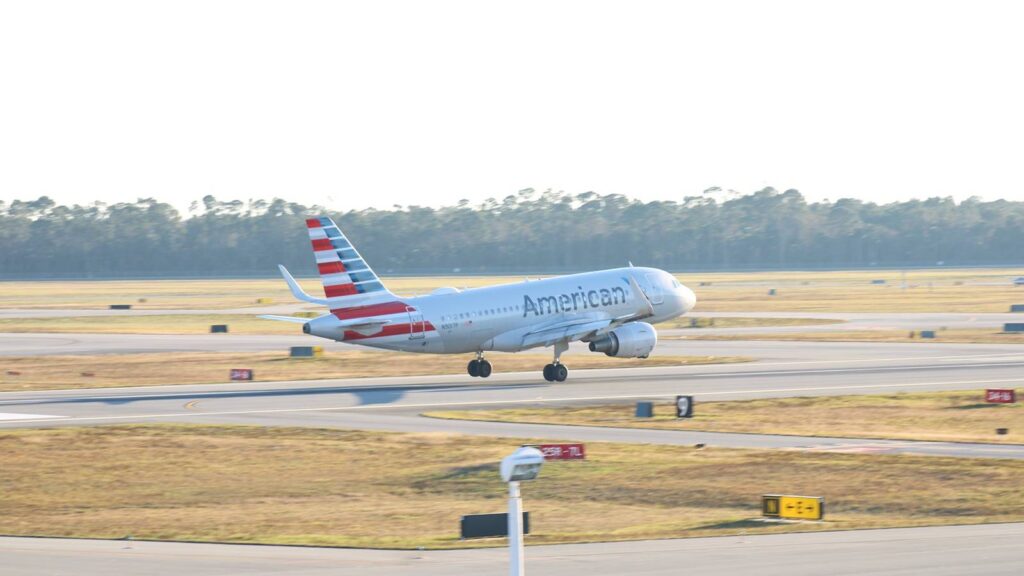
An American Airlines Airbus A319 was grounded after making contact with a de-icing truck at Chicago O’Hare International Airport on Friday, January 30. The incident delayed passengers for several hours as they awaited a replacement aircraft to continue their journey to Boston Logan International Airport.
The flight, designated as American Airlines 2121, was preparing for its scheduled departure when the collision occurred. Fortunately, no injuries were reported among the passengers or crew. The aircraft, a 12-year-old Airbus A319-115, has been out of service since the incident, remaining on the apron at O’Hare.
Incident Details and Immediate Response
Passengers aboard AA2121 were preparing for the short two-hour flight from Chicago to Boston when the aircraft made contact with the de-icing truck. The collision happened during the final stages of the de-icing process as the plane began to push back from gate K8. American Airlines promptly addressed the situation, stating:
“The aircraft was taken out of service to be inspected by our maintenance team and the flight will depart shortly on a replacement aircraft. Safety is our top priority and we apologize to our customers for their experience.”
The flight, initially scheduled to depart at 1:25 PM, was delayed significantly, eventually taking off at 8:16 PM on a replacement Airbus A321-200. The delay resulted in a late arrival in Boston, with the flight expected to land at approximately 11:22 PM, according to Flightradar24.
Aircraft Specifications and Replacement
The affected A319, registered as N9013A, has been part of American Airlines’ fleet since November 2013. Configured to carry up to 128 passengers, it features a mix of Domestic Class and Main Cabin seating. The replacement aircraft, an Airbus A321-231 registered as N903AA, is a newer model, capable of accommodating 190 passengers.
The A321, delivered to American Airlines in May 2017, provides a more spacious configuration with 20 Domestic First seats and 170 Main Cabin seats. This transition highlights the airline’s ongoing efforts to modernize its fleet and enhance passenger experience.
Fleet Modernization and Industry Trends
The incident at O’Hare underscores American Airlines’ broader strategy to update its domestic fleet. The A319 involved in the collision is part of a legacy group of aircraft that includes seatback entertainment screens, a feature that American plans to phase out in favor of streaming services accessible via personal devices.
This move contrasts with competitors like Delta Air Lines and United Airlines, which have been adding more seatback screens to their fleets. American Airlines currently operates around 32 A319s, many of which were inherited from US Airways and America West Airlines.
Expert Opinions and Industry Impact
Aviation experts suggest that the removal of seatback screens aligns with a broader trend towards digitalization and cost efficiency. By encouraging passengers to use their own devices, airlines can reduce maintenance costs and aircraft weight, leading to fuel savings.
However, this strategy may not appeal to all passengers. “While streaming services offer flexibility, some passengers still prefer the convenience of seatback screens,” notes aviation analyst Jane Doe. “Airlines must balance modernization with customer preferences to remain competitive.”
Looking Ahead
As American Airlines continues to assess the damage to the A319, the airline remains committed to maintaining high safety standards and minimizing disruptions for passengers. The incident serves as a reminder of the complexities involved in airport operations and the importance of rigorous safety protocols.
Moving forward, American Airlines will likely focus on further integrating technology into its fleet while addressing the evolving needs of its passengers. The airline’s response to this incident will be closely watched by industry observers and customers alike.