




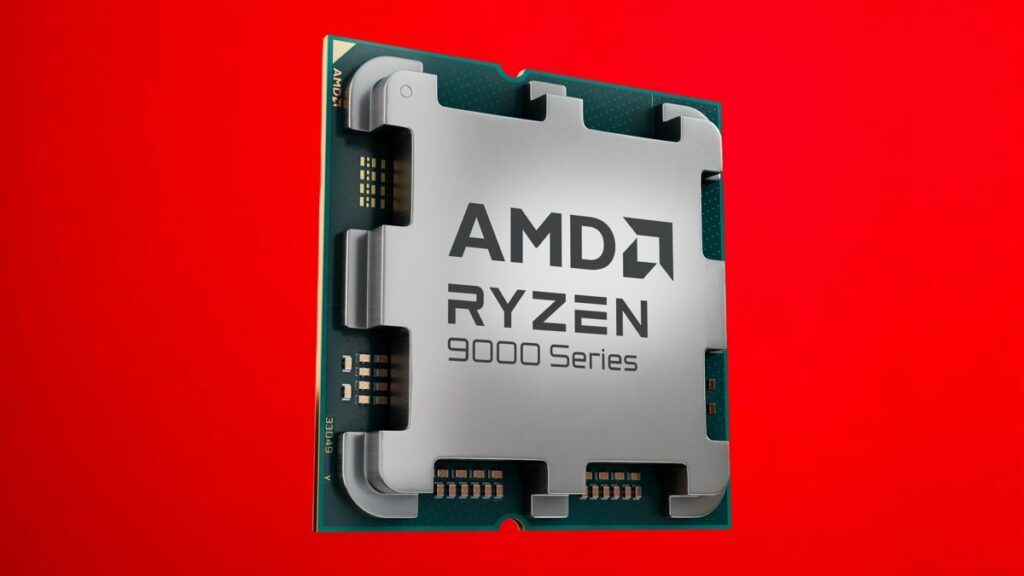
In a move set to excite the gaming community, AMD has announced the Ryzen 7 9850X3D, a new variant of its popular Ryzen 7 9800X3D processor. This latest release aims to enhance gaming performance with increased clock speeds, positioning itself as the world’s fastest gaming CPU. The announcement comes amid growing competition in the high-performance processor market, with AMD seeking to solidify its reputation among serious gamers.
The Ryzen 7 9850X3D builds on the success of the 9800X3D, which has been praised for its innovative 3D V-Cache technology. This technology allows for higher frame rates by incorporating high-speed cache, optimizing performance with existing GPUs. However, the new 9850X3D promises even greater speeds, thanks to its enhanced clock capabilities.
The 9850X3D Difference
While AMD has not disclosed all specifications of the Ryzen 7 9850X3D, the primary distinction lies in its clock speed. The 9850X3D boasts a top speed of 5.6GHz, compared to the 5.2GHz of its predecessor. Both processors feature the same underlying chips, suggesting that with the right conditions, the 9800X3D could potentially be overclocked to match the new model’s performance. This is largely due to AMD’s “binning” process, which sorts chips based on their capability to handle higher speeds.
Both processors are compatible with the AMD AM5 socket and are equipped with eight “Zen 5” CPU cores, each capable of processing two threads, resulting in 16 threads in total. They also share a 32MB L3 cache, supplemented by a 64MB last-level cache, which significantly boosts gaming performance.
“The increase in clock speed alone could enable a performance increase of around 8% over the Ryzen 7 9800X3D, in best-case scenarios.”
This performance enhancement aligns with AMD’s internal testing, which shows the 9850X3D generally outperforming the 9800X3D. In some instances, the performance gain exceeds 8%, potentially due to the alleviation of system bottlenecks.
AMD’s Claim to the Fastest Gaming Processor
AMD’s bold claim that the Ryzen 7 9850X3D is the fastest gaming processor is not without contention. The Ryzen 9 9950X3D, another powerhouse from AMD, features 16 cores, a turbo clock of 5.7GHz, and a larger cache, potentially making it a contender for the title. While the 9850X3D may excel in certain scenarios, the 9950X3D’s superior core count and cache could offer advantages in heavily threaded workloads and games that utilize more than eight cores.
Benchmark comparisons between the Ryzen 9 9950X3D and the Ryzen 7 9850X3D reveal a complex picture. The true measure of “fastest” may vary depending on the specific game and workload. AMD enthusiasts and tech analysts alike are eager to conduct firsthand tests to determine the definitive leader in gaming performance.
Pricing and Market Positioning
As of now, AMD has not released pricing details or an exact launch date for the Ryzen 7 9850X3D. Given the 9800X3D’s launch price of $479 and the 9950X3D’s price tag of $699, the 9850X3D is expected to fall somewhere in between. A price of around $549 is anticipated, reflecting the premium typically associated with AMD’s X3D chips.
Despite its potential, the Ryzen 7 9850X3D may not represent the best value for all gamers. The benefits of AMD’s 3D V-Cache are most pronounced in specific gaming scenarios, particularly at 1080p resolution. The impact diminishes with less powerful graphics cards or at higher resolutions, where the GPU becomes the limiting factor.
“Even with the world’s most powerful GPU, the Nvidia GeForce RTX 5090, you’ll often see little benefit from the 3D V-Cache while running games at 4K with maxed-out graphics settings.”
For esports enthusiasts and those seeking to maximize frame rates on high-refresh-rate monitors, the 9850X3D could be an attractive option. However, for gamers focused on 4K gaming, the processor’s advantages may be less significant.
Looking Ahead
As AMD continues to innovate in the gaming processor market, the Ryzen 7 9850X3D represents a significant step forward. Its enhanced clock speed and gaming performance are likely to appeal to a niche segment of the gaming community. However, the broader implications for AMD’s market position remain to be seen, especially as competitors like Intel continue to advance their own technologies.
Ultimately, the true impact of the Ryzen 7 9850X3D will depend on its real-world performance and reception by gamers and tech enthusiasts. As AMD prepares for its release, the gaming world waits with bated breath to see if this new processor will indeed set a new standard in gaming performance.