




As a career counterintelligence officer for the US Federal Bureau of Investigation (FBI) and Defense Intelligence Agency, I worked inside a fully integrated intelligence system. Signals intelligence from the National Security Agency guided investigations, while satellite imagery from the National Reconnaissance Office provided visibility into hostile environments. Human intelligence came through Defense Intelligence Agency channels. These streams were strengthened by reporting from domestic and foreign partners, creating a closed, tightly controlled system.
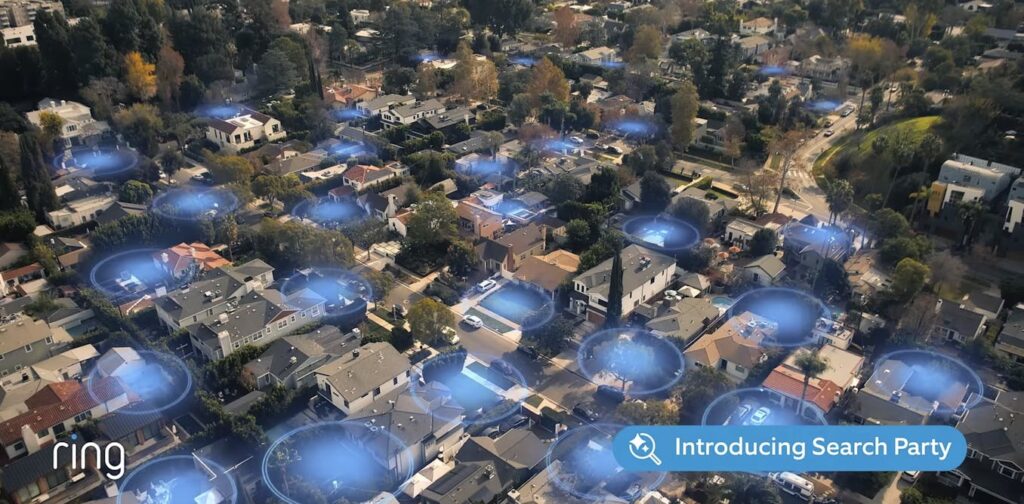
However, the landscape has shifted significantly. Private companies are now supplying “intelligence as a service” to government entities and others. This change became notably controversial when Amazon-owned Ring doorbell camera company advertised a new feature last week, highlighting the evolving dynamics of surveillance.
The Rise of Private Intelligence
For much of the 20th century, intelligence was the exclusive domain of nation-states. Collection systems were expensive and specialized, protected by strict classification rules designed to safeguard sources and methods. Intelligence agencies controlled the entire lifecycle: human spying, signals interception, satellite surveillance, analysis, and dissemination to decision-makers. This created a closed command economy, where states maintained their own capabilities with legal oversight and institutional tradecraft.
Today, that monopoly is eroding, replaced by a commercial intelligence marketplace operating alongside—and increasingly inside—government security structures. The shift began in the late 20th century as open-source intelligence gained value with the rise of online forums, social media platforms, and commercial satellite imagery.
Companies entered this market, scraping images from the web and content from social media sites. Clearview AI, perhaps the most well-known, emerged in 2017, offering to identify people based on photos from social media. Businesses quickly recognized the opportunity: intelligence could be produced commercially, packaged, and sold.
The Surveillance Economy
At the same time, a broader surveillance economy emerged, driven by private companies rather than governments. Acoustic gunshot detection systems illustrate this convergence. Originally designed for military force protection, these sensors are now deployed across cities, providing real-time alerts to police. In Australia, this has manifested with hardware store chain Bunnings incorporating facial recognition technology from Hitachi.
Uncrewed aerial vehicles—better known as drones—have followed a similar pattern. Once limited to military reconnaissance, sensor-equipped drones are now widely available commercially. Parts of the battlefield surveillance grid have migrated into civilian life.
Perhaps the most significant shift comes from everyday consumer technology. Internet-connected door cameras, home security systems, and other “Internet of Things” devices now form a vast, privately owned sensor network. This is likely to grow as products such as Meta’s planned facial-recognition smart glasses hit the market.
Real Intelligence Value but Real Privacy Concerns
These systems were never intended as intelligence tools, yet their intelligence value is undeniable. In the recent case of the kidnapping of Nancy Guthrie in Arizona, for example, Nest door camera footage helped reconstruct movements and identify a possible kidnapper. The data was captured passively, through daily digital life.
This is intelligence collection by proxy. It is constant, ambient, and privately owned. Amazon Ring’s attempt to launch its “Search Party” program demonstrates the tension. Framed as a community safety feature, the program proposed using AI to scan neighborhood camera footage to locate missing pets.
Concern escalated when Ring explored partnering with Flock Safety, whose automated license plate reader networks are widely used by law enforcement. Linking home surveillance cameras with other tracking systems signaled the emergence of a fully integrated commercial intelligence network.
Public backlash was swift—especially after the capability was advertised during the Super Bowl. Critics argued the pet-recovery narrative masked the normalization of mass surveillance. Facing mounting privacy concerns, Ring ultimately abandoned the partnership.
Intelligence as a Service
Commercial surveillance partnerships continue to expand. Networked cameras and license plate readers equipped with AI-powered object recognition enable vehicle tracking across jurisdictions. Data brokers feed into this ecosystem too, selling credit histories, utility records, and behavioral data to government clients.
Taken together, these developments represent “intelligence as a service.” Governments now buy cyber threat reporting, commercial sensor data, facial recognition, and behavioral analytics through subscriptions and data-sharing agreements. Intelligence production has become scalable, modular, and market-driven.
This transformation raises serious governance questions. Commercial intelligence providers often operate under far looser legal restrictions, allowing agencies to circumvent data privacy laws. Consumer-generated data, door cameras, vehicle telemetry, and biometric identifiers can often be used by investigators without the need for a warrant, complicating privacy protections and civil liberties safeguards.
None of this makes state intelligence services obsolete. Governments still retain unique authorities: human espionage, covert action, offensive cyber operations, and classified technical collection. However, these capabilities now operate within a broader intelligence supply chain, which includes satellite firms, data brokers, AI analytics companies, and cyber intelligence vendors.
Questions for the Future
The integration of commercial surveillance and artificial intelligence is likely to deepen. Technology leaders envision a near future where cameras on homes, vehicles, and public infrastructure feed constant video into AI systems. Citizens and police alike would operate under continuous algorithmic observation, with automated reporting aiming to shape behavior.
The privatization of intelligence is neither temporary nor accidental. It is the outcome of technological diffusion, data proliferation, and commercial innovation meeting demand from national security and law enforcement. The question is not whether intelligence as a service will expand—it will.
The real question is different. What happens to national sovereignty, democratic oversight, and personal privacy when the power to collect and analyze intelligence no longer belongs solely to the state? What happens when it belongs to private actors willing to sell it?
As the world moves forward, these questions will demand answers, shaping the future of surveillance and privacy in the digital age.