
Last week, during a visit to Adelaide, I found myself in a hotel that offered the nostalgic luxury of newspapers with breakfast. The front page of Adelaide’s tabloid was dominated by a government social media ban story, highlighting a 14-year-old mistakenly identified as a 24-year-old by Snapchat. This incident sparked a conversation with my breakfast companion, who asked if such a story would have troubled me during my time as a political staffer. My answer was affirmative; in politics, media scrutiny is a constant, pushing politicians to either resolve issues or justify their stance.
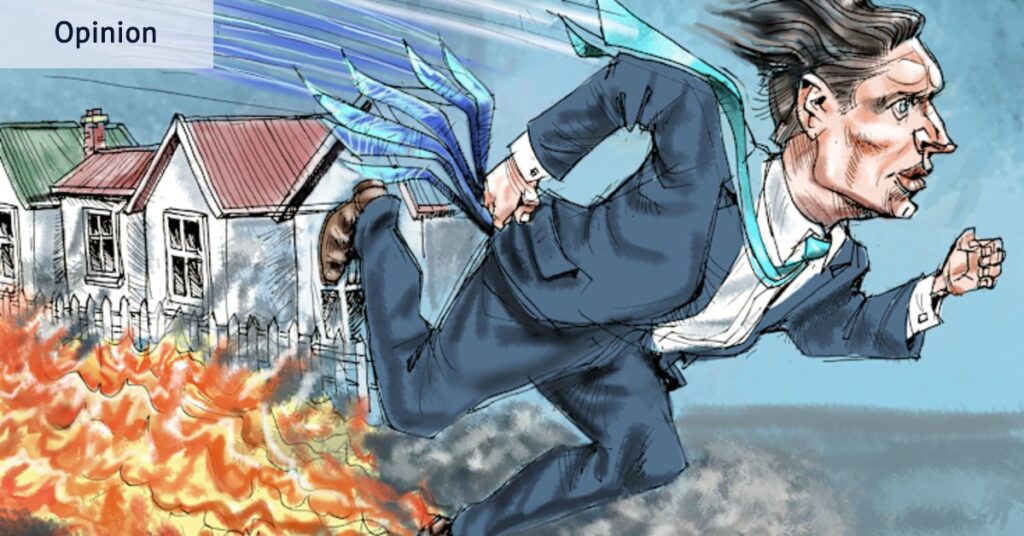
Reflecting on a favorite Paul Keating quote, I noted that in politics, one should be like the roadrunner, constantly announcing policies and leaving a trail of activity. The negative headline, in this case, was indicative of the government’s active engagement with policy issues. Similarly, the government’s recent environmental reforms, though not fully grasped by the public, dominated political discourse, signaling a hum of activity that could be perceived positively.
Post-Election Confidence and Potential Pitfalls
Following the election, Prime Minister Anthony Albanese and his government appeared more confident. However, this newfound confidence raised questions about whether it would lead to complacency or a renewed drive for action. The initial months of the term were somewhat disorganized, but recent developments suggest a possible shift towards the latter.
The Australian Election Study underscores the need for caution. It revealed that Peter Dutton was the most unpopular major-party leader in the study’s history, with perceptions of him being likened to Donald Trump. The unique context of the election implies that Labor cannot rely on these factors in future elections.
Opposition’s Strategic Shift
Some members of the Liberal Party are determined to redefine the battleground for the next election. Andrew Hastie, for instance, has criticized the current economic situation, arguing that it forces both parents to work, pushing children into institutionalized childcare, and eroding the Australian dream. Hastie’s critique goes beyond typical political rhetoric, challenging the neoliberal consensus that has dominated both major parties for decades.
Oppositions can also “burn up the road” by shifting the debate. Kevin Rudd did this in 2007 by focusing on technology and climate change, while Albanese shifted the narrative in 2022 by contrasting conflict with calm. Their success lay not only in government criticism but also in critiquing societal and political culture developments.
Implications for Future Political Landscapes
Sussan Ley, despite facing significant challenges, remains caught between conservative and moderate factions. Meanwhile, Hastie offers a new perspective on voter frustrations. Although climate change remains a significant issue, as demonstrated by the NSW bushfires, Labor cannot assume it will overshadow other concerns.
At an event in Adelaide, I was asked about the health of democracy in Australia. While compulsory voting is often credited with maintaining its health, I pondered whether similar measures in the United States would have prevented its current issues. In my Quarterly Essay, I reference philosopher Richard Rorty, who warned that a sterile political center could lead to a strongman-led America, with the economy dominated by the wealthy and minorities marginalized.
Australians may not like Donald Trump himself. But that doesn’t mean they are not – or won’t be, at some point – sympathetic to the arguments that have driven Trump’s ascent.
With inflation concerns resurfacing, the “cost of living” remains a dominant voter issue. This concern often intertwines with feelings of inequality, where rising prices reflect a broader frustration with being left behind as others prosper.
The political party that can redefine the cost of living debate and address voters’ primary concerns may gain a significant advantage. While driving policy debates is crucial, focusing on the most pressing issues for voters is paramount.
Sean Kelly is a regular columnist and was an adviser to former Labor prime ministers Julia Gillard and Kevin Rudd.