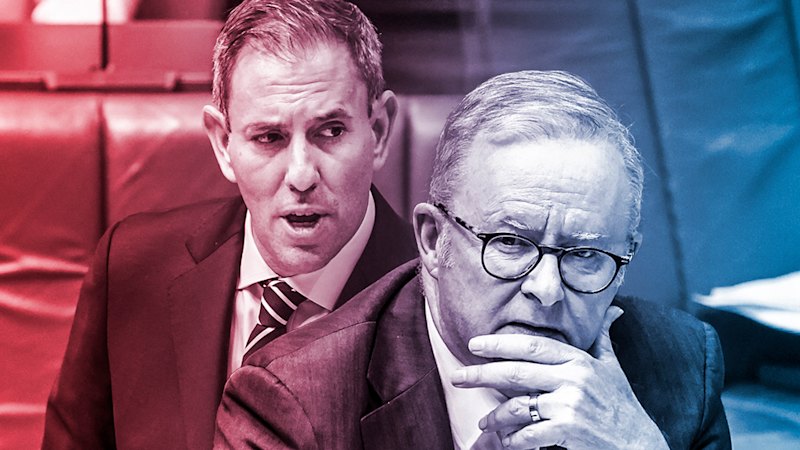

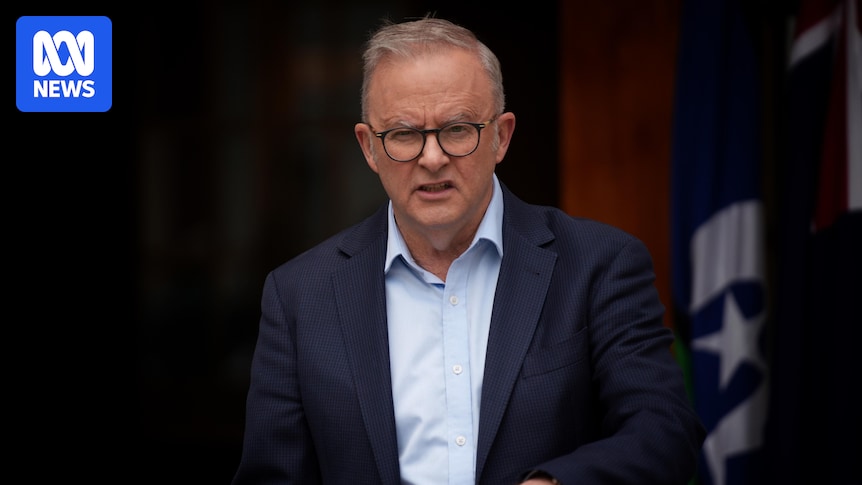
Prime Minister Anthony Albanese expressed optimism about the potential conclusion of the U.S.-led conflict against Iran, as he navigates the economic challenges looming over Australia’s budget. Speaking on Hobart’s Triple M radio, Albanese suggested that the primary objective of the military intervention—neutralizing Iran’s nuclear capabilities—had been achieved.
Albanese’s comments come at a critical time, with the Australian economy under pressure from rising inflation and fuel prices, exacerbated by the ongoing Middle Eastern conflict. The prime minister’s remarks seem to offer a diplomatic off-ramp for the United States, whose President Donald Trump has not directly communicated with Albanese since their last phone call in March.
War’s Impact on the Australian Economy
The conflict has already had significant repercussions for Australia, with attacks damaging Australian facilities and Iran issuing evacuation orders for gas fields. These developments have led to increased scrutiny from the U.S., which has criticized Australia for not being more involved in the war effort.
Economically, the war threatens to push inflation above 5%, driven by soaring fuel prices and rising interest rates. This economic pressure is compounded by increasing unemployment, painting a grim picture for Australia’s financial future. Treasury officials are considering worst-case scenarios that resemble dystopian narratives more than traditional economic forecasts.
Fuel Crisis and Public Reaction
The fuel crisis has been particularly alarming, with opposition politicians criticizing the government’s lack of preparedness. Australia, heavily reliant on oil imports, has seen a sharp increase in petrol prices, reminiscent of the panic buying during the pandemic. Despite government efforts to stabilize the situation, including appointing a fuel tsar and releasing stockpiles, uncertainty remains.
“We are in a fuel crisis, an ‘unprecedented’ crisis, the ‘biggest in history,'” said one opposition politician.
Public anxiety has been palpable, with many Australians resorting to stockpiling fuel, despite government assurances that rationing is not yet planned. The energy minister’s rebuke of such actions as “un-Australian” has done little to quell fears.
Budget Challenges and Political Implications
Amidst these economic challenges, Treasurer Jim Chalmers is preparing to deliver a budget that promises to be more about “bitter medicine” than “sugar hits.” Chalmers has indicated that the budget will include significant savings measures, targeting the Capital Gains Tax discount that predominantly benefits high earners.
The proposed changes have sparked debate, with critics arguing that reducing the discount could harm housing supply. However, even within the opposition, resistance has been relatively muted, with some acknowledging the need for reform.
“More than half of all capital gains reported are by the top 1% of earners,” noted economics reporter Tom Crowley.
Chalmers faces the difficult task of balancing fiscal responsibility with the need to provide relief from rising living costs. He has committed to making “hard decisions” in the upcoming budget, likening the current economic climate to past crises such as the Global Financial Crisis and the COVID-19 pandemic.
Looking Ahead: The Path Forward
The ongoing conflict in the Middle East remains a significant factor shaping Australia’s economic outlook. Even under the most optimistic scenarios, oil prices are not expected to normalize until late this year, with more pessimistic projections extending that timeline by several years.
As the government grapples with these challenges, the focus remains on stabilizing the economy and ensuring that the impacts of the conflict are mitigated. The coming months will be crucial as Australia navigates these turbulent times, with the budget playing a pivotal role in shaping the nation’s economic future.
In the backdrop of these developments, the political landscape continues to evolve, with leadership dynamics and policy decisions reflecting the broader uncertainties facing the country.