



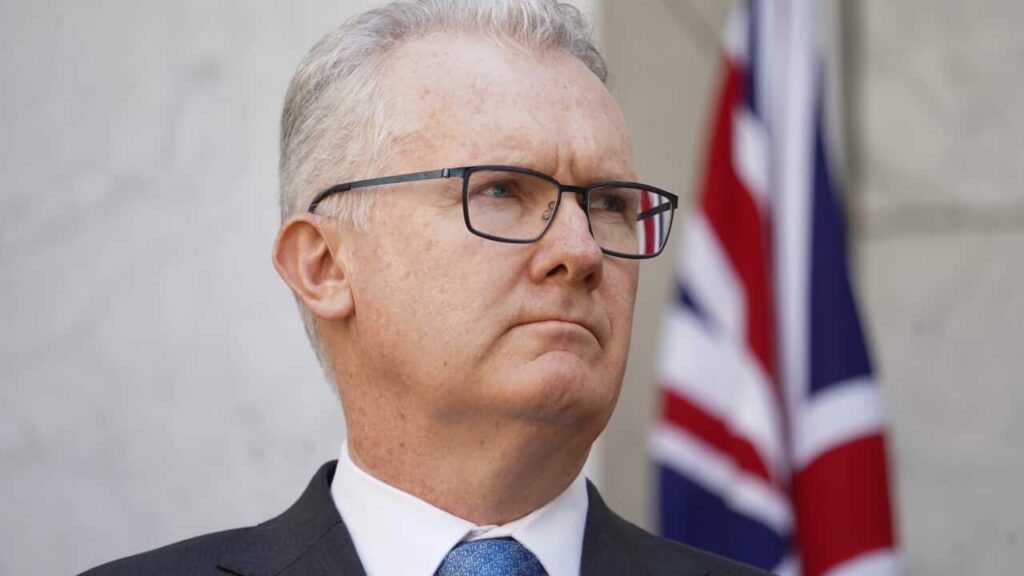
The Albanese government has announced plans to crack down on groups it accuses of promoting hate and disunity in Australia. Home Affairs Minister Tony Burke identified neo-Nazi organisations and radical cleric groups, such as Hizb ut-Tahrir, as the primary targets of new hate speech legislation.
The announcement follows growing concerns over extremist influences in the country, highlighted by recent events such as the Bondi Beach terror attack. The proposed legal framework aims to proscribe and prohibit the activities of what the government terms as “hate preachers,” who have so far managed to operate within the bounds of Australian law.
Details of the Proposed Legislation
In a statement on Tuesday, Minister Burke emphasized the need to lower the legal threshold for what constitutes hate speech. “We want to make sure that those hate preachers who have managed to keep themselves just on the legal side of Australian law, that the threshold is lowered so that those statements that every reasonable Australian has viewed as horrific and as having no place in Australia will become criminal,” he said.
The government intends for the new legislation to stop these groups from operating by allowing authorities to list them as prohibited organizations. “A number of the consequences that currently apply to organisations that are listed as terror organisations would effectively be a very close to exact match here,” Burke added. “We want those organisations to not operate. They hate Australia.”
Understanding the Targeted Groups
Hizb ut-Tahrir, one of the groups named by the government, is a global Islamic political party established in 1953. According to its Australian webpage, the party’s mission is to “liberate the Muslim world, intellectually first, then politically, economically and in all other respects, from the subjugation of kufr (unbelief) and its people.”
While Hizb ut-Tahrir claims not to work in the West to change the system of government, it promotes Islam as “the only way of life mandated by the Creator, Allah.” Neo-Nazi groups, on the other hand, have been associated with white supremacist ideologies and have been a growing concern for Australian authorities.
Criticism and Support
The government’s move comes amid criticism that it has not done enough to address a surge in antisemitism since October 2023. Critics argue that the rise in hate speech and extremist activities requires more decisive action. Meanwhile, supporters of the initiative believe it is a necessary step to curb the influence of groups that promote division and hatred.
According to officials, the proposed regime would allow authorities to list organizations promoting hate even if they do not meet the legal definition of terrorism. This broader approach is designed to preemptively address threats before they escalate into acts of violence.
Implications and Next Steps
The introduction of this legislation could have significant implications for freedom of speech and assembly in Australia. By expanding the criteria for what constitutes hate speech, the government aims to strike a balance between protecting public safety and preserving civil liberties.
As the government prepares to introduce the legislation, it is likely to face legal challenges and public debate over the potential impact on democratic freedoms. The success of the initiative will depend on its ability to effectively target and dismantle extremist networks without infringing on individual rights.
Moving forward, the Albanese government will need to engage with community leaders, legal experts, and civil rights organizations to ensure the legislation is both effective and fair. The outcome of this initiative could set a precedent for how Australia addresses hate speech and extremist activities in the future.