

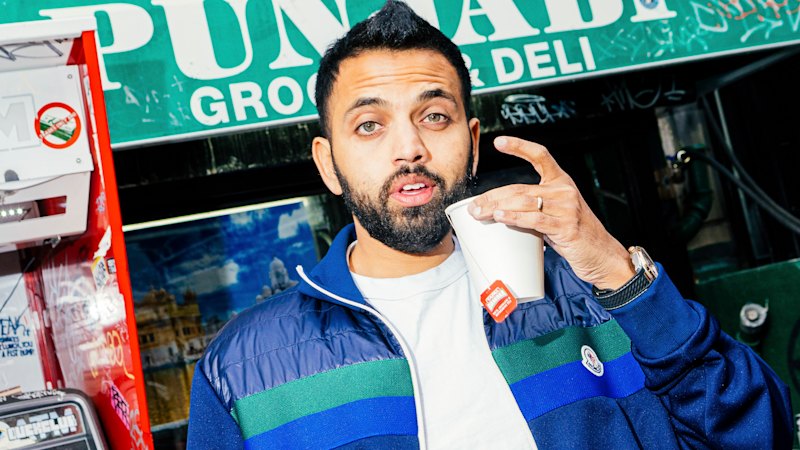
US comedian Akaash Singh has developed a theory on why it seems like every other man has his own podcast: “There’s no other space for us to talk in any kind of therapeutic way. It’s not socially acceptable. That’s why these male podcasts all popped up.” This notion was discussed on Singh’s podcast, Flagrant, co-hosted by Andrew Schulz. The show, which has garnered millions of downloads and YouTube views, is so popular that Singh is now preparing for his first tour of Australia with his live show, Generational Triumph.
On the surface, Flagrant follows the typical bromance podcast model: casual chats, jokes, and candid discussions. “Our friends will get together on Flagrant, and we’ll make some jokes that are inappropriate, and we’ll make fun of each other. We’ll make fun of everyone,” Singh explains. However, Singh distinguishes himself by openly discussing the benefits of therapy, a topic not commonly associated with the so-called manosphere.
The Intersection of Comedy and Therapy
Singh is an advocate for therapy, having been in therapy for a decade. “By the time Flagrant started, I was a pretty big proponent of therapy. It was really life-changing for me… I’ve been in therapy for 10 years now. Breath work, all these other things. Read the books, write affirmations,” he shares. This openness about mental health sets him apart in a landscape often criticized for promoting toxic masculinity.
Despite his positive stance on therapy, Singh was surprised to find his podcast associated with the manosphere, a controversial online space often linked to misogyny. Singh acknowledges this association but distances himself from its more negative aspects. “I hope men just grow up and evolve,” he states.
Controversy and Cancel Culture
Singh’s co-host, Andrew Schulz, has been a lightning rod for controversy, frequently criticized for his use of offensive language. Flagrant has hosted a variety of guests, from therapists to polarizing figures like Donald Trump and Jordan Peterson. Singh himself navigates the line of political correctness in his comedy, as seen in his 2024 stand-up special Gaslit, where he jokes about gender identities.
Singh believes that the fear of cancel culture is overblown. “I think the cancel culture thing existed more before we all had our careers via the internet. When there was only movies and TV shows, you had to worry about cancellation,” he says. However, he acknowledges that online platforms can still be harsh, as seen with his wife Jasleen’s podcast experience.
The Evolving Landscape of Masculinity
Singh comments on the changing perceptions of masculinity, noting that older comedians may struggle to adapt. “These days, tech bros cry in saunas because emotional wellness increases productivity,” he quips, highlighting the evolving expectations of masculinity.
He also critiques the notion of comedians as saviors, a role amplified during the COVID-19 lockdowns. “A lot of comics rode that false hero narrative. When we were cooped up during COVID, going to a live show and laughing with people felt like the greatest thing in the world,” Singh reflects.
From Texas to the World Stage
Born to Indian-American parents in Texas, Singh was expected to pursue a traditional career path. “You were supposed to be a doctor or an engineer,” he recalls. However, he chose comedy, a decision that initially puzzled his family. Now, with a successful career, Singh is set to tour Australia, performing at venues like Melbourne Recital Centre and Sydney’s Enmore Theatre.
As Singh prepares for his Australian tour, he reflects on his journey and the evolving comedy landscape. “I don’t know if they have a choice. I’m 41 – am I going to become a doctor now?” he jokes, underscoring his commitment to comedy and the unique voice he brings to the conversation about masculinity and mental health.