




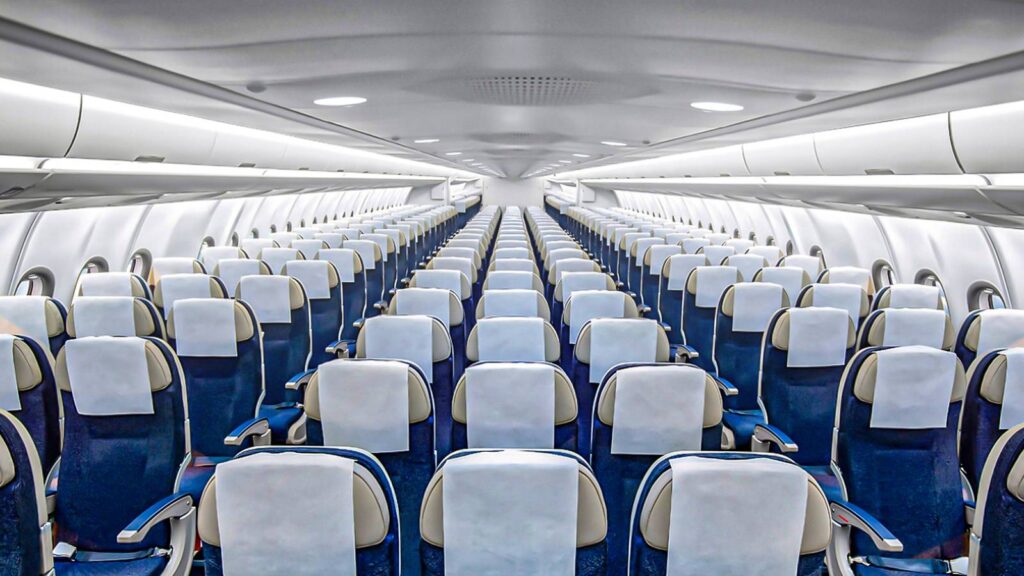
Flying in basic economy is often synonymous with discomfort, as passengers contend with cramped seating and minimal space between rows. However, for those planning long-haul flights, choosing an airline with extra legroom can significantly enhance the travel experience. In 2026, Japan Airlines (JAL) and All Nippon Airways (ANA) lead the way with industry-leading legroom, offering a pitch of 34 inches (86.4 cm). For American travelers, JetBlue stands out with a pitch of 32.3 inches (82.0 cm), providing more space to stretch out.
Prioritizing Flyers in Japan
Japan Airlines has consistently been recognized for its ‘Best Economy Class Seat,’ a testament to its commitment to passenger comfort. By rejecting the industry trend of densification, JAL’s “Sky Wider” strategy features a 2-4-2 layout on Boeing 787 Dreamliners, diverging from the typical 3-3-3 configuration. This design choice preserves seat width and pitch, enhancing passenger comfort.
JAL’s specialized slim-seatback design further enhances knee room without compromising cushion comfort. ANA, in a bid to match its domestic rival, maintains a 34-inch pitch across much of its long-haul fleet, including the Boeing 777-300ER and 787-9. In the summer of 2026, ANA will introduce newly designed Recaro seats on its Boeing 787-9 aircraft, offering an additional inch (2.5 cm) of knee space and increased recline, making it one of the most comfortable economy class options globally.
The Economy Class Leaderboard
For many airlines, economy class presents a paradox: passengers seek comfort but often prioritize low fares. The industry standard pitch has settled between 31-32 inches, driven by the need to maximize passenger numbers per flight. By reducing seat pitch by even an inch, airlines can add extra rows, significantly boosting revenue. This pressure has led full-service airlines to reduce seat pitches to compete with ultra-low-cost carriers like Spirit or Ryanair, which offer as little as 28 inches of pitch.
According to data from Business Traveller and Conde Nast Traveler, Emirates offers 34 inches of legroom on its Airbus A380 “superjumbos,” matching the Japanese carriers in comfort. Modern ‘slim-back’ seat designs, using thinner padding and molded composites, claim to offer comparable knee room at a 31-inch pitch to older 34-inch seats, despite the reduced actual distance.
A Tough Market for Economy Airfares
Despite frequent complaints about legroom, passengers are often unwilling to pay higher fares for increased space. American Airlines’ ‘More Room Throughout Coach’ initiative in the early 2000s demonstrated this market reality. The initiative, which increased seat pitch to 34-35 inches across its fleet, was ultimately deemed a financial failure due to passengers’ reluctance to pay even a small premium for the extra comfort.
The failure of this initiative is often cited by airline executives as a key reason why economy cabins remain cramped. Regulatory bodies like the FAA do not mandate minimum seat sizes or pitches, allowing airlines to prioritize profit margins on business and first-class tickets while configuring economy class to cover basic operating costs.
The Leading American Carriers
JetBlue has carved out a niche in the US market by offering more legroom than its competitors, positioning itself as a comfort-focused airline. With a standard pitch of 32 to 34 inches across its fleet, JetBlue provides a more comfortable experience compared to the 30 to 31 inches typical of rival airlines.
Delta Air Lines and Alaska Airlines follow closely with a 31-inch pitch, while Southwest Airlines offers 31.8 inches. These airlines are known for their reliable service and competitive pricing, though JetBlue’s focus on comfort sets it apart in the crowded American market.
The Middle of the Pack
Qantas, Cathay Pacific, and Singapore Airlines occupy a middle ground in global economy class rankings. While they offer superior experiences compared to standard American and European carriers, they fall slightly short of the exceptional comfort provided by JAL and ANA. These airlines typically configure their widebodies with nine seats per row, compared to the eight seats per row on Japanese carriers.
Despite this, the Gulf and Asian carriers often outshine American and European operators through a combination of high service standards and superior hard products. Passengers enjoy complimentary hot meals, high-quality amenity kits, and attentive service as standard on long-haul flights.
As airlines continue to balance passenger comfort with profitability, the competition for the most spacious economy class remains fierce. While some carriers prioritize maximizing passenger numbers, others, like JAL and ANA, focus on offering a premium passenger experience, setting them apart in the global market.