



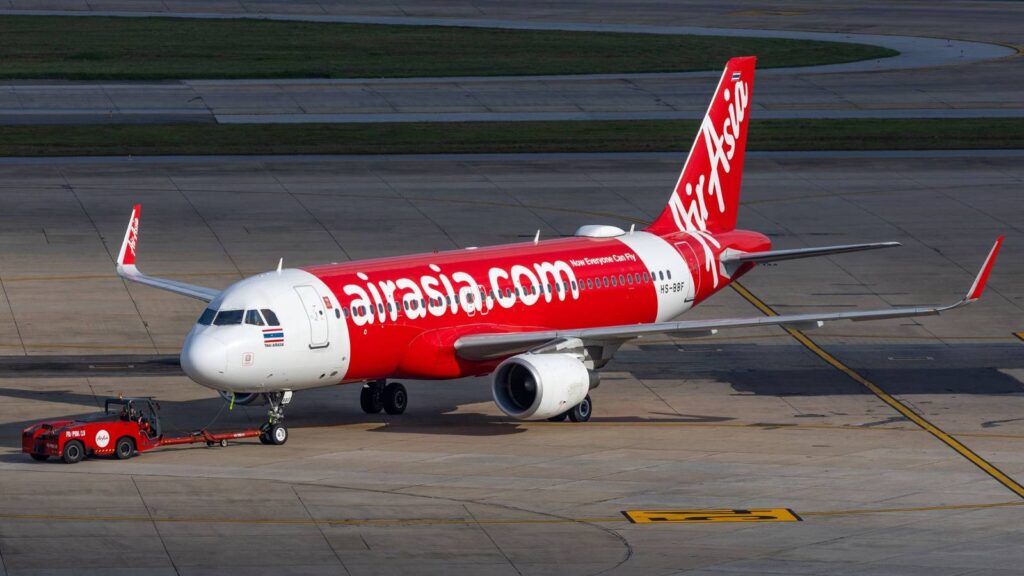
Airbus is on the brink of securing a landmark deal with AirAsia, potentially involving the sale of around 100 A220 aircraft, according to industry insiders. The ongoing discussions could soon lead to a formal announcement, marking AirAsia’s inaugural venture into the Airbus A220 program. This strategic move aligns with the airline’s efforts to enhance capacity and operational efficiency as it rebuilds and expands its network post-pandemic.
Historically, AirAsia has heavily relied on Airbus aircraft, particularly the A320 family, to support its low-cost operations across Asia. The introduction of the A220 would provide a smaller, more flexible option, ideal for regional routes with lower demand or infrastructure limitations. This development follows AirAsia’s commitment to 50 A321XLRs, with options for 20 more, signaling a comprehensive fleet strategy that encompasses both short-haul and extended-range flights. Together, these decisions reflect a more sophisticated approach to fleet planning than the airline has traditionally employed.
A New Aircraft Type for AirAsia’s Fleet?
Sources suggest that the proposed agreement includes approximately 100 firm A220 aircraft, with the potential for up to 50 additional options. Originally developed by Bombardier, the Airbus A220 is optimized for shorter routes and boasts lower fuel consumption, making it particularly attractive for high-frequency regional services. AirAsia is reportedly considering higher-density seating configurations to align the aircraft with its low-cost business model. However, neither Airbus nor AirAsia has publicly confirmed the specifics of the deal.
Introducing the A220 would enable AirAsia to deploy aircraft more strategically across its network, especially on routes where the A320’s capacity surpasses demand. This could enhance load factors while reducing unit costs. The potential order would also strengthen Airbus’ presence among Southeast Asia’s leading low-cost carriers at a time when competition for narrow-body orders is intensifying. An AirAsia spokesperson commented:
“We have no announcements to make at this time.”
AirAsia: The Low-Cost Powerhouse in Asia
Founded in 2001, AirAsia has grown into one of Asia’s largest low-cost airline groups, operating an extensive short- and medium-haul network across Southeast Asia and beyond. Before the pandemic, the AirAsia Group transported over 85 million passengers annually, supported by a fleet numbering in the hundreds and one of the region’s most comprehensive route networks. The airline’s rapid expansion was fueled by a no-frills business model, high aircraft utilization, and stringent cost control, allowing it to stimulate demand in price-sensitive markets.
A key factor in AirAsia’s success has been its longstanding relationship with Airbus and a focus on fleet commonality, primarily centered on the A320 family. This strategy simplified pilot training, maintenance, and scheduling while keeping unit costs low. Over the years, AirAsia has placed some of the largest single-aisle aircraft orders in commercial aviation, reinforcing its status as a cornerstone customer for Airbus and a dominant force in the Asian low-cost segment.
Following a multi-year restructuring triggered by the pandemic, AirAsia is now repositioning itself for its next phase of growth. The group has emphasized disciplined capacity management, network optimization, and gradual international expansion as travel demand continues to normalize. With competition intensifying across Southeast Asia, AirAsia’s ability to adapt its fleet and network strategy will be crucial in maintaining its cost advantage and long-term relevance in the region’s low-cost aviation market.
Future Fleet Plans for the Operator
Beyond the A220 discussions, AirAsia maintains one of the largest outstanding Airbus order books among low-cost carriers, dominated by A320-family aircraft. The airline has historically emphasized fleet commonality, making the potential introduction of the A220 a notable strategic shift.
Looking ahead, the combination of A220s for regional services and A321XLRs for extended routes could enable AirAsia to pursue network expansion without resorting to wide-body aircraft. This approach mirrors a broader industry trend toward versatile narrow-body fleets capable of serving a wide range of markets.
If finalized, the A220 agreement would mark another milestone in AirAsia’s post-restructuring evolution, reinforcing its position as a major Airbus customer while equipping the airline with greater operational flexibility for the next decade.