

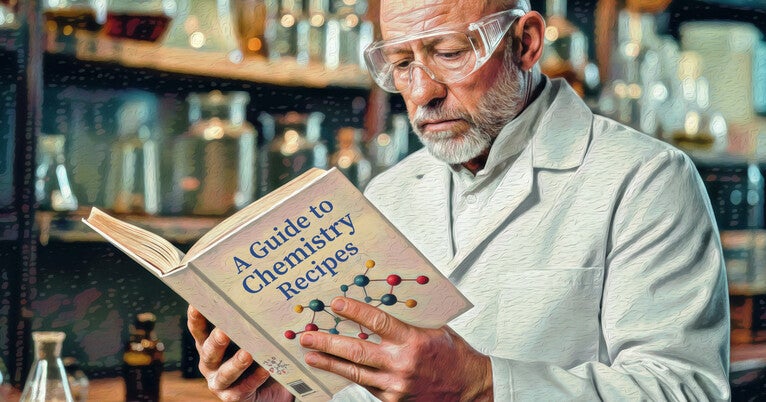
Speeding up drug discovery in the age of artificial intelligence may hinge on a concept that feels comfortingly old-fashioned: consulting a chemistry recipe book. This innovative approach is being spearheaded by chemists at Yale University, in collaboration with researchers from Boehringer Ingelheim Pharmaceuticals in Connecticut. Together, they have developed an AI-powered platform named MOSAIC, designed to generate experimental procedures for chemical synthesis, including for compounds that do not currently exist.
The announcement comes as the field of synthetic chemistry faces the daunting challenge of designing new molecules amid a deluge of global research. Every week, scientists introduce innovative discoveries, protocols, best practices, and shortcuts that could enhance chemical synthesis—if researchers are aware of them. MOSAIC aims to bridge this gap by transforming information overload into actionable laboratory procedures.
Breaking Down the AI Revolution in Chemistry
Victor Batista, the John Gamble Kirkwood Professor of Chemistry at Yale, who led the research, emphasized the potential impact of this new tool. “Chemistry has accumulated millions of reaction protocols, but making practical use of that knowledge remains a bottleneck,” Batista explained. “MOSAIC is designed to transform that information overload into actionable laboratory procedures.”
The platform distinguishes itself from other AI-aided resources by utilizing 2,498 individual AI “experts,” each representing the knowledge of a leading practitioner in a specific chemistry-related topic. This approach is akin to consulting the world’s best chefs for crafting a culinary masterpiece, ensuring precision and expertise at every step.
From Cookbook to Chemical Synthesis
Timothy Newhouse, a professor of chemistry at Yale and co-corresponding author of the study, drew parallels between MOSAIC and everyday cooking. “Chemists follow recipes to synthesize molecules, just like chefs follow recipes from a cookbook,” Newhouse noted. “Being able to quickly look up protocols to make molecules with MOSAIC makes synthetic chemistry easier, just like ChatGPT has made finding a fun new recipe easier.”
The first authors of the study, Haote Li and Sumon Sarkar, highlighted the unique capabilities of MOSAIC. Unlike existing AI systems, which rely on a single, large model, MOSAIC allows users to draw on expertise from thousands of distinct niches of chemical reactions. This approach has proven to outperform commercial large language models on similar tasks, enabling the synthesis of more than 35 previously unreported compounds.
Implications for the Future of Chemistry
The development of MOSAIC represents a significant leap forward in chemical synthesis. The framework not only provides users with experimental procedures but also offers measurable uncertainty estimates, indicating how closely a request fits into a MOSAIC “expert’s” domain of experience. This feature allows chemists to prioritize their experiments effectively.
Furthermore, the system is fully open-source and designed to be compatible with future models. The researchers intend for MOSAIC to help move AI beyond mere prediction and into the realm of supporting real-world experimentation. “Chemistry has evolved from books to databases, and now to AI-guided navigation,” Sarkar said. “At a high level, MOSAIC functions like a smart cookbook for new recipes and Google Maps for navigating chemical synthesis.”
Support and Collaboration
The study was supported in part by Boehringer Ingelheim Pharmaceuticals and the National Science Foundation Engines Development Award. Co-authors from Yale include Wenxin Lu, Patrick Loftus, Tianyin Qiu, Yu Shee, Abbigayle Cuomo, John-Paul Webster, and Robert Crabtree, the CP Whitehead Professor of Chemistry Emeritus. Additional contributors from Boehringer Ingelheim Pharmaceuticals include H. Ray Kelly, Vidhyadhar Manee, Sanil Sreekumar, and Frederic Buono.
The move represents a pivotal moment in the integration of AI into chemical research, offering a glimpse into a future where AI not only predicts outcomes but actively participates in the experimental process. As MOSAIC and similar technologies continue to evolve, they promise to reshape the landscape of chemistry, making the discovery of new compounds faster and more efficient than ever before.