



Only a few weeks ago, Nvidia’s impressive quarterly results were celebrated as a sign that the artificial intelligence bubble was not a threat, reinforcing the company’s dominance in the AI chip market. However, since then, Nvidia’s shares have stagnated, while those of Alphabet, Google’s parent company, have surged nearly 10%. The market capitalization gap between these two tech giants, once about $2 trillion, has now narrowed to approximately $570 billion.
So, what has changed? Despite Nvidia’s strong performance, skepticism remains about the sustainability of its numbers, much of it voiced by investors like Michael Burry of “The Big Short” fame. Questions linger about whether Nvidia’s near-monopoly on AI hardware truly reflects the commercial viability of the technology itself. The history of technology is littered with examples of companies that invested heavily in infrastructure but failed to strike gold.
The Rise of Competition
Investments in AI have created a massive demand for Nvidia’s chips, yet the returns on these investments remain uncertain. The sheer amount of money being funneled into AI does not preclude the possibility of a bubble. Meanwhile, OpenAI, the company that initially sparked the AI boom with ChatGPT, is now facing serious competition for the first time since its launch three years ago.
OpenAI and other start-ups initially funded their ambitions through equity. As their financial commitments grew, they turned to circular financing, including vendor finance. Nvidia, for instance, has invested in its customers, while companies like Oracle and Microsoft have made significant commitments to Nvidia’s chips and OpenAI’s AI products. As the scale of funding escalated, these companies began raising debt, some off the balance sheet, to support their massive spending commitments.
The structure of the AI industry is fragile, with Nvidia and OpenAI at its center.
On Monday, OpenAI’s CEO declared a “code red” in a memo to staff, first reported by The Information, signaling an urgent push to improve ChatGPT’s quality while delaying the development of other revenue-generating products. This urgency arose as OpenAI faces its first real competition since the AI frenzy began.
Google’s Strategic Moves
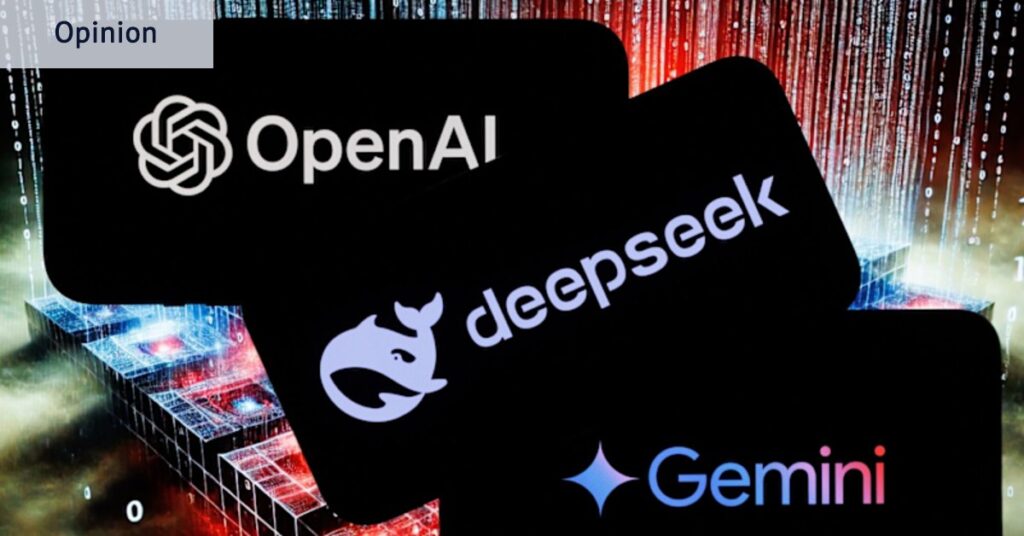
Alphabet’s Google has emerged as a formidable competitor, threatening Nvidia’s dominance and its substantial margins. Late last month, The Information revealed that Google was in talks to sell its internally developed AI chips to Meta in a multibillion-dollar deal, challenging Nvidia’s hold on the AI hardware sector. Google’s recent release of its chatbot, Gemini 3, has also been widely praised for its capabilities, potentially outperforming OpenAI’s ChatGPT 5.
Google’s entry into the AI hardware market poses a dual threat to Nvidia, as Google is one of the four hyperscalers that account for more than 60% of Nvidia’s revenue. The development of Google’s own chips adds another layer to the competitive landscape.
Amazon, the world’s largest cloud services provider, has also entered the fray, recently installing its latest chip, Tranium3, in data centers. While Google’s TPUs and Amazon’s chips may not match the versatility of Nvidia’s GPUs, they excel in inference, where AI models deploy their knowledge. This shift in the market presents opportunities for competitors to offer cheaper, faster, and more energy-efficient alternatives to Nvidia’s offerings.
Nvidia’s Response and Future Prospects
Nvidia, unsettled by Google’s emergence as a threat, took the unusual step of publicly defending its position on social media, asserting that it remains a generation ahead of the industry. However, Google’s financial strength, with no debt and substantial cash reserves, positions it well to become one of the dominant players in AI.
Google’s cash reserves stand at approximately $100 billion, with annual cash flows of around $150 billion.
Google’s vertically integrated suite of products, including platforms, infrastructure, hardware, and software, further bolsters its position. Gemini 2, launched a year ago, now boasts over 650 million monthly active users, closing the gap with ChatGPT’s 800 million weekly active users.
The increasing competition from Google and other hyperscalers to diversify their supplier base and develop their own chips does not spell the end for Nvidia and OpenAI. However, it complicates their path forward, potentially fragmenting customer bases and increasing costs.
For OpenAI, the challenge is particularly acute, as it must invest heavily to maintain its leadership while seeking new revenue sources. Nvidia, while likely to remain the dominant chip provider, may face pressure on its margins and growth rate.
This moment has been dubbed a “DeepSeek moment,” referencing a Chinese open-source chatbot built at a fraction of ChatGPT’s cost, which shocked the sector.
The landscape of AI is evolving rapidly, and the coming years will determine which players emerge as the dominant forces in this transformative technology. As the industry continues to mature, both Nvidia and OpenAI will need to navigate a complex web of competition and investment to secure their positions in the AI revolution.