




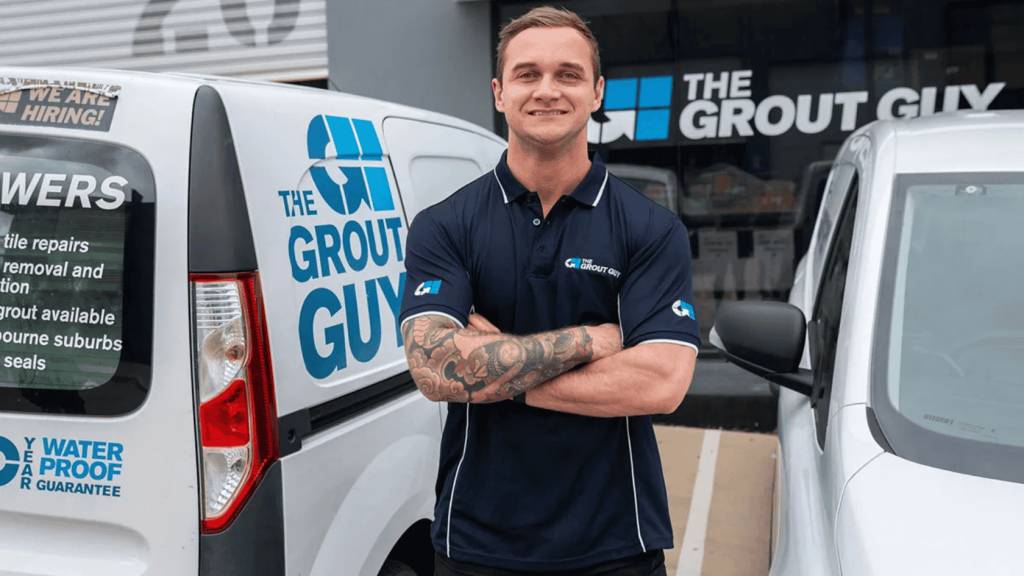
For The Grout Guy, a national leader in tile and grout restoration, the solution to scaling their business wasn’t merely hiring more staff—it was creating a digital workforce. Today, the team behind this success story has unveiled Servly, a cutting-edge technology platform designed to bring enterprise-grade artificial intelligence to small and medium-sized trade businesses across Australia. The announcement was made at the Agentforce World Tour in Sydney, marking the dawn of the “agentic tradie” era.
The journey of Servly is deeply rooted in the real-world challenges faced by The Grout Guy. What began as a local operation has now blossomed into a multi-state enterprise with over 130 technicians. This remarkable growth was underpinned by a robust foundation built on Salesforce Data 360 and Agentforce platforms.
From Local Beginnings to National Leadership
The transformation of The Grout Guy from a “man with a van” to a national leader in tile and grout restoration showcases the power of digital innovation. Brad Young, co-founder of Servly and chief grout officer at The Grout Guy, emphasizes the importance of technology in their success. “We want to help other trade businesses realize they don’t have to be stuck using siloed systems that don’t support the growth they want,” Young explains. “We’re proving that you can have ‘grown-up’ tech without the enterprise-grade complexity.”
The results speak volumes. The Grout Guy has tripled its number of field technicians without expanding its dispatch team, shifting the dispatcher-to-technician ratio from 1:7 to 1:25. Additionally, lead conversion rates have improved by 20%.
Introducing the “Agentic Tradie”
Small-to-medium Australian trade businesses, typically employing between two and 50 workers, often struggle with the administrative infrastructure needed to scale. Servly aims to address this by integrating siloed data into a unified Customer 360 view, Salesforce’s comprehensive customer data suite.
This unified data acts as the “brain” for autonomous AI agents operating 24/7. Instead of humans manually triaging emails, AI agents qualify inbound requests and images, ensuring technicians are dispatched only to high-probability jobs. Once a job is confirmed, the platform’s scheduling agent—one of the first of its kind in the Southern Hemisphere—automatically fills calendar gaps and optimizes travel routes in real-time.
The efficiency gains are significant. AI-powered PDF parsing has reduced manual work-order entry from two business days to just 15 seconds. By the time a technician arrives on-site, they have an AI-generated summary of the customer’s full history, allowing them to focus on their craft rather than paperwork.
Closing the “Last Mile” of AI
For many SMEs, the cost and complexity of enterprise software have historically been barriers to entry. Servly’s mission is to eliminate these hurdles, providing a blueprint for small businesses to operate with the sophistication of a global enterprise.
Anthony Messina, chief technology officer for The Grout Guy and co-founder of Servly, highlights the importance of this shift. “The reality is that many trade businesses are scared off by the cost and complexity of these tools, so they stay stuck in spreadsheets,” Messina notes. “We’ve spent the time to make this work for our own business, and now we’ve built it so others can just switch it on. It’s about being able to run a massive operation with a tiny office team because the agents are doing the heavy lifting in the background.”
“Every lead matters, but when you’re busy on site, you can’t always answer the phone or qualify a photo of a leaking shower,” Young explains. “Our AI agents are first to the party. They handle the triage, the scheduling, and the follow-ups so the humans can focus on the craft.”
While the journey began in Australia, Servly has global ambitions to empower the trade industry worldwide. For the thousands of Australian businesses looking to move beyond the manual bottleneck, the digital workforce has officially arrived.