



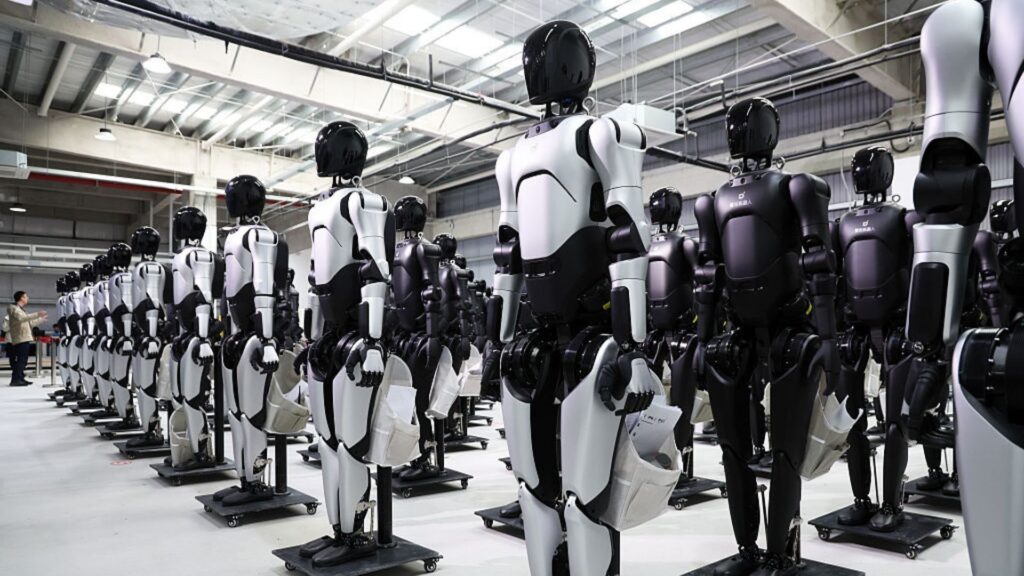
Chinese humanoid robots are making a splash in the gig economy, offering high-tech solutions for weddings, business meetings, and other events. AgiBot, a leading robotics company, launched Qingtian Rent on Tuesday, a pioneering platform that rents humanoid robots for 16 different types of events and duties. However, these advanced machines come with a hefty price tag.
The announcement comes as the Chinese rental market grapples with seasonal volatilities, unstable pricing, and fragmented interface standards across various robot brands. Analysts suggest that Qingtian Rent’s success will hinge on its ability to address these core market challenges effectively.
Pricing and Strategy
According to a quotation sheet seen by Yicai, the Unitree U2 dancing robot rents for approximately $690 per unit per day, while the more affordable Unitree Go2 Air robot dog is available for about $138 per unit per day. Meanwhile, the AgiBot Yuanzheng A2, known for its advanced interactive capabilities, costs around $1,380 per unit per day. All rental fees include technical support and transportation.
Currently operational in 50 cities, Qingtian Rent has already onboarded 600 service providers and over 1,000 robots, as revealed by CEO Li Yiyan. By 2026, AgiBot aims to expand its service network to over 200 cities, reflecting its ambitious growth strategy.
“Our ‘1234 strategy’ aims to onboard more than 10 original equipment manufacturers, connect with over 200 top-tier rental service providers, and attract more than 3,000 content creators to serve around 400,000 customers,” said Qingtian Rent chairman Jiang Qingsong.
This year, the company will focus on entertainment- and performance-related rentals, with plans to extend services to the manufacturing and industrial sectors in the near future.
Analyzing the Boom
The robot rental trend gained momentum earlier this year when Unitree Robotics’ G1 and H1 robots captivated audiences at the Chinese New Year Gala, briefly driving up rental prices for humanoid robots. However, as more robots enter the market and competition intensifies, companies like Unitree and AgiBot have ramped up mass production, causing the initial hype to subside.
Despite the ebb in excitement, the market shows no signs of slowing down. The Chinese robot rental market was estimated to be over $140 million in 2025. With the introduction of Qingtian Rent, it is expected to exceed $1.4 billion next year. China is already stress-testing the “Robots as a Service” (RaaS) market, leading to widespread adoption.
The scale of manufacturing is evident, with AgiBot reaching its 5,000-unit mark earlier this month, promising greater availability of robots for rental companies and indicating a more scalable infrastructure.
Implications for the United States
Although similar services exist in the United States, China’s move represents a broader, more coordinated effort to mainstream robot rentals. The country aims to accelerate the real-world adoption of humanoids at scale, contrasting with the US’ smaller, fragmented alternatives.
Experts believe that China’s aggressive push into the robot rental market could set a precedent for other countries. As China continues to innovate and expand its offerings, the global landscape for humanoid robots in events and other industries may undergo significant transformations.
As Qingtian Rent continues to expand, the world will be watching closely to see how these developments influence international markets and the future of humanoid robots in everyday life.