
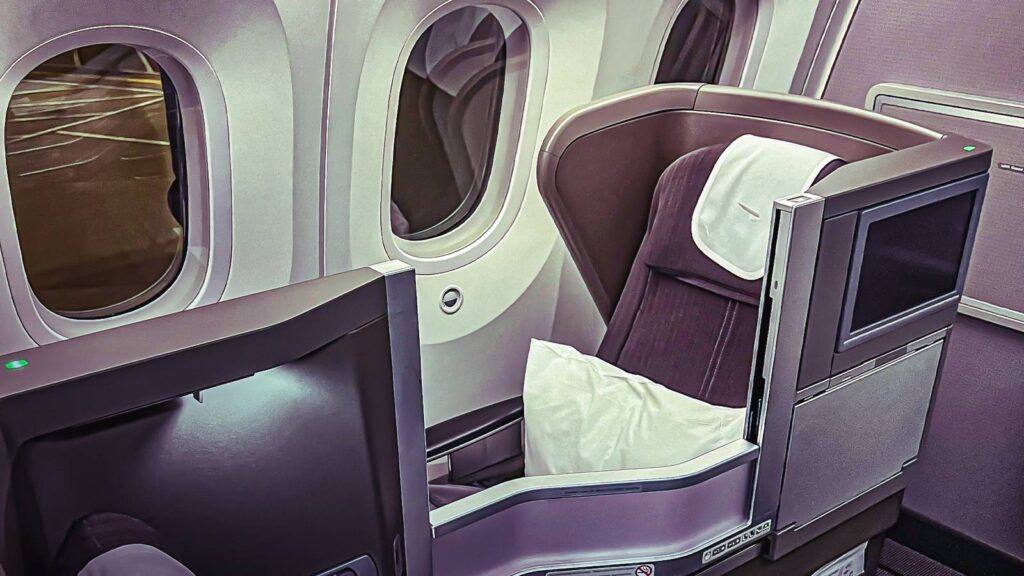
Business class travel, often synonymous with luxury and high costs, doesn’t always require a first-class price tag. While premium cabins on marquee long-haul routes can soar into the $5,000 to $10,000 range, certain airlines offer lie-flat comfort, gourmet meals, and a serene airport-to-arrival experience for significantly less. This affordability arises as airlines discount products to fill premium cabins during periods of slower demand. Hub-and-spoke carriers, in particular, price aggressively to attract connecting traffic through their networks.
Some airlines offer “lite” business class fares, providing onboard comfort while trimming extras like lounge access or advanced seat selection. Flexibility in travel dates and accepting one-stop itineraries can help travelers find these deals. This article highlights five business class products frequently found at the lower end of the price spectrum, offering passengers better sleep and more space to stretch out comfortably. Though prices fluctuate daily, these options consistently represent some of the best-value seats available today.
TAP Air Portugal
Average expected cost: $2,400-$3,000 roundtrip
TAP Air Portugal stands out as a reliable choice for affordable long-haul business class services, especially between the United States East Coast and Lisbon or Porto. Competing with larger European network carriers, TAP frequently undercuts rivals while delivering essential overnight service comforts. Onboard, passengers can expect lie-flat seats, though not always with the latest design, full-meal services with Portuguese flair, and standard priority perks to ease airport navigation.
The airline’s Lisbon hub facilitates efficient one-stop journeys to Spain, Italy, France, and beyond, allowing passengers to extend trips within Europe for a modest premium over the transatlantic fare. To maximize value, travelers should consider midweek services, connections, and mixed-fare options where the long-haul leg is in business class. While some aircraft feature denser cabins and limited storage, TAP offers a repeatable bargain for those seeking comfort akin to premium economy prices.
Turkish Airlines
Average expected cost: $2,500-$3,000 roundtrip
Turkish Airlines earns its place on this list by offering competitive pricing below that of other full-service global carriers, while still providing a strong premium experience. Istanbul serves as a major hub, positioning Turkish Airlines as a global superconnector. Constant fare competition across numerous city pairs necessitates competitive pricing.
On the right dates, one-stop itineraries can be significantly cheaper than nonstop options on American or European carriers. The core product remains robust, with many long-haul aircraft featuring lie-flat seating, large entertainment screens, and a dining program reminiscent of classic flag-carrier service. The airline’s cabin layout and bedding support restful sleep and functional arrival. Ground experience further enhances Turkish Airlines’ appeal, with priority check-in, fast-track lanes, and lounge access.
To find the best fares, travelers should seek flights connecting through Istanbul, tolerate longer layovers, and be aware of potential trade-offs such as older seats on some routes. Despite these challenges, Turkish Airlines offers excellent value for money in a business-class cabin.
Condor
Average expected cost: $2,200-$3,400 roundtrip
Condor is a standout in bargain business class services, targeting price-sensitive leisure travelers on transatlantic routes. Known for its premium cabin, Condor’s newer long-haul product sharpens its value proposition. On select aircraft, passengers enjoy modern lie-flat seats, a clean cabin aesthetic, and amenities comparable to those of major network airlines at higher fares.
Travelers seeking deals should look for flights from major US gateways to Germany during the shoulder season, where Condor often ranks among the cheapest business-class options. Simplicity allows Condor to price aggressively, particularly on leisure-heavy routes. While frequencies may be limited and operations occasionally irregular, Condor offers a true flat bed at one of the lowest cash prices available.
Qatar Airways (Business Lite Products)
Average expected cost: $2,300-$2,700 roundtrip
Qatar Airways might seem an unusual choice for affordable business-class cabins, yet its Business Class Lite fares offer exceptional value. These fares trim add-ons like lounge access and advance seat selection while preserving key long-haul service elements, such as lie-flat seats and attentive service.
Passengers can access top-tier cabins at reduced rates, particularly on competitive routes where Qatar seeks market share. This option suits those prioritizing sleep and onboard comfort over pre-flight perks, especially if they already have lounge access through other means. Discounted one-stop itineraries through Doha are available to South Asia, Southeast Asia, and East Africa, competing with nonstop alternatives.
Travelers should review fare rules, as seat selection and changes may incur extra costs, and the cheapest options can disappear quickly.
JetBlue Airways
Average expected cost: $1,500-$2,300 roundtrip
JetBlue’s Mint offers a rare business-class style seat within reach for travelers not crossing oceans. On key transcontinental routes like New York to Los Angeles and Boston to San Francisco, Mint often ranks among the cheapest lie-flat options, sometimes only slightly more expensive than economy.
The cabin prioritizes comfort, featuring lie-flat seats, additional privacy, solid dining options, and a modern vibe. JetBlue Mint is particularly attractive when legacy carriers price premium transcontinental products aggressively or when last-minute travel inflates coach fares.
Consistency is another advantage, with passengers less likely to encounter dated seats. To find deals, travelers should target midweek flights, watch for nonrefundable sales, and consider alternative airports or connections.
In conclusion, while business class travel is often associated with high costs, these airlines demonstrate that luxury and affordability can coexist. By being flexible and informed, travelers can enjoy premium experiences without the premium price tag.