


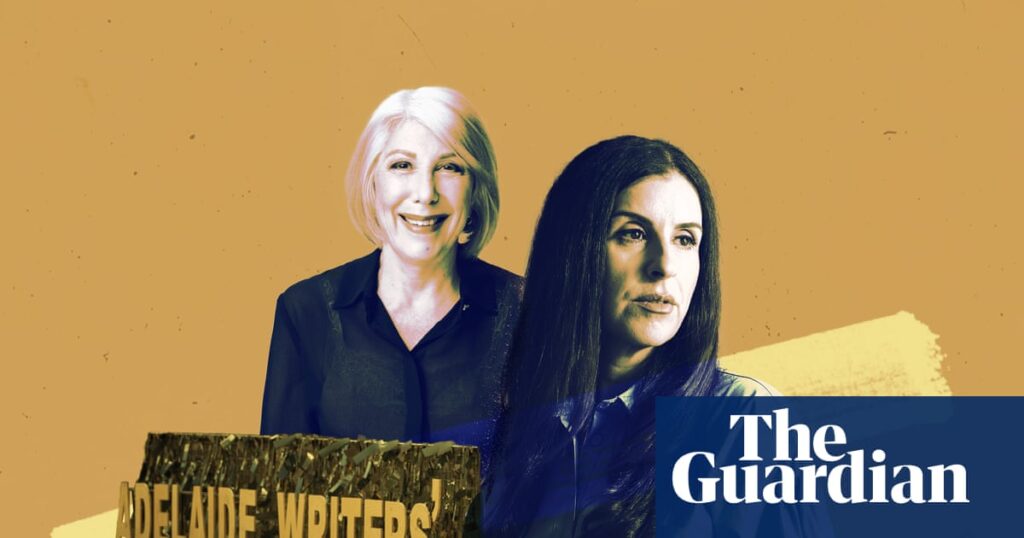
It began as a quiet programming dispute in Adelaide, known as the “city of churches.” By Wednesday morning, a six-day war of words had culminated in the collapse of the 2026 Adelaide Writers’ Week, leaving a trail of resignations and legal threats. What started with the discreet exit of a business titan and arts board veteran spiraled into chaos, with allegations of racism and hypocrisy flying from all sides.
The cancellation of the Adelaide Writers’ Week (AWW) may only be the beginning. The aftermath has set the stage for a Supreme Court showdown between South Australia’s premier, Peter Malinauskas, and Palestinian Australian academic Randa Abdel-Fattah, whose invitation to the 2026 event was revoked less than two weeks ago. At the center of the legal battle is the premier’s controversial “Bondi analogy,” which even his allies admit may have tarnished his reputation.
The Seeds of Discontent
The seeds of this spectacular collapse were sown in October, with the resignation of Tony Berg, a former managing director of Macquarie Bank and Boral, and a key festival benefactor. Berg, a self-described Zionist, accused the festival’s leadership of harboring a “blatantly one-sided” mission against Israel and Zionism. He alleged that the festival director, Louise Adler, failed to provide balance since her appointment in 2022, accusing her of “spewing anti-Zionism” through her choice of speakers.
Abdel-Fattah gained national attention with an Instagram post declaring, “Zionists have no claim or right to cultural safety” shortly after conflict erupted in Gaza. For Berg, her inclusion in the 2026 lineup was the final “travesty,” crossing the line from political criticism to antisemitism. Berg reiterated his stance, accusing Adler and Abdel-Fattah of a “selective” and “utterly hypocritical” approach to free speech.
Global Boycott and Institutional Collapse
The controversy intensified with the cancellation of a Jewish New York Times columnist, Thomas Friedman, from the 2024 program due to scheduling issues. Berg claimed Adler and Abdel-Fattah led the charge to de-platform Friedman, who had written a controversial column comparing the Middle East conflict to the animal kingdom. Adler denied issuing an ultimatum, while Abdel-Fattah defended her stance as part of a broader academic critique.
Meanwhile, Premier Malinauskas denied direct interference, citing his defense of the festival in 2023 as evidence of his commitment to artistic autonomy. However, he admitted to lobbying for Abdel-Fattah’s removal, leading to a letter to the board on January 2 advocating his position.
The fallout was swift. Influential think tank the Australia Institute withdrew its partnership, and a global literary boycott ensued. By the time former New Zealand Prime Minister Jacinda Ardern confirmed her withdrawal, over 70 literary figures had announced their boycott, including Zadie Smith, Percival Everett, and Yanis Varoufakis.
Legal Battles and Political Ramifications
The premier’s “Bondi analogy” further inflamed tensions. Malinauskas compared the situation to a hypothetical scenario where a far-right Zionist committed an atrocity in Sydney, questioning whether he would support such a figure speaking at the festival. This analogy led to a legal notice from Abdel-Fattah’s team, accusing the premier of defamation.
The new board, led by Judy Potter, issued an apology to Abdel-Fattah and promised her a spot at next year’s event. However, the damage was done. The 2026 writers’ week was canceled, and the festival’s reputation was in tatters.
Looking Forward
This controversy highlights the delicate balance between free speech and cultural sensitivity in public events. The Adelaide Writers’ Festival, once a platform for intellectual discourse, now faces an uncertain future. As the legal battles unfold, the city of Adelaide must grapple with its identity as a beacon of free expression in a rapidly changing world.
The collapse of the festival underscores the challenges of maintaining social cohesion in a diverse society. As the dust settles, the implications for Adelaide’s cultural landscape remain profound, with potential ramifications for similar events nationwide.