


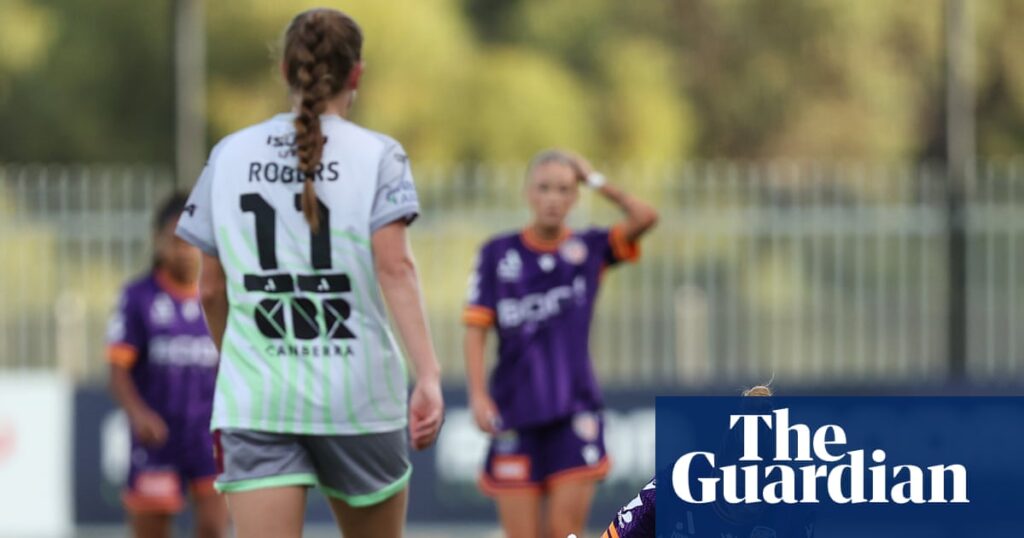
Cannon Clough didn’t immediately comprehend the severity of her injury when she hit the ground. The Central Coast Mariners defender had jumped to defend a high ball, and upon landing, felt a jarring sensation through her leg. Her foot twisted one way while her body went another, followed by a distinct pop.
“I was like ‘oh, that was weird,’” Clough recounted. “I hadn’t been in the game for long at all, but the staff were like ‘you look really white’ and then I went into shock.” Initially, it seemed like a minor issue, but a subsequent scan revealed an anterior cruciate ligament (ACL) and meniscus tear, abruptly ending her season. “It was a shock for something so silly and simple to be the end of the season for me,” Clough said.
Clough is among seven A-League Women players who have suffered ACL tears during the 2025-26 season. In just the past two weeks, four players, including Clough, Sabitra Bhandari, Grace Kuilamu, and Isabella Coco-Di-Sipio, have sustained similar injuries. The absence of publicly available data on ACL injuries in the A-Leagues highlights a significant oversight in the sport.
Global Trends and Research Gaps
The lack of data on ACL injuries reflects a broader global trend. Despite women athletes being two to six times more likely than men to suffer ACL tears, only 6% of sports science research is dedicated to women’s bodies. This disparity underscores the need for targeted research and investment in women’s sports.
Organizations like Kynisca and Fifpro are working to bridge this gap. Fifpro launched Project ACL, a multi-year initiative focusing on ACL injuries in England’s Women’s Super League, emphasizing environmental factors such as access to facilities, staff, equipment, recovery, game schedules, and travel.
“The day-to-day conditions that players experience is sometimes ignored because attention on this topic often pivots to: ‘this is an ACL injury, therefore it’s medical’,” said Dr. Alex Culvin, director of women’s football at Fifpro. “What is overlooked, though, is the lack of holistic research done on conditions; the real quality control issue that we have in women’s football.”
Impact of Part-Time Structure
For Clough and her Mariners teammate, Taren King, who recently returned from her own ACL injury, the league’s part-time structure exacerbates the risk of injuries. The condensed schedule of ALW matches during the holidays, combined with high temperatures, increased travel, and insufficient off-field support, contribute to the recent surge in injuries.
“The darkest days are when you feel you’re on your own,” King expressed. “You don’t really have anyone to lean on, getting out of bed to go and do your rehab is tough because there’s no one there making sure you do it.”
The current 32-week contracts leave players without adequate rest and recovery time, as they juggle training and other work commitments. For an injury that can take over a year to heal, this is a significant concern.
Call for Full-Time Investment
In response to these challenges, Clough, King, and their fellow players are advocating for the league to transition to a full-time model. They argue that increased investment would lead to better research, prevention of major injuries, and the sustainability of careers for Australia’s top women footballers.
“If we’re full-time, hopefully it means the staff will be full-time too, which means they’re not spread too thin and you can actually get the care you need,” Clough explained. “You don’t have to self-motivate or find ways to set it up yourself; it’s a structure that’s already set up for you, so you just show up to work and do your thing.”
As the A-League Women grapples with these pressing issues, the call for full-time investment grows louder. The future of the league, its players, and their well-being hinges on the decisions made in the coming months. Without significant changes, the risk of injuries and the subsequent impact on players’ careers will continue to loom large over the sport.