



Researchers at the University of Michigan have uncovered a fascinating mechanism by which cells protect their host organisms, a discovery that could lead to advancements in both human health and agricultural resilience. The study, published in the journal Nature, reveals that cells utilize a previously unknown molecular structure to halt the spread of pathogens without damaging healthy neighboring cells.
This breakthrough, led by professors Libo Shan and Ping He from the U-M Department of Molecular, Cellular, and Developmental Biology, highlights the formation of “beautiful cell death rings” that play a crucial role in the immune response. The research was supported by federal funding from the National Institutes of Health.
Understanding the Mechanism of Cell Death
One of the ways cells can protect their host organism from disease is through programmed cell death, a process where compromised cells sacrifice themselves to prevent pathogen spread. This operation is effective but requires precision to avoid harming healthy cells. “Cell death may sound like a bad thing, but in plants and mammals, it’s a marker of resistance,” explained Ping He. “We need to have this defense, but it is also important to have this defense in a limited area.”
Over the years, researchers have identified genes and proteins in plants that trigger this self-destruct sequence, with shared elements found in mammalian cells. However, the complete molecular choreography of this process remains a subject of intense study.
The Formation of Cell Death Rings
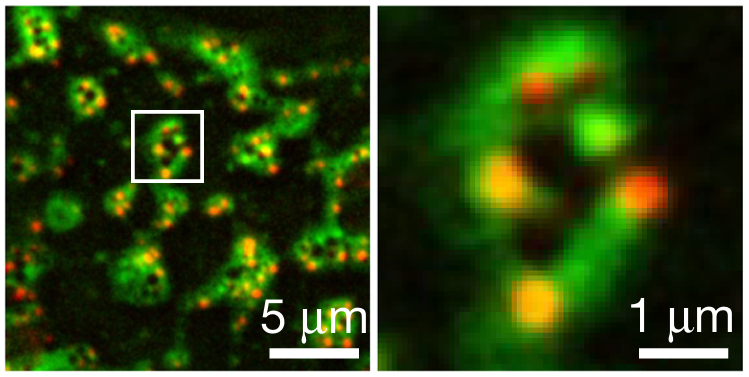
Recent studies in immunology have shown that proteins involved in cell death form channels to shuttle calcium ions. Yet, these channels alone weren’t enough to initiate cell death. Shan, He, and their team have now revealed that these channels organize into a ring structure on the cell membrane, a discovery made using Arabidopsis and Nicotiana bethamaian plant models and advanced microscopy techniques.
“For the first time, we’ve shown how the channels organize into a beautiful ring structure on the cell membrane,” said Libo Shan.
The ring, resembling a wreath or necklace, consists of proteins binding to the cell membrane and six channels running through it. This structure potentially allows for communication with nearby cells, sending inflammation signals that can trigger targeted cell death.
Implications for Medicine and Agriculture
The discovery of these cell death rings opens up numerous possibilities for future research and applications. The team is currently collaborating with the U-M Life Science Institute and its Cryo-Electron Microscopy Lab to further examine the rings’ structure and function.
“The next thing that we’re doing is looking at what kinds of things could be leaking out through this structure, and also what supports the ring structure formation,” Shan noted. “We haven’t answered all the questions, but we have advanced the field.”
This research could pave the way for developing more resilient plants and new treatments for conditions where cell death is dysregulated in humans. The potential to understand and manipulate these processes could have significant implications for both agriculture and medicine.
Future Directions and Research Potential
The findings from the University of Michigan team are expected to inspire a wave of new research. The ability to control cell death precisely could lead to breakthroughs in treating diseases where immune responses are either too weak or excessively strong.
“We know there are a lot of unknowns with this ring hanging on the ceiling of cells, but we know it is absolutely required to have the perfect amount of cell death, to have the perfect immune response,” Shan said. “We truly believe this work will lay the foundation to launch a wave of exciting research for continued discovery.”
As researchers continue to explore the intricacies of cell death rings, the potential for practical applications grows. Whether in enhancing plant resilience or improving human health, this discovery marks a significant step forward in understanding the complex dance of cellular defense mechanisms.