
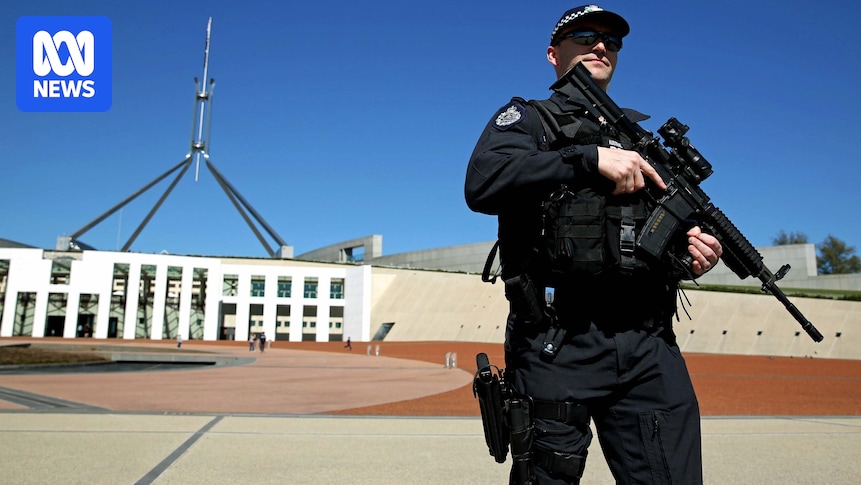
Most Australians expect the nation to face a series of national security crises over the next five years, according to recent research. A significant portion of the population also fears that the country is underprepared to tackle these challenges.
The research, conducted by the Australian National University’s National Security College, highlights a growing anxiety among Australians regarding national security threats. The survey reveals that severe economic shocks, violent unrest, foreign interference, and critical supply disruptions are considered likely by more than three-quarters of respondents.
Public Perception of National Security Threats
The survey, which gathered insights from over 20,000 Australians both before and after the Bondi terror attack, but prior to the current Iran conflict, paints a picture of a nation on edge. Nearly 70% of those surveyed anticipate Australia becoming involved in a military conflict within the next five years, while 45% foresee a foreign military attack on Australian soil.
Additionally, two-thirds of Australians believe that the country is likely to experience unprecedented natural disasters or another global pandemic. Despite these looming threats, the survey did not specify which countries might pose a danger, nor did it ask respondents to identify potential adversaries.
Australia’s Preparedness for Security Threats
Rory Medcalfe, head of the National Security College, expressed concern over the findings, stating that they reflect a realistic appraisal by Australians of the complex world they inhabit. “There seems to be a realistic appraisal by the population that we’re living in this much more complex world where a whole lot of risks are converging,” he said.
“Just look at the impact economically of the conflict in Iran, or look at the impact on social cohesion in Australia from conflicts overseas. The public seems to get that.”
Medcalfe emphasized the burden on government and policymakers to evaluate the nation’s preparedness and resilience in handling multiple simultaneous shocks. The survey presented 15 different threats, ranging from foreign military attacks to economic crises and pandemics, yet fewer than one in five respondents felt Australia was “very” or “fully” prepared.
“I think the public is more open to a national conversation about preparedness,” Medcalfe noted, suggesting that such discussions should aim to build confidence and resilience rather than incite panic.
Demand for Clearer Communication on Threats
Another significant finding from the survey is the public’s demand for more transparency from political leaders regarding national security threats. The majority of Australians expressed a desire for more information from leaders, although there are concerns that too much information could cause panic or foster distrust in institutions.
Security agencies like the Australian Federal Police (AFP) and the Australian Security and Intelligence Organisation (ASIO) enjoy high levels of trust, but politicians and the media are viewed by some as exploiting security concerns for their advantage.
“Most Australians are up for clearer communication from government on these issues,” Professor Medcalfe said. “So there was also a focus on how information is communicated clearly, simply, rather than a flood of alarm.”
Shifting Concerns Over Terrorism
Concerns over terrorism have notably increased, particularly in response to the Bondi terror attack. In late 2024, just over half of Australians considered terrorism a serious threat, but this figure surged to 72% by February 2026.
This development follows a broader trend of heightened awareness and anxiety over security threats, underscoring the need for effective communication and preparedness strategies from the government.
As Australia navigates these uncertain times, the call for a national dialogue on security preparedness becomes increasingly urgent. The public’s demand for transparency and effective communication presents a clear challenge for political leaders, who must balance the dissemination of information with the need to maintain public trust and confidence.