




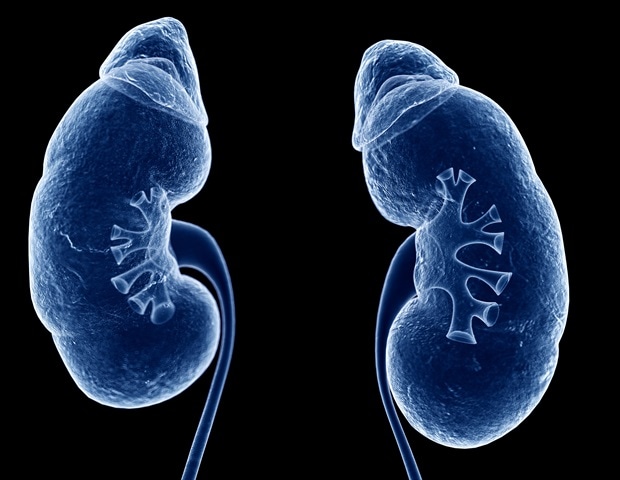
Kidney stones, known for causing some of the most intense pain imaginable, affect daily life and often lead to emergency hospital visits. In the United States, 1 in 11 people will experience kidney stones, and nearly half of these individuals will face a recurrence. A recent study by the Urinary Stone Disease Research Network, coordinated by the Duke Clinical Research Institute, has found that behavioral hydration programs may not be sufficient to prevent these painful recurrences.
The study, published in The Lancet on March 19, sheds light on the complexities of preventing kidney stones, even when individuals are highly motivated and receive daily support. According to Charles Scales, M.D., co-senior author and associate professor at Duke University School of Medicine, “The trial results show that despite the importance of high fluid intake to prevent stone recurrence, achieving and maintaining very high fluid intake is more challenging than we often assume for people with urinary stone disease.”
Understanding the Study’s Approach
Participants in the study were randomly assigned to either standard care or a behavioral hydration program. This innovative program used Bluetooth-enabled smart water bottles to track fluid intake, set personalized hydration goals, and offered financial incentives, reminder texts, and health coaching to encourage increased fluid consumption. Despite these efforts, the increase in average urine output was not significant enough to reduce the rate of symptomatic kidney stone recurrence across the group.
The trial, which enrolled 1,658 adolescents and adults across six U.S. clinical centers, is the largest behavioral study conducted for kidney stone prevention. Researchers followed participants for two years, using regular surveys and imaging to track stone recurrence, making it the first study to focus on actual stone recurrence rather than just fluid intake or urine output.
Challenges and Implications
The findings highlight the difficulty many people face in consuming large amounts of fluid daily, even with structured support. This raises questions about the need for more individually tailored hydration targets, as hydration needs can vary greatly based on factors like age, size, lifestyle, and health conditions.
“Across adolescents and adults, the study moves the field toward more precise prevention,” said Gregory E. Tasian, M.D., co-senior author and attending pediatric urologist at the Children’s Hospital of Philadelphia. “Rather than asking every patient to meet the same fluid goal, we should determine who benefits from which targets, understand why adherence breaks down, and build interventions – behavioral and medical – that reliably reduce stone recurrence.”
Future Directions in Kidney Stone Prevention
Researchers emphasize the need to explore new prevention strategies, including tailored hydration targets and methods to overcome barriers created by work and lifestyle. Additionally, potential therapies to help keep minerals dissolved in urine could play a crucial role in reducing stone formation.
Alana Desai, M.D., first author of the study, noted, “Kidney stone disease is a chronic condition, punctuated by unpredictable, sometimes excruciatingly painful episodes that can disrupt work, sleep, productivity, and life in general. Most people would appreciate a simple means to reduce their chances of experiencing another event.”
In addition to Scales, Tasian, and Desai, the study’s authors include Naim M. Maalouf, Jonathan D. Harper, Sri Sivalingam, John C. Lieske, H. Henry Lai, Peter P. Reese, Hunter Wessells, Hongqiu Yang, Hussein R. Al-Khalidi, and Ziya Kirkali. The research was funded by the National Institute of Diabetes and Digestive and Kidney Diseases.
This study underscores the complexity of preventing kidney stone recurrence and the necessity for continued research and innovation in treatment approaches. As the medical community seeks more effective solutions, the hope is to provide relief and better quality of life for those affected by this chronic condition.