



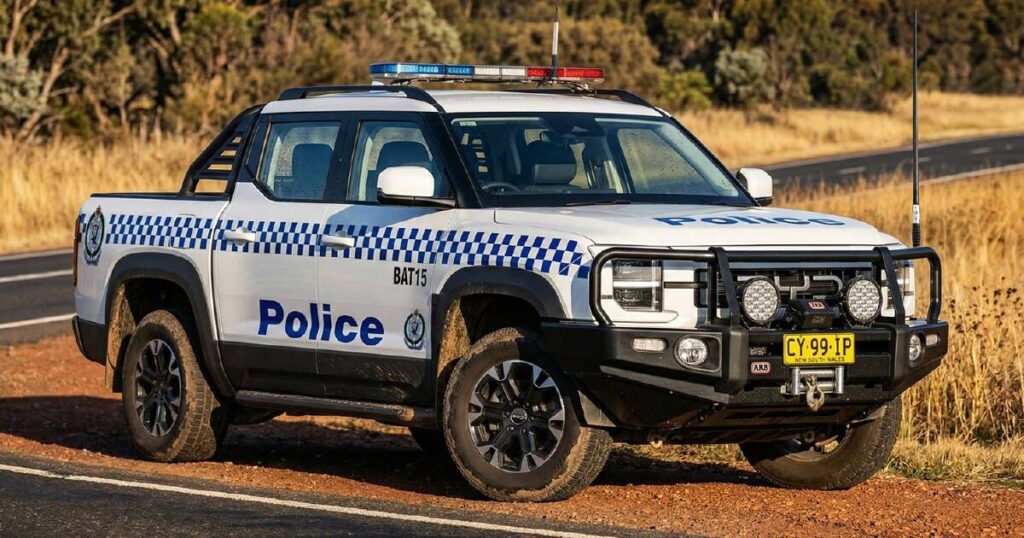
In recent years, the landscape of police vehicles has evolved significantly. Gone are the days when the Holden Commodore, Ford Falcon, and occasionally the Toyota Camry were the only vehicles adorned with the iconic blue and white Sillitoe tartan. Today, the options have expanded to include Ford Rangers, Hyundai Santa Fes, and Volkswagen Passats, among others. As police departments consider new vehicle acquisitions, factors such as hybrid technology, electric vehicles (EVs), and specialized utility vehicles are increasingly coming into play.
The announcement comes as police forces worldwide are re-evaluating their fleets to meet modern demands, including sustainability and versatility. Here, we explore five potential contenders that could redefine policing on the roads.
BYD Shark 6: A Versatile Contender
One of the more intriguing options is the BYD Shark 6, a vehicle that combines the practicality of a utility truck with the efficiency of electric power. As envisioned by digital artist Thanos Pappas, the Shark 6 could be a formidable presence in both urban and rural settings across Australia.
Australia’s diverse environments make it an ideal testing ground for the Shark 6. Its electric capabilities are well-suited for city patrols, while its petrol engine alleviates range anxiety during longer missions. However, its off-road capabilities are limited to “light to moderate” terrains, according to off-road expert Marcus Craft. Despite these limitations, the Shark 6’s aesthetic appeal in police livery cannot be denied.
Kia Tasman: A Practical Reality
Another vehicle that could soon join police fleets is the Kia Tasman. The relationship between Kia, Hyundai, and various police services in Australia is already well-established, and the Tasman has even been mocked up as a police vehicle. In 2025, multiple jurisdictions expressed interest in the Tasman, although extensive testing remains a prerequisite for its deployment.
The move represents a shift towards more practical and reliable vehicles, with the Tasman offering a balance of performance and utility. Its potential adoption underscores the ongoing evolution of police vehicle strategies.
Ford Mustang: High-Performance Patrols
Meanwhile, the Ford Mustang presents a different kind of appeal. Known for its high performance, the Mustang has been considered for highway patrol and community engagement roles. A decade ago, the New South Wales Police Force contemplated using the Mustang GT, although overheating issues during testing were a concern.
The Mustang’s design and performance, coupled with its historical connection to the Ford Performance Vehicles (FPV) patrol cars, make it a compelling choice for specialized police roles. Its Coyote 5.0-litre engine shares a lineage with the FPV’s Miami V8, adding to its allure.
Toyota RAV4: A Reliable Choice
The Toyota RAV4 might seem like an obvious choice, but its practicality and reliability cannot be overstated. As a hybrid vehicle, it aligns with the growing emphasis on sustainability. Toyota’s longstanding history of supplying police vehicles further enhances its credentials.
The current RAV4 model has proven to be capable and user-friendly, making it a sensible option for police departments seeking a dependable workhorse.
Genesis G70: A Luxurious Alternative
Finally, the Genesis G70 offers a luxurious yet practical alternative. In 2017, Victoria Police incorporated BMW 5 Series vehicles into their highway patrol fleet, paving the way for similar models like the rear-drive Genesis G70. As a sibling brand to Hyundai, Genesis vehicles have already been utilized by police forces, providing a foundation for future adoption.
According to sources, the G70’s combination of performance and style could make it an attractive addition to police fleets, particularly for highway patrol duties.
As police departments continue to adapt to changing needs and technologies, the selection of vehicles will play a crucial role in shaping the future of law enforcement. Whether prioritizing sustainability, performance, or reliability, the next generation of police cars promises to be as diverse as the communities they serve.