


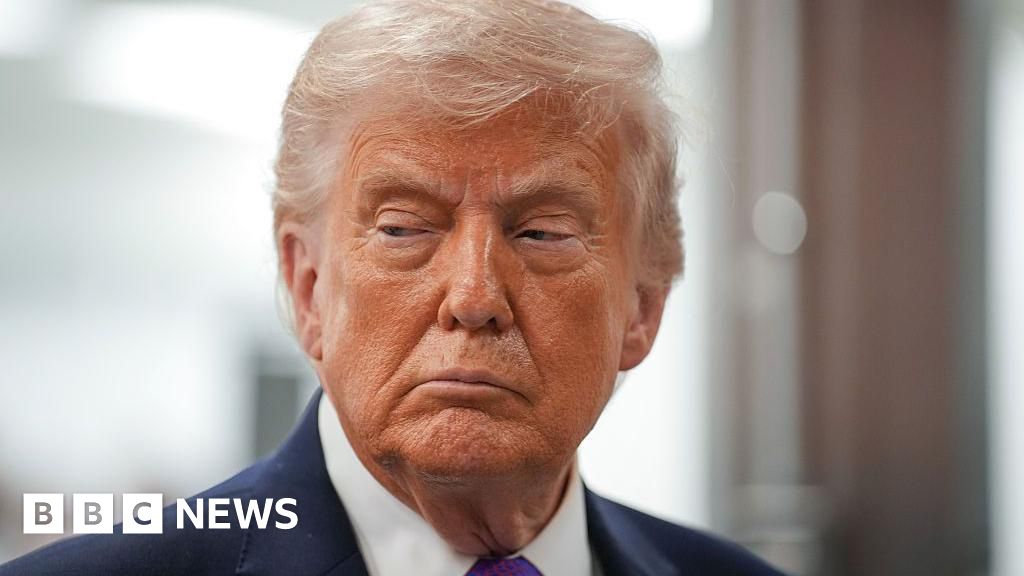
Three weeks into the joint US-Israeli military operations against Iran, the conflict is mired in a haze of mixed messages and strategic ambiguities. President Donald Trump’s public statements often seem at odds with the unfolding realities on the ground, creating a complex narrative that is both challenging and unpredictable.
Despite Trump’s assertion that the war is “very complete, pretty much,” the deployment of new American ground forces, including a Marine expeditionary unit, indicates otherwise. While he claims the conflict is “winding down,” US and Israeli airstrikes on Iranian targets persist with no signs of abatement.
Strategic Chokepoints and Military Objectives
The Strait of Hormuz, a critical maritime chokepoint through which 20% of the world’s oil exports pass, remains a focal point of the conflict. Trump has described its opening as a “simple military manoeuvre,” yet, for now, only Iranian-sanctioned vessels traverse these waters. Meanwhile, the Iranian military, which Trump declared “gone,” continues to launch drone and missile attacks, extending as far as the joint US-UK base in Diego Garcia.
On Saturday evening, Trump escalated tensions by threatening further military action if Iran does not “fully open, without threat” the Strait of Hormuz within 48 hours. He warned that the US military would target Iranian power plants, “starting with the biggest.”
Conflicting Signals and Military Strategy
The day prior, Trump had outlined a list of American military objectives on his social media platform, Truth Social. This marked his most detailed statement on the conflict since its inception, highlighting goals such as degrading Iran’s military capabilities, dismantling its defense infrastructure, and curtailing its nuclear weapons program. Notably absent from this list was the objective of securing the Strait of Hormuz, which Trump suggested should be the responsibility of other nations more reliant on Gulf oil exports.
Trump’s stance reflects a broader geopolitical reality: although the US is a net energy exporter, global oil market fluctuations still impact American consumers. His omission of regime change from the list of objectives signals a potential shift in strategy, suggesting that the US operation might conclude with Iran’s current leadership still in place.
Military Movements and Potential Escalations
Recent reports indicate that a Marine expeditionary unit, comprising approximately 2,500 combat soldiers, is en route from Japan to the Middle East. Another similar force has departed from California, expected to arrive by mid-April. Military analysts speculate that the US might be planning to seize Kharg Island, Iran’s primary oil export terminal. Such a move could cripple Iran’s oil revenues, potentially forcing it to negotiate concessions.
However, Trump has publicly denied plans to deploy ground troops to Iran, adding, “If I were, I certainly wouldn’t tell you.” This ambiguity underscores the strategic uncertainty surrounding US intentions.
“They have got a whole lot more briefing and a whole lot more explaining to do on how we’re going to pay for it, and what’s the mission here.”
Financial Implications and Congressional Involvement
The Trump administration’s request for $200 billion in emergency funding from Congress further complicates the narrative. Such a substantial financial commitment suggests that the White House is preparing for a prolonged and costly engagement, contradicting any notion of a de-escalating conflict.
Iran has responded with its own threats, warning that any attack on Kharg Island would lead to “insecurity” in the Red Sea and widespread disruption of regional energy facilities. This rhetoric highlights the potential for the conflict to expand beyond its current parameters.
Historical Context and Future Prospects
The current US-Iran tensions echo historical conflicts, notably the prolonged hostilities following the 1979 Iranian Revolution. Trump’s administration has framed the current military actions as a continuation of this decades-long struggle, with the aim of finally resolving it.
As the situation develops, the strategic decisions made by the US will have far-reaching implications not only for the Middle East but also for global energy markets and international diplomacy. The world watches closely as Trump navigates this complex geopolitical landscape, with potential outcomes ranging from a negotiated settlement to an extended military engagement.
Ultimately, the resolution of this conflict will depend on a delicate balance of military strategy, diplomatic negotiations, and economic considerations, each influencing the global stage in significant ways.