




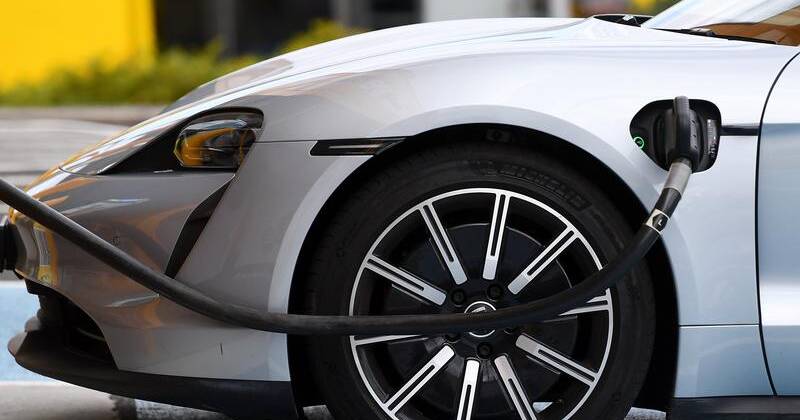
Quantum batteries, a groundbreaking innovation by Australian researchers, could revolutionize the way we charge electric cars and smartphones. These next-generation batteries promise to recharge electric vehicles faster than traditional refueling methods and could even power up smartphones instantaneously.
On Wednesday, the CSIRO’s quantum battery research team announced a significant breakthrough, unveiling the world’s first proof-of-concept device. This development represents a potential leap forward in energy storage technology, although significant challenges remain before quantum batteries can be fully realized.
Breakthrough in Quantum Battery Technology
The announcement follows a surge in home battery installations across Australia, with more than 250,000 units installed under a federal government discount scheme. In February, electric vehicles accounted for a record 11.8 percent of new car sales, highlighting the growing demand for efficient energy solutions.
According to James Quach, the lead of the CSIRO quantum batteries team, conventional batteries are reaching their limits. Quantum batteries, operating under the principles of quantum mechanics, could offer more power and faster charging capabilities.
“Potentially, when quantum batteries become viable, we could have super-fast charging processes where your phone could almost charge instantaneously,” Dr. Quach told AAP. “My ultimate ambition is a future where we can charge electric cars much faster than fuel petrol cars, or charge devices over long distances wirelessly.”
Prototype and Potential Applications
The CSIRO team has successfully developed a prototype quantum battery that charges wirelessly using a laser. This prototype converts light into an electric current and has demonstrated the ability to store energy for six times longer than the time it takes to charge. Interestingly, larger quantum batteries charge faster than smaller ones, offering significant advantages for applications like electric cars and large-scale energy storage.
Despite the promising results, challenges remain in scaling up the technology and extending its energy storage duration. The research, which began in 2013, has made remarkable progress, but further development will require collaboration with external partners, including potential investors from the electric vehicle industry.
The Future of Quantum Batteries
Dr. Quach emphasized the enormous potential of quantum batteries, particularly as the world shifts towards renewable energy and electrification. “The pay-off is enormous and it’s something we need,” he said. “We’re looking at partners, either venture capital firms or other bodies interested in deep quantum tech, and companies with a financial interest in the next generation of quantum batteries.”
Quantum technologies have been identified as a national priority in Australia, with projects like PsiQuantum’s utility-scale computing facility in Brisbane and Quantum Brilliance’s computer circuit technology in Victoria leading the charge.
Implications and Next Steps
The development of quantum batteries could have far-reaching implications for the energy sector, potentially transforming how we store and use power. As the technology progresses, it could lead to more sustainable and efficient energy solutions, aligning with global efforts to combat climate change and reduce reliance on fossil fuels.
The next steps involve overcoming technical challenges and securing partnerships to bring quantum batteries closer to commercial viability. As research continues, the promise of quantum batteries offers a glimpse into a future where energy storage is faster, more efficient, and more sustainable.