



In the mysterious depths of the ocean, a phenomenon resembling snowfall occurs. This “marine snow” consists of dust and detritus from decomposing marine organisms. As these particles descend several kilometers to the ocean floor, they become buried in the seafloor for millennia, acting as a significant carbon sink. However, recent research from MIT and collaborators has unveiled a surprising twist in this natural process.
The study, published in the Proceedings of the National Academy of Sciences, reveals that tiny bacteria hitching rides on marine snow particles may prevent them from sinking as deeply as previously thought. These microbes consume calcium carbonate, a crucial ballast that aids in the particles’ descent. This discovery challenges existing assumptions about how the ocean sequesters carbon from the atmosphere.
The Role of Marine Snow in Carbon Sequestration
Marine snow plays a pivotal role in the ocean’s ability to store carbon. At the surface, phytoplankton absorb atmospheric carbon dioxide, converting it into various carbon forms, including calcium carbonate. Upon death, these phytoplankton descend as marine snow, potentially locking away carbon for centuries. However, the new findings suggest bacteria may hinder this process by eroding calcium carbonate, slowing the particles’ descent and increasing the likelihood of carbon dioxide release back into the atmosphere.
Andrew Babbin, an associate professor at MIT and co-author of the study, emphasizes the importance of understanding these microbial mechanisms. “As humanity tries to design our way out of the problem of having so much CO2 in the atmosphere, we have to take into account these natural microbial mechanisms and feedbacks,” he states.
Microscale Processes: A New Perspective
The researchers, led by Benedict Borer, formerly of MIT and now at Rutgers University, conducted experiments simulating marine snow interactions at the microscale. They created particles mimicking marine snow, varying in calcium carbonate and bacterial content, and observed their behavior in a controlled environment.
“Most oceanographers think about the macroscale, and in this instance what’s happening in microscopic particles is what is actually controlling bulk seawater chemistry,” Borer explains. This microscale activity could significantly impact the ocean’s carbon sequestration capabilities.
Experiment Insights: The Sinking Sweetspot
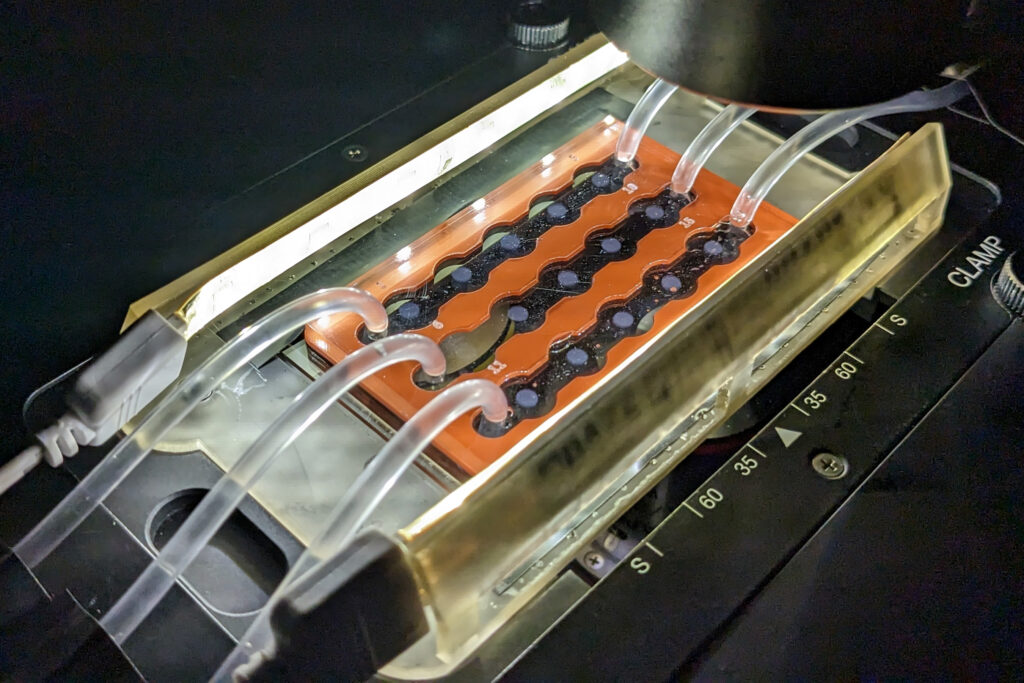
The team designed a microfluidic chip to simulate different sinking speeds of marine snow. They discovered that both slow and fast sinking rates limit calcium carbonate dissolution. Slow sinking suffocates bacteria due to low oxygen availability, while fast sinking flushes away bacterial waste before it can dissolve calcium carbonate. However, at intermediate speeds, bacteria thrive, efficiently dissolving calcium carbonate and impacting the particles’ sinking ability.
“Bacteria are sufficiently oxygenated and can also build up enough waste, enabling the microbes to efficiently dissolve calcium carbonate,” the study notes.
Implications for Climate Change Mitigation
The findings challenge previous assumptions about calcium carbonate’s stability in the ocean’s upper layers. They suggest that bacteria and other microbes may counteract the ocean’s natural carbon sequestration efforts by dissolving marine snow’s ballast. As climate solutions increasingly consider enhancing the ocean’s biological pump, the role of bacteria must be factored into these strategies.
Borer highlights the importance of these insights, stating, “Insights from this work are vital to predict how ecosystems will respond to marine carbon dioxide removal attempts, and overall how the oceans will change in response to future climate scenarios.”
This research was supported by the Simons Foundation, the National Science Foundation, and the Climate Project at MIT. As scientists continue to explore the complexities of marine snow and its role in carbon sequestration, understanding these microbial interactions will be crucial in addressing the challenges posed by climate change.