



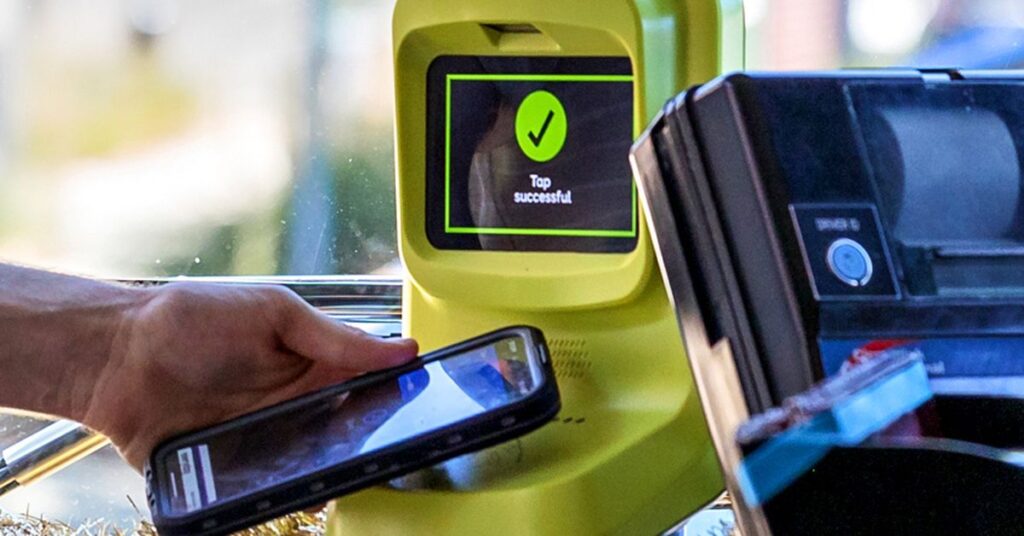
Thousands of Victorians can now use their phones or bank cards to pay for train fares as a long-awaited contactless payment trial begins across Melbourne. Until today, commuters were required to purchase and pre-load a physical Myki card to travel on public transport, a system that has been in place for years.
The state government is trialling contactless payments on four train lines, allowing passengers to tap on with their credit or debit card, phone, or smartwatch. This trial is available for full-fare customers traveling on the Craigieburn, Upfield, Ballarat, or Seymour train lines, including routes to and from the City Loop. However, concession holders will not yet benefit from this new technology.
Transition to Modern Payment Systems
Eligible stations will have Myki readers labeled with artwork to indicate the availability of tap and go. The fare price remains unchanged from the Myki card rate, which was increased to $5.70 per one-way trip last year. A caveat exists: if passengers switch to a line not included in the trial during their commute, they will need to revert to using their Myki card.
Transport Victoria has announced that contactless payments will be enabled across the entire train network following the trial’s conclusion, expected by the end of April. The rollout for trams and buses will occur at a later stage. The trial aims to address any initial issues as the government gradually transitions to a full contactless payment system, replacing the state’s often-criticized Myki system.
Comparisons with Other Cities
Melbourne is among the last major metropolitan areas in Australia to implement contactless tap and go payments for public transport. In contrast, Sydney began a trial for contactless payments in 2017, which has since expanded to all modes of public transport across most of New South Wales. Similarly, Brisbane’s buses and metro services started accepting contactless payments in 2024, while the Australian Capital Territory launched a new tap and go system late in 2024.
Adelaide’s metro, bus, and tram network adopted tap and go payments in 2022, and Perth commuters have been able to use their cards, phones, or smartwatches for public transport payments since December last year. This move positions Melbourne to catch up with other Australian cities in embracing modern payment technologies.
Expert Opinions and Future Implications
Experts suggest that the transition to contactless payments is a crucial step in modernizing Melbourne’s public transport system. According to transport analyst Dr. Sarah Collins, “The introduction of contactless payments will not only enhance the commuter experience but also streamline operations and reduce the reliance on physical ticketing systems.”
“The introduction of contactless payments will not only enhance the commuter experience but also streamline operations and reduce the reliance on physical ticketing systems.” — Dr. Sarah Collins, Transport Analyst
The move represents a significant shift towards a more efficient and user-friendly public transport system. As the trial progresses, authorities will monitor its impact on commuter satisfaction and operational efficiency. If successful, the full implementation of contactless payments could pave the way for further technological advancements in Melbourne’s public transport infrastructure.
Meanwhile, commuters are encouraged to provide feedback during the trial to help refine the system before its broader rollout. The success of this initiative could serve as a model for other cities looking to modernize their public transport systems.
As Melbourne embarks on this new chapter, the city joins a growing list of global metropolises embracing digital payment solutions, setting the stage for a more connected and convenient travel experience for all.