


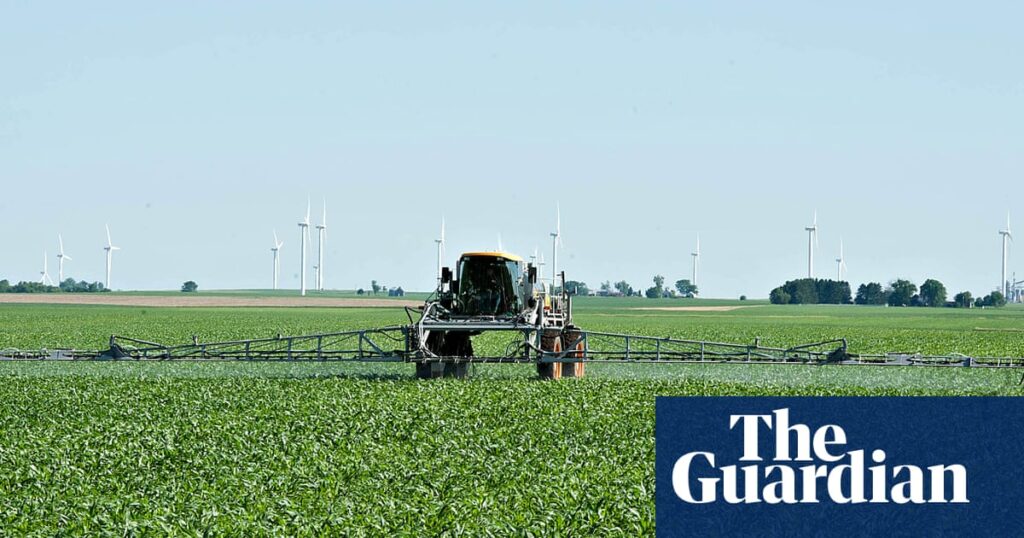
Rodney Bushmeyer, a seasoned farmer from Illinois, has witnessed the agricultural landscape transform over decades. His family-run Bushmeyer Farms, established over a century ago by German immigrants, now faces unprecedented challenges. The recent surge in fertilizer costs, exacerbated by geopolitical tensions, threatens the very sustainability of his operations.
For Bushmeyer, the rising costs have been a growing concern over the past five to six years, with some fertilizers doubling in price. Meanwhile, grain commodity prices have plummeted, squeezing profit margins to near non-existence. “There is really no profit right now,” Bushmeyer lamented. “It’s not sustainable in the long term. We can do that for a few years, but eventually it’ll put us out of business.”
Impact of Geopolitical Tensions
The current predicament for American farmers is largely tied to the US-Iran conflict. Iran’s closure of the Strait of Hormuz, a critical route for fertilizer production and transport, has disrupted global supply chains. This escalation comes during the crucial US spring planting season, compounding several years of financial strain for farmers.
“It’s not a great time for the grower,” said Matt Bennett, CEO of AgMarket and a seventh-generation grain farmer. The Middle East’s role in global fertilizer trade is significant, with 35% of urea and 20% of phosphate trade originating from the region, according to Chris Yearsley, CEO of Profercy.
Fertilizer prices have nearly doubled since the closure of the shipping channel, with nitrogen prices soaring from $350 to $600 per short ton.
Economic Pressures and Historical Parallels
Fertilizer costs represent a substantial portion of production expenses, particularly for corn, the US’s largest crop. The USDA reports that fertilizer can account for 20% of total production costs. Farmers have already been grappling with costs outpacing income for several years, with the USDA predicting another year of diminished profits even before the recent price hikes.
Philip Coffin, an independent grain industry analyst, warns that current crop economics could devastate farmers’ financial statements. “With crop economics as bad as they are right now, it doesn’t take much to destroy a farmer’s income statement,” he said.
Gregg Ibendahl of Kansas State University noted that federal subsidies have been crucial in keeping farmers afloat. “They turned a really bad year into at least a mediocre year,” he remarked.
Farmers’ Resilience and Future Outlook
Lance Lillibridge, an Iowa farmer, recalls the economic pressures of the 1980s farm crisis and fears a similar situation. “The fertilizer industry is probably the most concentrated industry in the entire world,” he stated, expressing frustration over market manipulation.
Lillibridge’s concerns are echoed by other farmers who fear that continued high prices will make fertilizer unaffordable, leading to reduced crop yields and higher consumer prices. “For you, me, everybody else, your cost at the grocery store is going to go up,” he warned.
Angela Guentzel, a Minnesota farmer, emphasized the broader implications of the crisis. “Food security is basically national security,” she said. “If we can’t afford to put a crop in the ground, we then become more dependent on foreign nations to feed our own people.”
“Farmers are the backbone of America, and when they’re squeezed by rising costs like fertilizer, it carries real political weight,” noted Brittany Martinez, a Republican strategist.
As farmers navigate these turbulent economic waters, they remain hopeful yet cautious. “We have to be optimistic or we would never raise a crop, never try,” Bushmeyer reflected, embodying the resilience and determination that have defined American agriculture for generations.