

The Emirates Palace Mandarin Oriental in Abu Dhabi, a $3.5 billion marvel of opulence, stands as a testament to the region’s ambition and extravagance. Yet, as tensions with Iran escalate, this symbol of luxury now underscores the fragility of the Gulf’s prosperity. Over the past two weeks, cities like Dubai, Doha, and Abu Dhabi have come under increasing threat, challenging the stability that has long been their hallmark.
These developments follow a series of attacks that have shaken the foundation of the Gulf’s economic model, which relies heavily on tourism, aviation, and investment as hedges against dwindling fossil fuel reserves. As a frequent visitor to these cities, I have witnessed their transformation from modest trading ports to global hubs of commerce and culture. However, the current conflict with Iran threatens to unravel decades of progress.
The Rise and Fall of Gulf Ambitions
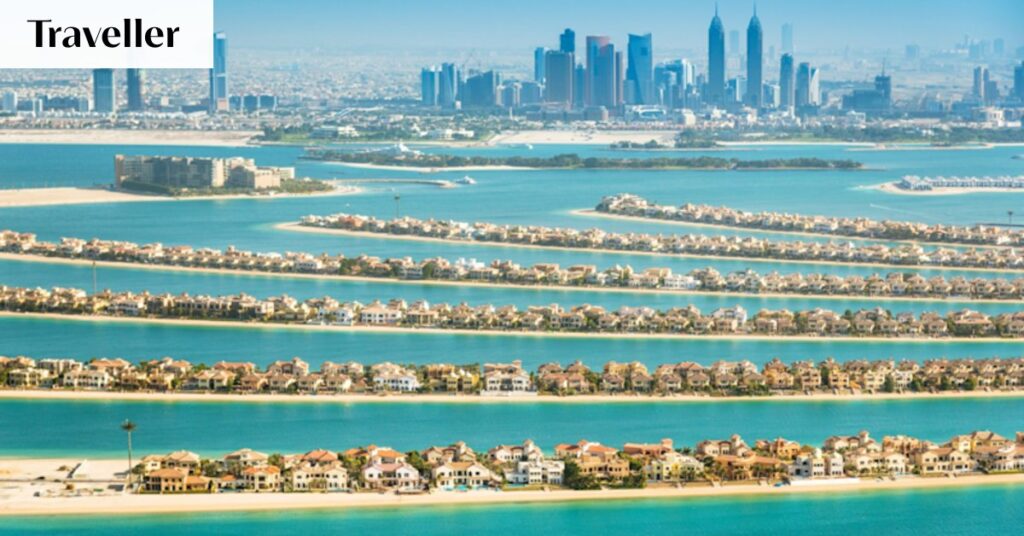
Until the 1980s, Dubai was a sleepy fishing village with limited infrastructure. The Emiratis’ strategy of building high and lavishly paid off, turning their cities into magnets for tourists and investors. However, the recent US-Israeli conflict with Iran has embroiled these cities in a geopolitical quagmire, casting doubt on their future as safe havens.
Abu Dhabi, often seen as Dubai’s affluent cousin, has invested billions in cultural projects to differentiate itself. The Saadiyat Cultural District, home to the Louvre Abu Dhabi and the soon-to-be-completed Guggenheim, represents a significant cultural investment. Yet, the ongoing conflict raises questions about the sustainability of such grand ambitions.
Expert Insights on the Gulf’s Future
According to Emile Hokayem, a Middle East expert at the International Institute for Strategic Studies, the Gulf’s real asset has been its ability to project confidence.
“Beyond their immense wealth, their real currency was confidence. It’s the fact that they could realistically tell people it’s a good business environment, you will feel safe,”
Hokayem notes. This perception is now under siege, as regional politics threaten to destabilize the Gulf’s carefully cultivated image.
As the dust settles from recent attacks, Gulf states face the daunting task of rebuilding their reputations. The resilience of international travelers will be tested, as will the depth of the Gulf’s financial reserves. The region’s airlines, such as Emirates and Qatar Airways, are already offering discounted fares to lure back passengers, signaling the beginning of a fierce battle to restore their status.
Challenges and Opportunities Ahead
Meanwhile, Saudi Arabia’s ambitious plans for Neom, a $50 billion linear city, have been scaled back, highlighting the limits of the Gulf’s growth model. The postponement of the 2029 Asian Winter Games, originally slated for Neom, further underscores the challenges facing the region.
Despite these setbacks, the Gulf states remain determined to maintain their dominance in aviation and tourism. Saudi Arabia’s Riyadh Air, with plans to reach 100 destinations by 2030, exemplifies this determination. However, the path forward is fraught with uncertainty, as geopolitical tensions continue to simmer.
The Gulf’s ability to adapt to these challenges will determine its future role on the global stage. As the region grapples with the aftermath of recent events, the world watches closely to see how it will navigate this turbulent period.