



In a dramatic escalation of tensions in the Middle East, US President Donald Trump has criticized NATO allies as “cowards” for not contributing troops to reopen the strategic Strait of Hormuz. The waterway is vital to global oil trade, and its closure has already pushed oil prices to $110 a barrel, causing worldwide economic ripples.
The conflict has prompted warnings for people to work from home, drive less, and avoid air travel to mitigate the risk of severe oil shortages if the strait remains closed. Meanwhile, Iran’s new Supreme Leader, Mojtaba Khamenei, has issued a defiant statement on Nowruz, the Persian New Year, vowing that Iranian resilience will prevail.
Global Energy Concerns and Military Movements
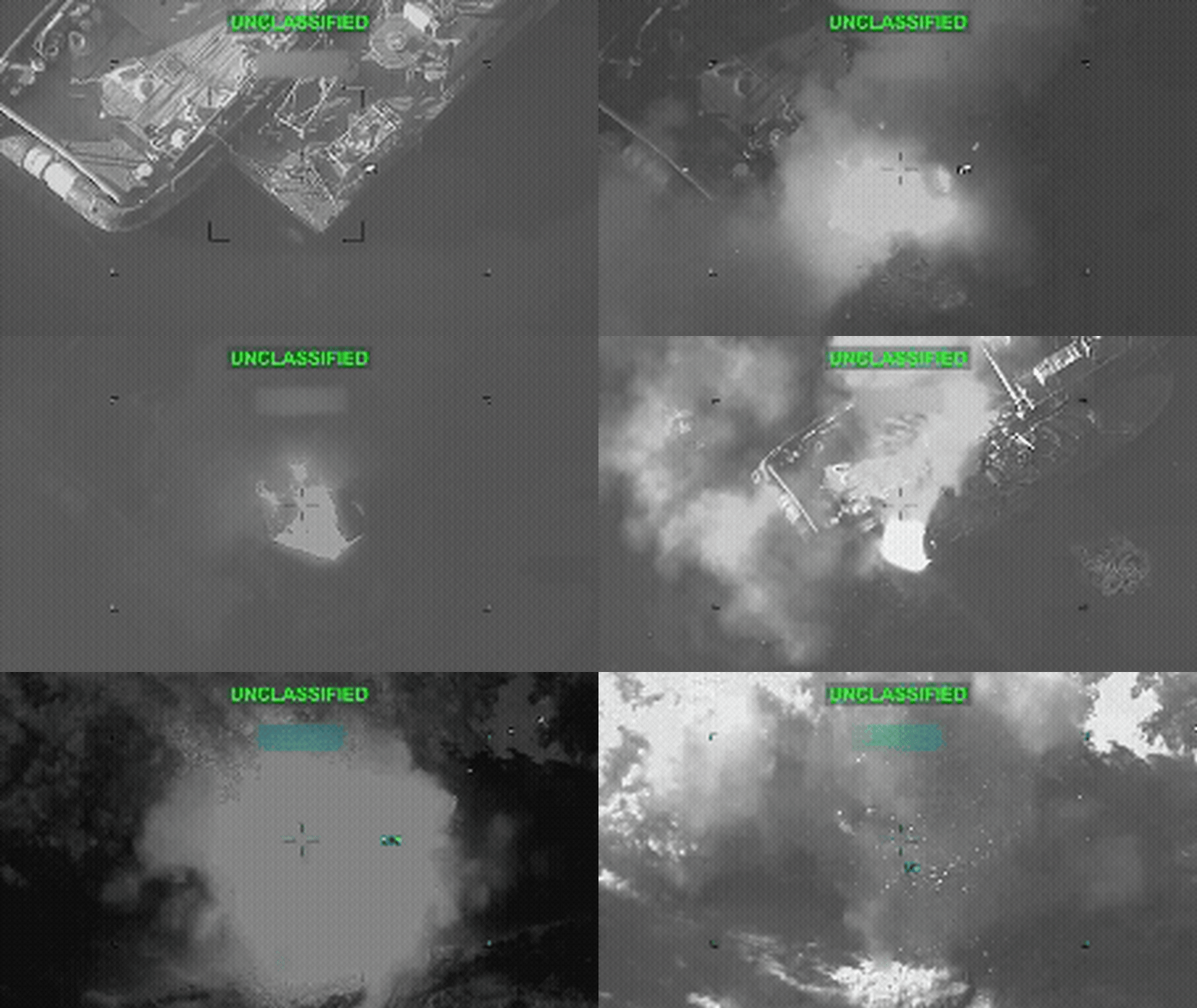
The Strait of Hormuz is a critical chokepoint for the world’s oil supply, and its closure has disrupted oil flows, causing prices to soar and raising fears of a global energy crisis. In response, the US has deployed three additional warships and 2,500 Marines to the Middle East to bolster its military presence.
Iran has launched strikes on energy facilities across the Gulf, with Kuwait’s Mina Al-Ahmadi refinery being targeted for the second time, resulting in fires at several units. Concurrently, Israel has intensified its military actions against Tehran as Iranians celebrate Nowruz.
“Without the U.S.A., NATO IS A PAPER TIGER! They didn’t want to join the fight to stop a Nuclear Powered Iran,” Trump declared on Truth Social.
International Reactions and Strategic Moves
Trump’s criticism of NATO comes as the UK authorizes the US to use British bases for strikes on Iranian missile sites. This decision has drawn criticism from Iranian Foreign Minister Abbas Araghchi, who accused UK leader Keir Starmer of endangering British lives by aligning with US military actions.
British aircraft are now patrolling over Jordan, Qatar, the UAE, and Bahrain, marking the highest level of UK military activity in the region in 15 years. The UK Ministry of Defence has confirmed the deployment of a small number of planners to assist US Central Command in securing the Strait of Hormuz.
NATO’s Strategic Withdrawal
In a related development, NATO has withdrawn its security advisory mission from Iraq, relocating personnel to Europe following attacks on bases in northern Iraq. This move underscores the shifting dynamics and heightened risks in the region.
“The UK has more jets flying in the region than at any time in the last 15 years,” stated the UK Ministry of Defence.
Iran’s Defiant Stance and Global Threats
Iran’s Supreme Leader Mojtaba Khamenei, who assumed leadership after the death of his father, issued a statement lauding Iranian resilience and warning that tourist sites worldwide could become targets. This threat has raised concerns about potential militant attacks beyond the Middle East.
General Ali Mohammad Naini of the Islamic Revolutionary Guard Corps boasted about Iran’s missile production capabilities, even amidst conflict, signaling a continued commitment to military expansion.
“Parks, recreational areas and tourist destinations worldwide wouldn’t be safe for his country’s enemies,” General Naini warned.
Implications and Future Outlook
The ongoing conflict and strategic maneuvers by global powers have created a volatile situation with far-reaching implications. The potential for further escalation remains high, with economic, military, and diplomatic stakes intertwined. As the world watches, the actions of the US, Iran, and their allies will likely shape the geopolitical landscape for years to come.
Looking ahead, the international community faces the challenge of navigating these tensions while ensuring energy security and regional stability. The coming days and weeks will be crucial in determining whether diplomatic efforts can avert a broader conflict or if the situation will deteriorate further.