




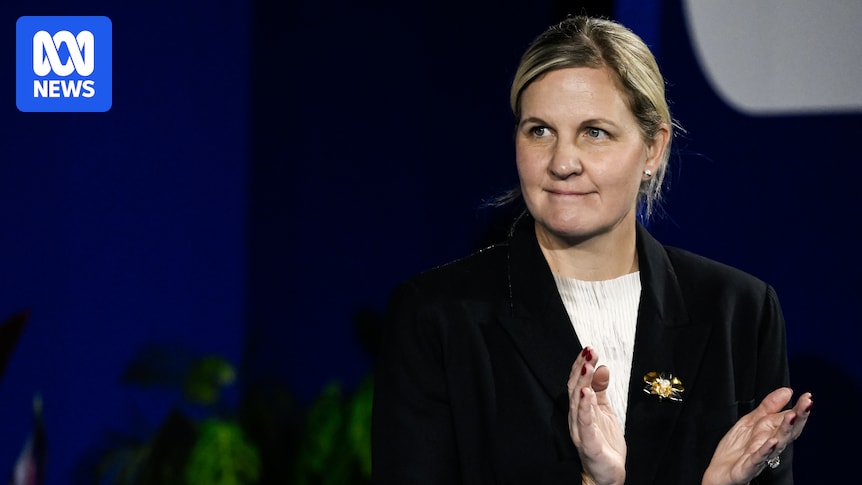
The International Olympic Committee (IOC) is evaluating the establishment of universal rules for transgender athletes at the Olympic Games. This comes as numerous sports organizations worldwide are tightening eligibility criteria, reflecting a shift in sentiment that the IOC, under the leadership of new president Kirsty Coventry, seems increasingly inclined to support.
In a significant policy reversal in June, Coventry announced that the IOC would spearhead the creation of eligibility criteria for transgender athletes, moving away from its previous stance of delegating this responsibility to individual sports federations. This earlier approach had resulted in a confusing array of policies.
Establishing New Guidelines
In September, the IOC formed the “Protection of the Female Category” working group, comprising experts and representatives from international federations, to explore ways to safeguard the female category in sports. An IOC spokesperson stated on Monday that the working group is still deliberating and no decisions have been made yet. “Further information will be provided in due course,” the spokesperson added.
Prior to Coventry’s decision, the IOC had refrained from imposing any universal rule on transgender participation, advising international federations in 2021 to develop their own guidelines. Under the current rules, transgender athletes remain eligible to compete in the Olympics, though only a few openly transgender athletes have participated in the Games.
Historical Context and Current Policies
New Zealand’s Laurel Hubbard made history as the first openly transgender athlete to compete in a gender category different from that assigned at birth during the Tokyo Olympics in 2021. While some international federations have established rules, others are still formulating their policies.
Meanwhile, the United States has seen significant policy changes under former President Donald Trump, who banned transgender athletes from competing in school sports. This decision, encapsulated in the “Keeping Men Out of Women’s Sports” order signed in February, has been criticized by civil society groups as an infringement on transgender rights. Trump also announced his intention to prevent transgender athletes from competing in the 2028 Los Angeles Summer Olympics.
Global Sports Federations’ Stances
Following Trump’s decision, the United States Olympic and Paralympic Committee updated its rules to prohibit transgender athletes from participating in women’s sports. Several sports federations globally have also revised their policies, often barring athletes who have undergone male puberty from competing in female categories at elite levels.
World Rugby has implemented a ban on transgender athletes at the elite level, while World Athletics restricts participation for those who have undergone male puberty. World Aquatics permits transgender athletes who transitioned before age 12 to compete but excludes those who transitioned later.
The situation remains ambiguous in soccer, with FIFA yet to release an updated policy. However, some associations, including the English FA, have independently banned transgender players from women’s competitions. Additionally, boxing and athletics have introduced mandatory tests for the SRY gene, which is linked to male characteristics, targeting athletes with Differences of Sexual Development (DSD).
Implications and Future Directions
The evolving landscape of transgender athlete participation in sports highlights the ongoing debate over fairness, inclusion, and competitive integrity. The IOC’s potential move towards universal rules could set a precedent for global sports governance, balancing the rights of transgender athletes with the need to maintain fair competition in female categories.
As the IOC continues its deliberations, the sports world awaits further updates on the working group’s findings and any subsequent policy changes. The outcome could significantly influence how transgender athletes are integrated into international sports, shaping the future of the Olympic Games and beyond.