

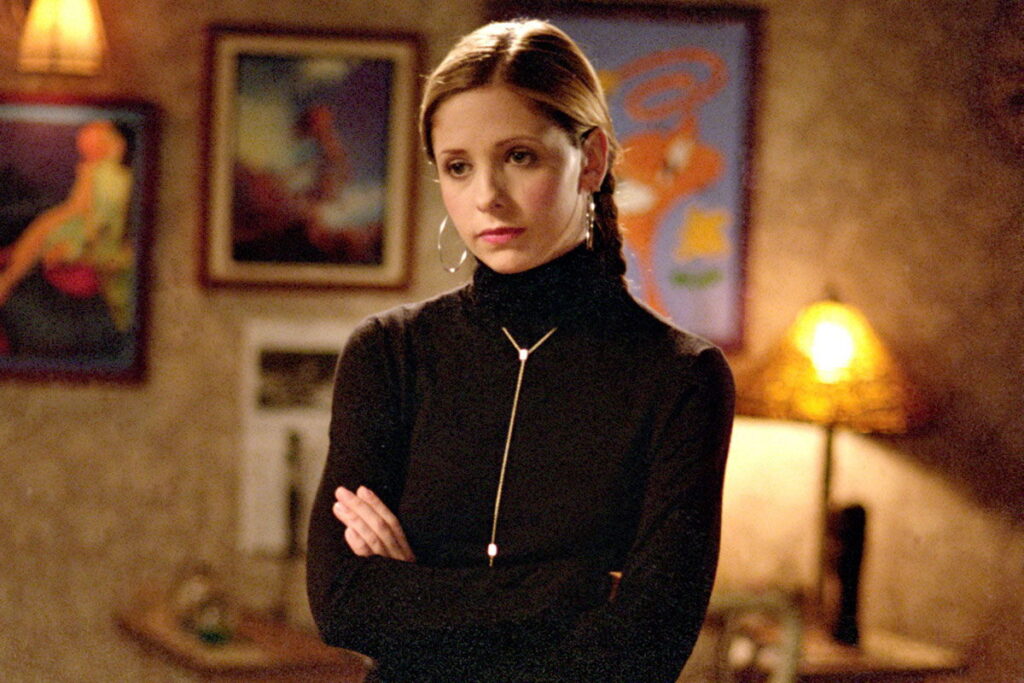
Last weekend, Hulu unexpectedly announced it would not proceed with its anticipated revival and sequel series to the beloved 1990s show, “Buffy the Vampire Slayer”. This decision has sent ripples through both the entertainment industry and the show’s dedicated fanbase.
The original series’ star, Sarah Michelle Gellar, was set to reprise her iconic role as Buffy Summers, albeit in a supporting capacity. The spotlight was to shift to a new Slayer, a 16-year-old high school student named Nova, played by Ryan Kiera Armstrong. The project was helmed by “Hamnet” director Chloe Zhao, who directed the pilot last summer. However, industry sources reported that the pilot was deemed ‘not perfect’, and Zhao’s directorial style may not have aligned with the show’s needs.
The Unexpected Turn of Events
In the aftermath of Hulu’s decision, Sarah Michelle Gellar expressed her surprise in an interview with People, stating, “nobody saw this coming.” She also noted that an executive involved was openly dismissive of the original series, having never watched it in its entirety. This revelation has added another layer of complexity to the narrative surrounding the show’s cancellation.
Further insights have emerged as Variety obtained a shooting draft of the pilot episode, penned by sisters Nora and Lilla Zuckerman. The draft revealed that Gellar’s Buffy was scarcely featured, appearing only in a brief cameo at the episode’s conclusion. The storyline predominantly focused on Nova and the formation of a new ‘Scooby Gang’ amidst a Renaissance Faire-like setting in Sunnydale, while the vampires in the Hellmouth were reawakened.
Creative Differences and Production Challenges
According to industry insiders, a recent rewrite attempted to incorporate more of Buffy and aimed to mature the show’s tone. However, these changes were insufficient to persuade Hulu to continue investing in the series. Sources also suggested that Zhao’s cinematic style, while acclaimed in film, may not have translated well to the exposition-heavy demands of a television pilot.
On Wednesday, a spokesperson for Disney Entertainment Television issued a statement to Variety, clarifying, “Our decision not to move forward with a series order is not a reflection of our respect and admiration for the creative team.”
The Legacy of “Buffy the Vampire Slayer”
The original “Buffy the Vampire Slayer” series, which aired from 1997 to 2003, has maintained a cult following and is often credited with redefining the supernatural genre on television. Its blend of horror, humor, and coming-of-age themes resonated with audiences and influenced a generation of similar shows.
Experts in television history note that revivals and reboots often face significant challenges, particularly when trying to balance nostalgia with fresh narratives. The “Buffy” reboot’s struggle to find this balance is not unique, as seen in other recent attempts to revive classic series.
“Bringing back a beloved show requires a delicate balance between honoring the original and introducing new elements that appeal to both old and new audiences,” said television critic Laura Thompson.
Looking Forward: What’s Next for the Franchise?
While the cancellation of the “Buffy” reboot is a disappointment for fans eager to return to Sunnydale, it also opens the door for future possibilities. The enduring popularity of the original series suggests that there may still be opportunities for the franchise to evolve in different forms, whether through new television projects, films, or other media.
For now, fans and industry watchers alike will be keeping a close eye on any developments related to “Buffy the Vampire Slayer” and its potential return. As the entertainment landscape continues to evolve, the demand for nostalgic yet innovative content remains strong.
The decision by Hulu serves as a reminder of the complexities involved in reviving iconic series and the high expectations that come with such endeavors. As the dust settles, the legacy of Buffy Summers and her world continues to captivate imaginations, leaving the door open for future stories to unfold.