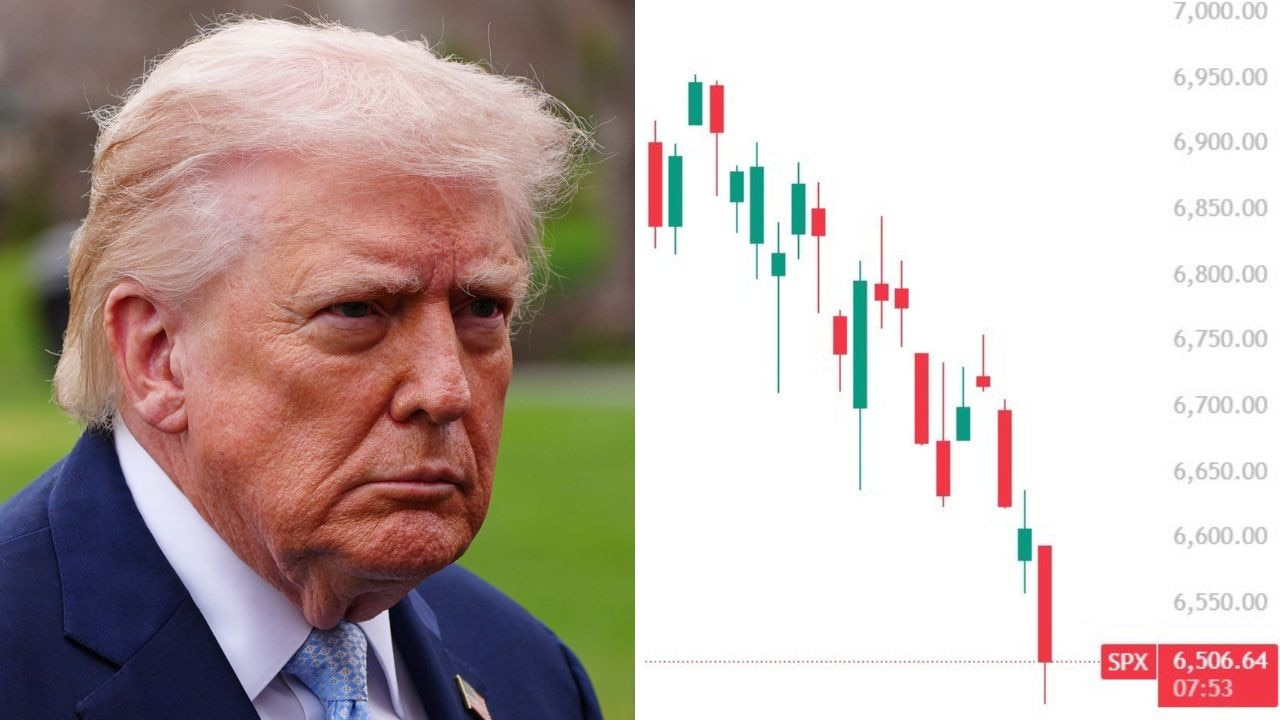





As the United States retreats from global leadership in green energy under the administration of Donald Trump, China is stepping forward to fill the void. With Washington deregulating its fossil fuel industry, Beijing sees an opportunity to establish itself as a leader in the burgeoning low-carbon economy. This shift could allow China to write the rules for a global green economy, a position that comes with significant influence.
China already holds a dominant position in global green energy supply chains, producing solar panels, wind turbines, grid equipment, storage systems, and electric vehicles. The recent US policy rollback strengthens China’s ability to shape global standards for green products and dictate the terms of compliance.
China’s Strategic Moves in Green Energy
China’s next likely step is to develop a robust monitoring, reporting, and verification system for heavy industries, enabling the pricing, comparison, and auditing of carbon emissions. This move aligns with the European Union’s new regulations addressing “carbon leakage,” where companies relocate production to regions with looser environmental standards. The EU now requires companies to purchase certificates that quantify carbon emissions for imported goods, a policy the UK plans to adopt as well.
Market access is increasingly tied to documentation, with exporters who can verify their carbon content gaining a competitive edge. The EU’s digital “battery passport,” mandatory from February 2027 for electric vehicle and industrial batteries above 2kWh, exemplifies this trend. Although China does not control access to the European market, it can facilitate compliance with EU-style requirements by standardizing the necessary infrastructure and tools. Once a factory integrates into a specific compliance system, switching becomes costly, reinforcing China’s influence.
Leveraging Supply Chain Dominance
China can capitalize on its supply chain dominance and advanced digital infrastructure to offer traceability tools, reporting templates, verification services, and management platforms. As firms are expected to publish more consistent sustainability and climate information, China’s position could become even more advantageous. This data will allow investors to compare climate exposure and performance across companies and countries.
China’s Green Energy Transformation
Since the Paris Agreement, where 195 countries committed to addressing climate change, China has been transforming into a clean energy superpower. By 2025, this sector is projected to be worth $2.1 trillion, or 11.4% of China’s GDP. China’s investment in renewable energy has surged from $117 billion in 2015 to $290 billion in 2024, three times the US investment during the same period.
However, the US is not entirely absent from the renewable energy scene. Some US states are advancing independently of federal policies, with US renewable energy investment increasing 2.6 times from 2015 to 2024, slightly outpacing China’s growth rate.
China’s Global Leadership Aspirations
The divergence between the US and China is most evident in their approaches to multilateral engagement. At the UN’s climate summit, COP30, in 2025, China presented itself as a global leader in renewable energy production, viewing renewables as a core pillar of its economic strategy. This focus has been central to China’s economic transformation since the 2010s.
Despite its ambitions, China faces challenges, including falling short of its emission reduction targets, overcapacity and price collapse in its solar panel industry, and growing regional competition with India. Nevertheless, as the US withdraws from the green economy, China can position itself as a broker of compatible green finance rules, especially for emerging markets seeking capital without conflicting standards.
The Global Shift Towards Green Rules
Green rules are becoming integral to the global economy. Businesses and investors, who dislike uncertainty, may welcome China’s efforts to position itself as the international rule-maker for green products and energy. This strategic positioning could secure China’s influence in the future low-carbon economy.
As the world increasingly prioritizes sustainability, China’s proactive approach could redefine global economic dynamics, with implications for international trade, environmental policy, and geopolitical power structures. The coming years will reveal whether China can successfully navigate its internal challenges while capitalizing on the opportunities presented by the global shift towards a low-carbon future.