




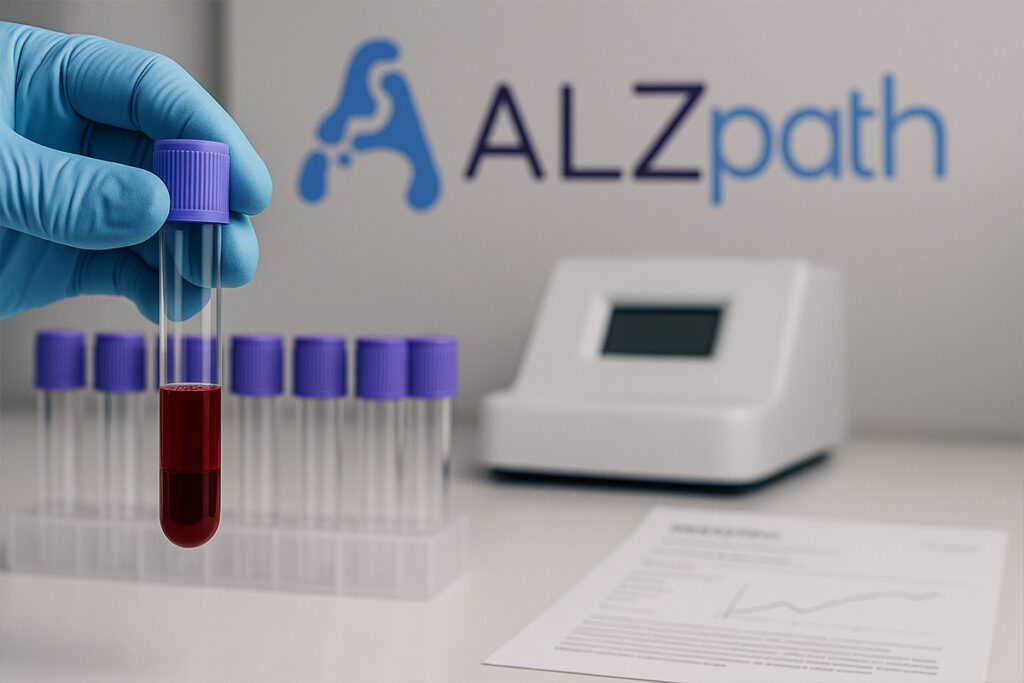
At the 2026 International Conference on Alzheimer’s and Parkinson’s Diseases (AD/PD), ALZpath, a biotech company based in California, made a significant announcement that could transform the landscape of Alzheimer’s diagnosis. The company revealed that its proprietary pTau217 antibody was featured in 29 presentations, highlighting its growing prominence in the field of blood-based Alzheimer’s testing.
Alzheimer’s disease often begins its silent assault long before a formal diagnosis is made. Families might notice subtle signs such as repeated questions or forgotten routes home, but obtaining a definitive diagnosis typically involves a lengthy and emotionally taxing process. This usually includes specialist visits, imaging scans, or spinal fluid tests, which, while accurate, are not easily accessible to everyone.
The Rise of pTau217 in Alzheimer’s Diagnostics
The introduction of ALZpath’s pTau217 antibody into the diagnostic process represents a significant shift towards more accessible and scalable testing methods. The antibody was highlighted in eight live sessions, 15 posters, and four symposiums at AD/PD 2026, indicating its widespread adoption by researchers and labs worldwide.
The concept of the pTau217 antibody might seem confined to specialist laboratories, but its implications are far-reaching. By identifying blood-based biomarkers, researchers aim to detect Alzheimer’s disease earlier, potentially before significant memory loss occurs. This early detection is crucial as it allows for timely intervention and management of the disease.
“Repetition matters. In diagnostics, confidence is built not by a single flashy result, but by seeing the same story hold up in different hands.”
ALZpath’s Strategic Positioning
ALZpath is positioning itself as a key player in the infrastructure of Alzheimer’s diagnostics. The company claims that its pTau217 antibody has been chosen by leading in vitro diagnostic companies for blood-based assays. Its platform-agnostic design allows for integration across various lab systems, making it adaptable to different healthcare environments.
This adaptability is crucial because even the most scientifically advanced diagnostic tools can fail if they cannot be implemented in real-world healthcare settings. Scalability, though not glamorous, is essential for turning innovation into widespread adoption.
Mike Banville, CEO of ALZpath, emphasized the company’s commitment to integrating pTau217 testing into routine medical practice. “Our collaboration with a robust ecosystem of assay developers and clinical providers aims to streamline the transition of pTau217 testing into routine medical practice,” he stated, highlighting the potential to address the projected 152 million global cases of dementia by 2050.
Beyond Detection: The Broader Implications
While blood tests for Alzheimer’s are not definitive verdicts, they are valuable tools that can aid doctors in making quicker, more informed decisions. These tests could reduce reliance on more invasive procedures but must be interpreted within the broader context of clinical judgment.
In the evolving landscape of Alzheimer’s treatment, early detection is only beneficial if it leads to actionable outcomes. This includes early referrals, eligibility for treatment, precise monitoring, and reducing the uncertainty faced by patients and families.
Banville further noted that advancements in pTau217 assay sensitivity and specificity could facilitate earlier detection, more accurate staging, and improved tracking of treatment responses. These improvements are crucial in the dynamic field of Alzheimer’s diagnostics.
“Consistent performance across independent studies and assay platforms reinforces its value for improving diagnostic confidence and enabling precise patient identification,” said Dr. Henrik Zetterberg, underscoring the clinical value of pTau217.
Scientific Validation and Future Prospects
ALZpath’s announcement at AD/PD 2026 also reflects a broader scientific trend. The pTau217 biomarker is increasingly being studied for its ability to not only indicate the presence of Alzheimer’s but also to track disease progression and severity.
One notable study presented at the conference examined brain-derived plasma p-tau217 in samples from 268 participants. The findings suggested that higher baseline levels of this biomarker were linked to faster cognitive decline, indicating its potential use in monitoring disease progression.
For investors and those interested in longevity, a biomarker that aids in early detection is valuable. However, one that also supports patient staging, clinical trial enrollment, and therapy monitoring becomes deeply embedded in the healthcare ecosystem.
As ALZpath’s pTau217 antibody continues to gain traction, it is becoming a foundational element in Alzheimer’s diagnostics. Backed by over 100 peer-reviewed publications in just two years, the company is establishing itself as a critical component in the shared language of Alzheimer’s diagnostics, precisely when the market is determining which tools to trust and scale.
The future of healthy aging depends not only on extending life but also on maintaining cognitive health. ALZpath’s advancements in Alzheimer’s diagnostics are paving the way for earlier intervention and better disease management, ultimately contributing to a more humane and effective approach to tackling this devastating disease.