



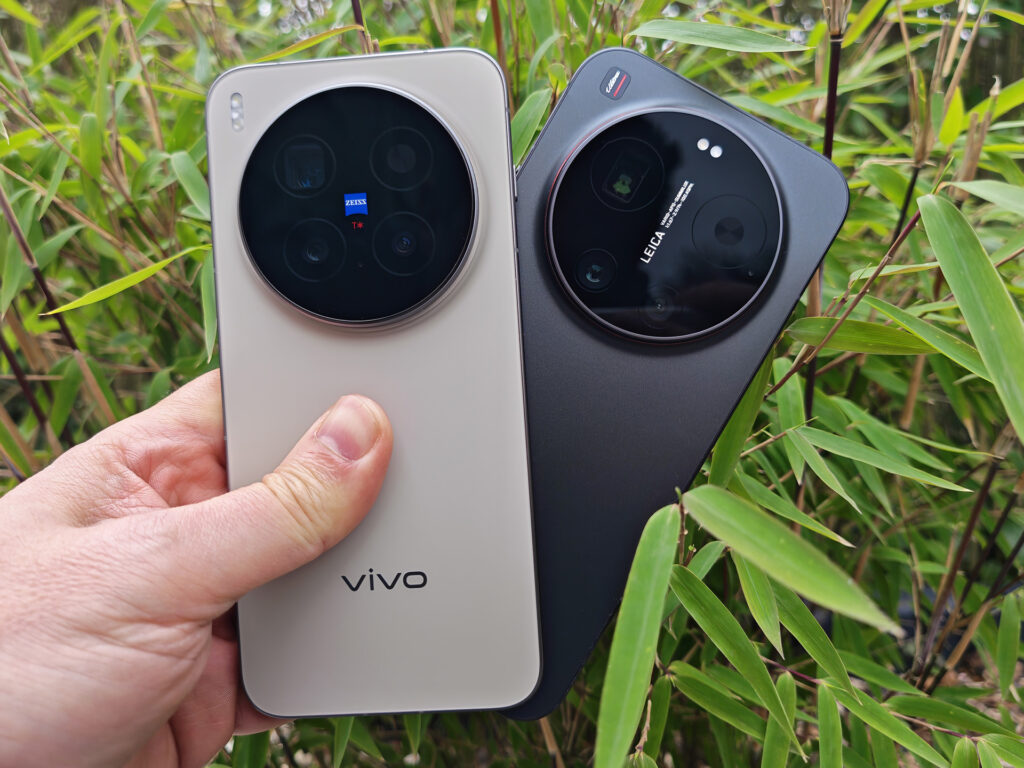
The battle for smartphone camera supremacy continues to intensify as two of China’s leading tech giants, Vivo and Xiaomi, go head-to-head with their latest flagship models. The Xiaomi 17 Ultra, with its impressive camera setup, and the Vivo X300 Pro, known for its balanced image compositions, are both vying for the top spot in consumer preference. This article delves into a detailed comparison of these two devices, focusing on their photographic capabilities.
Our extensive camera comparison test reveals that while the Xiaomi 17 Ultra excels in several areas, the Vivo X300 Pro holds its ground with certain advantages. The test, conducted in the vibrant cities of Beijing and Chongqing, showcases the strengths and weaknesses of each smartphone’s camera system.
Xiaomi 17 Ultra: A Technological Marvel
The Xiaomi 17 Ultra boasts a large 1-inch sensor, a feature that immediately sets it apart in the smartphone market. This sensor, combined with a choice of focal lengths ranging from 23 mm to 35 mm, offers users flexibility in capturing a variety of scenes. The device’s prowess is particularly evident in low-light conditions, where it delivers balanced images with remarkable detail.
Experts have praised the Xiaomi 17 Ultra for its mechanical zoom capabilities, which provide a wider range of options for photographers. According to industry insiders, “The mechanical zoom of the Xiaomi 17 Ultra is a game-changer, allowing for more precise control over image composition.”
Vivo X300 Pro: A Balanced Contender
On the other hand, the Vivo X300 Pro, despite having a smaller sensor, compensates with a wider aperture and advanced features such as gimbal image stabilization and CIPA 5.5. These attributes contribute to its superior performance in daylight photography, where it produces more natural color balances compared to the Xiaomi 17 Ultra.
In terms of digital zoom and image stabilization at long focal lengths, the Vivo X300 Pro emerges as the frontrunner. Its ability to maintain image sharpness and smoothness during zoom operations is a significant advantage for users who frequently rely on digital zoom.
Daylight vs. Low-Light Performance
The comparison between these two devices becomes more nuanced when examining their performance under varying lighting conditions. In daylight, the Vivo X300 Pro’s color reproduction is more convincing, while the Xiaomi 17 Ultra tends to brighten subjects, sometimes excessively. However, in low-light environments, the Xiaomi smartphone shines, offering a more balanced image with greater detail.
“In low-light conditions, the Xiaomi 17 Ultra’s ability to render different lighting scenarios naturally is unmatched,” commented a photography expert.
Implications for the Smartphone Market
The competition between Vivo and Xiaomi is indicative of the broader trends in the smartphone industry, where camera capabilities are increasingly becoming a key differentiator. As both companies continue to innovate, consumers can expect even more advanced features in future models.
Meanwhile, Vivo is preparing to unveil the X300 Ultra, which promises to push the boundaries of smartphone photography even further. This upcoming release is anticipated to intensify the rivalry and offer consumers even more choices.
In conclusion, while the Xiaomi 17 Ultra impresses with its low-light performance and mechanical zoom, the Vivo X300 Pro stands out for its balanced daylight photography and superior digital zoom capabilities. As both companies continue to refine their technologies, the ultimate winner will be the consumers, who stand to benefit from the ongoing advancements in smartphone camera technology.