

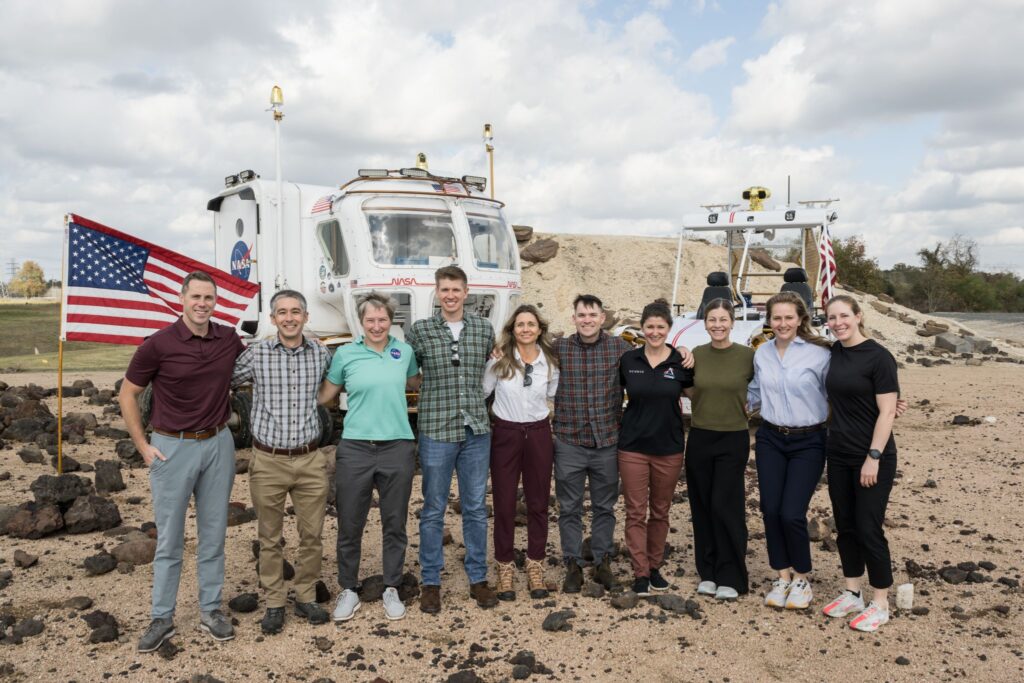
Ten explorers are currently training at NASA’s Johnson Space Center in Houston, aiming to become flight-eligible astronauts. Selected in 2025, these astronaut candidates are honing the technical and operational skills required for future missions to the International Space Station, the Moon, and eventually Mars. The latest cohort of NASA’s astronaut candidates has been given a distinctive class name: the Platypi.
The name was chosen by the previous astronaut candidate class, known as the Flies. Members of that group collaborated to select a name that encapsulates the range of skills and personalities observed in the new candidates. NASA astronauts Anil Menon and Chris Birch played key roles in facilitating these discussions.
“They’re like the Swiss Army knife of candidates,” Menon said. “They can use just about any tool to solve any problem or challenge they face. They’re unassuming and incredibly kind, but extremely capable.”
Menon explained that the class reminded the Flies of one of Earth’s most remarkable animals. “Our main driver was that this class stood out as extremely capable, with a lot of different skills, while also being very friendly and supportive of each other,” he said. “They have many diverse and sometimes hidden talents, like the platypus.”
The Symbolism Behind ‘Platypi’
The platypus is a unique mammal, laying eggs and possessing traits such as electroreceptors in its bill and a venomous spur. Its features resemble several different animals, including the bill of a duck, the tail of a beaver, and the body of an otter. Despite its unusual appearance, the platypus is highly adapted to its environment.
For NASA’s newest astronaut candidates, the name reflects a similar idea: a team with a wide range of strengths working together toward a common goal. So far, the astronaut candidates have trained to operate and understand the Canadarm2 robotic arm used aboard the space station. They are learning how to capture visiting spacecraft, move equipment outside the station, and support spacewalk operations.
Training and Preparation
The candidates are also training in space station systems, orbital mechanics, and flight operations. “It is really impressive to me to learn about all of the complexities of the various systems that keep the International Space Station operational, and how they’ve all been functioning with a continuous human presence aboard for the last 25 years,” said astronaut candidate Lauren Edgar. “It’s amazing to see how it all works together and how to fix things when needed.”
The candidates have completed survival training to prepare for the unlikely event of landing in remote environments after a mission. They also participated in land and water survival exercises designed to build teamwork and decision-making under pressure.
“The diversity of the training as well as the focus on psychological, physical, and expeditionary skills has been the most surprising to me,” said astronaut candidate Yuri Kubo. “I’ve learned a lot about myself, from areas of professional and interpersonal development to my ability to overcome challenges. It is amazing what we can achieve with dedication and hard work and an amazing team of people to support you.”
Looking Ahead: Future Training and Missions
The candidates began conducting spacewalk training inside NASA’s Neutral Buoyancy Laboratory, where astronauts rehearse spacewalks underwater in conditions that simulate microgravity. They also have flown in the agency’s T-38 supersonic jets and other aircraft at Ellington Field.
Future training will include operating spacecraft systems used in human spaceflight missions and studying geology in classrooms and field settings for future missions to the Moon. The class will work shifts in the Mission Control Center in Houston to experience a day in the life of the people who keep watch over the astronauts and vehicles.
“Our training has already been diverse and dynamic,” said astronaut candidate Anna Menon. “There is a lot to learn, and I’m excited about every chapter!”
The Platypi: A Team with Diverse Strengths
The Platypi are focused on learning the fundamentals of human spaceflight, building the skills that will one day help them operate spacecraft, conduct science in orbit, and explore beyond Earth. Like the animal they are named after, their strength lies in the many capabilities each member brings to the team.
This development follows a long tradition of NASA cultivating diverse and capable astronauts to meet the challenges of space exploration. As the Platypi continue their rigorous training, they embody the spirit of innovation and teamwork that is essential for the future of space exploration.