




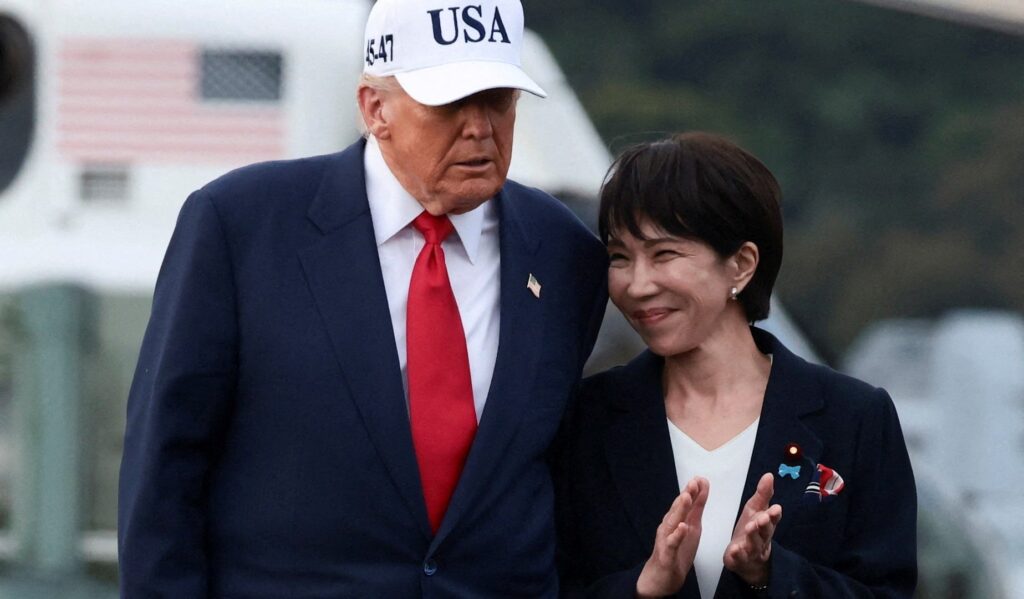
South Korea and Japan are grappling with complex questions regarding their mutual defense obligations as the United States intensifies its call for allied support in the escalating conflict with Iran. Nearly three weeks into the conflict, US President Donald Trump has urged key allies, including the United Kingdom, China, France, Japan, and South Korea, to dispatch warships to the strategically vital Strait of Hormuz.
The request comes as the Strait has remained effectively closed since the US, alongside ally Israel, initiated military actions against Tehran on March 28. Despite a subsequent shift in stance, with Trump declaring on social media that the US no longer “needs” assistance from NATO countries or allies like Japan, Australia, and South Korea, the diplomatic pressure remains palpable.
Japan’s Strategic Calculations
Japanese Prime Minister Sanae Takaichi is expected to discuss the issue of warship deployment with President Trump at the White House. According to Al Jazeera correspondent Jack Barton, there is an anticipation that Trump will press Takaichi to contribute naval forces to the Strait of Hormuz, a crucial passage for Japan’s energy imports.
Japan’s Maritime Self-Defense Force, one of the world’s most advanced, is seen as a potential asset for the US. However, Japan’s pacifist constitution imposes strict conditions on military deployment, allowing action only in cases of direct attack or when facing existential threats.
“People do expect him to put pressure on Takaichi again to send warships to the Strait of Hormuz. It makes sense in a way because Japan is so dependent on energy supplies,” Barton noted.
Prime Minister Takaichi has indicated that her government is exploring legal avenues to protect Japanese interests, but any deployment remains speculative. Japan’s heavy reliance on Middle Eastern oil, with 70 percent passing through the Strait, further complicates the decision-making process.
Expert Opinions and Legal Constraints
Stephen Nagy, a professor at the International Christian University in Tokyo, observed that Japan’s response to US requests is expected but fraught with legal and strategic considerations.
“The question is if they are going to be on the front line of the attack from Iran or if they are going to provide some kind of supporting role, such as anti-mining activities, refueling missions, maritime domain awareness,” he explained.
Nagy suggests that Japan might find a way to contribute without direct involvement in combat, highlighting the delicate balance Tokyo must maintain between legal constraints and alliance obligations.
South Korea’s Dilemma
Similarly, South Korea faces its own set of challenges. As a US treaty ally heavily reliant on Middle Eastern oil and gas, Seoul is wary of the implications of deploying military assets to the region. The South Korean government recently imposed a price cap on domestic fuel, a measure not seen since the 1997 Asian financial crisis, to mitigate the impact of rising oil prices.
Despite these economic pressures, South Korean legislators urge caution in military engagement. The potential redeployment of US THAAD missiles from South Korea to the Middle East adds another layer of complexity, given the ongoing threat from North Korea.
“Seoul must also consider the persistent threat from North Korea and the fact that a South Korean warship is already deployed to the Middle East,” commented retired South Korean Lieutenant General In-Bum Chun.
Balancing Regional and Global Interests
Chun emphasized the importance of maintaining freedom of navigation through the Strait of Hormuz, a critical national interest for South Korea, given that 70 percent of its oil imports transit this route. The decision to support US efforts must weigh these competing priorities carefully.
As both Japan and South Korea navigate these diplomatic and strategic waters, the broader implications for regional security and international alliances remain uncertain. The decisions made in Tokyo and Seoul will not only affect their own national interests but also have significant repercussions for global geopolitical dynamics.
Moving forward, the international community will closely watch how these East Asian allies balance their legal constraints, economic dependencies, and strategic alliances in response to the ongoing Middle East conflict.