



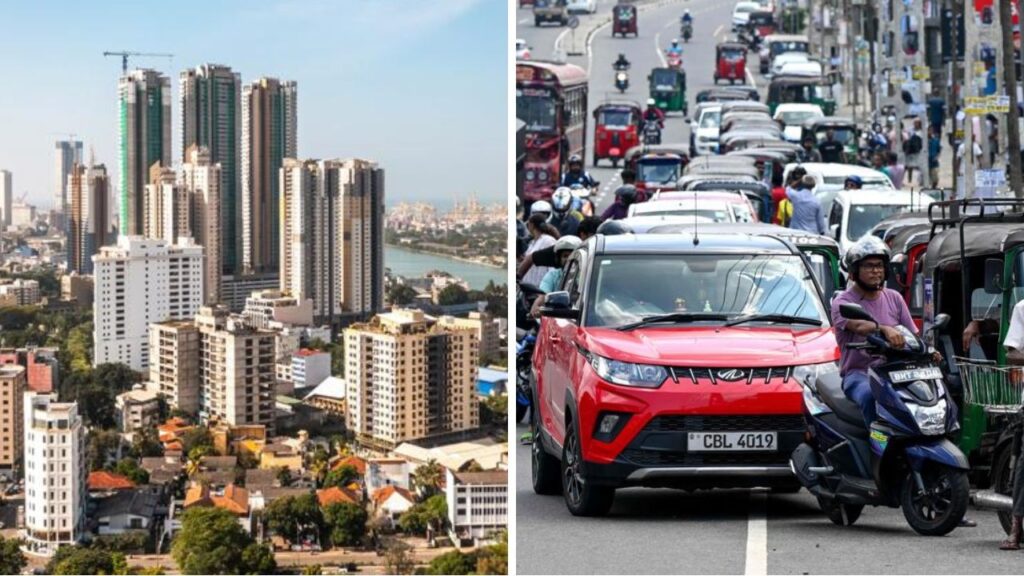
Sri Lanka has announced a shift to a four-day workweek for all state institutions, a decision unveiled earlier this week as the nation braces for the ongoing conflict in the Middle East. This move comes in response to Iran’s closure of the Strait of Hormuz, a critical maritime passage, which has significantly disrupted the global oil supply.
The closure of the Strait of Hormuz, which occurred shortly after the United States and Israel launched air strikes against Iran on February 28, has led to a reduction of a fifth of the world’s oil supply, causing a surge in fuel prices worldwide. Tehran has issued stern warnings that any vessels attempting to navigate the strait will be met with force.
Sri Lanka’s Response to the Crisis
In light of these developments, Sri Lanka’s government has mandated a four-day workweek starting Wednesday, applying to schools and universities as well. The change is set to remain in place indefinitely, according to Prabath Chandrakeerthi, Commissioner-General of Essential Services. The government is also urging the private sector to adopt similar measures.
“We are also asking the private sector to follow suit and declare every Wednesday a holiday from now on,” Chandrakeerthi stated after an emergency meeting chaired by President Anura Kumara Dissanayake. The President emphasized the need to “prepare for the worst, but hope for the best.”
To further conserve fuel, civil servants are encouraged to work from home where possible, with fuel rationing already implemented across the country. Public ceremonies have been suspended, although essential services such as hospitals and ports will continue operations as usual.
Regional Impact and Measures
Sri Lanka is not alone in its efforts to reduce fuel consumption. Asian countries, heavily reliant on oil passing through the Strait of Hormuz, are also taking action. In 2024, over 80% of crude oil and liquefied natural gas transported through the strait was destined for Asia.
The Philippines has implemented a temporary four-day workweek for government employees to cut electricity and petrol costs by up to 20%. President Ferdinand Marcos Jr. has also prohibited non-essential government travel and activities, encouraging online alternatives.
Meanwhile, Vietnam has urged businesses to promote remote work to minimize travel, and Thailand has directed civil servants to work from home, with additional energy conservation measures. These include setting office air conditioning to no lower than 26°C and encouraging casual dress codes to reduce reliance on air conditioning.
In Myanmar, the military government has restricted private vehicle use to conserve fuel, allowing vehicles with even-numbered plates to operate on even dates, and vice versa.
Economic and Historical Context
Back in Sri Lanka, fuel rationing began on Sunday, limiting motorists to 15 liters of petrol or diesel weekly, while public transport receives up to 200 liters. Officials estimate the country’s fuel reserves will last nearly six weeks, but any disruption to fresh supplies could critically impact the island.
Sri Lanka sources refined petroleum products from Singapore, Malaysia, and South Korea, while its crude oil is imported from the Middle East. The government has cautioned that an escalation in Middle East tensions could undermine efforts to recover from the 2022 economic crisis.
Sri Lanka defaulted on its $46 billion foreign debt in 2022 after exhausting its foreign exchange reserves. The nation has since secured a $2.9 billion bailout from the International Monetary Fund.
This move towards a four-day workweek and other conservation measures reflect a broader regional strategy to mitigate the economic impact of geopolitical tensions. As countries navigate these challenges, the focus remains on balancing immediate needs with long-term economic stability.