

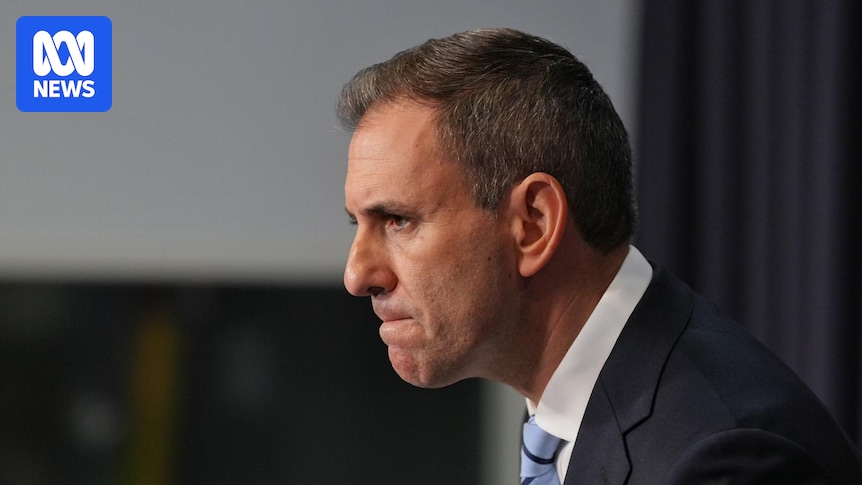
The ongoing conflict in the Middle East is poised to push inflation in Australia above five percent, as Treasurer Jim Chalmers asserts that the turmoil underscores the necessity for ambitious budget reforms. New scenarios from the Treasury warn that escalating oil prices and widespread disruptions could drive up costs and stifle economic growth, potentially leaving Australia’s economy smaller for years if the conflict persists.
In a speech scheduled for Thursday in Melbourne, Mr. Chalmers will detail how the upcoming May federal budget will address the crisis, focusing on “substantial” savings, productivity enhancements, and tax reforms aimed at creating a fairer system for younger Australians. According to an advanced copy of the speech obtained by the ABC, Mr. Chalmers emphasized that rising global volatility necessitates “more reform, not less.”
Inflation Risks and Economic Scenarios
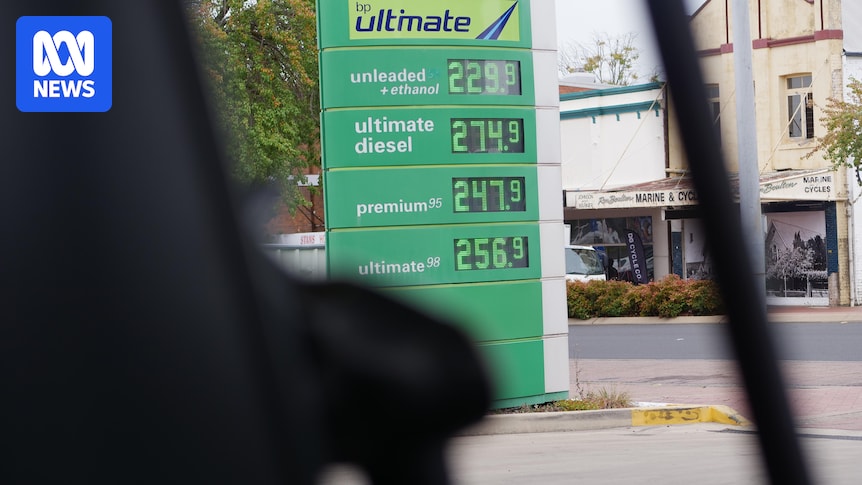
Mr. Chalmers highlighted that the Treasury has modeled both a short-term and a “more prolonged” scenario for oil prices, with a third, more drastic possibility still under development. The first scenario assumes oil prices remain at $100 per barrel until mid-year before gradually returning to pre-conflict levels by December. The second scenario anticipates a peak of $120 per barrel, with a recovery period extending over three years.
“It means the prospect of inflation peaking in the high fours or even higher this year is very real,” Mr. Chalmers stated.
In the short-term scenario, Australia’s GDP would be 0.2 percent lower around mid-year but is expected to recover “quickly.” In the prolonged scenario, the Treasury estimates GDP would be 0.6 percent lower by 2027. Mr. Chalmers indicated that the government would soon elaborate on its plans for fuel security.
Fuel security and the broader impacts of the Middle East conflict will dominate discussions when state premiers, territory chief ministers, and Prime Minister Anthony Albanese convene for a national cabinet meeting on Thursday morning.
Spending Cuts and Economic Reforms
The government’s budget preparations are centered on three “ambitious” reform packages focused on savings, productivity, and taxes. Mr. Chalmers noted that these reforms are “designed to work together,” with savings intended to “make even more room” for the private sector to expand and to reduce the budget deficit.
The Reserve Bank has cited higher-than-expected private sector spending as a factor in its decision to raise the cash rate, which increased to 4.1 percent on Tuesday. The Coalition has linked this to government spending, arguing that Labor must cease “pouring” public funds into the economy.
Shadow Treasurer Tim Wilson remarked, “What we need is a treasurer who’s going to take responsibility, control spending and make sure that he’s not actively stoking an inflation agenda, as he is right now.”
In his speech, Mr. Chalmers argued that the government has already made significant progress on budget sustainability since taking office, including $114 billion in savings and re-prioritizations. However, he acknowledged that more must be done over the next four years and through the medium term, signaling that “substantial savings options” are being developed for the May budget.
Tax Reforms for Intergenerational Fairness
On the productivity front, Mr. Chalmers stated that the government is committed to unlocking investment in three key areas: housing, the net-zero energy transition, and AI infrastructure. Tax reform is also a crucial component of Labor’s productivity agenda.
“We are working on more tax reform in the budget — how much we can do in May depends on fiscal considerations, international developments, and cabinet deliberations,” Mr. Chalmers said.
He emphasized that tax policy would be guided by “clear principles,” focusing on how the current “outdated” system disproportionately burdens younger Australians and future generations. “Any changes would have a substantial focus on our intergenerational responsibilities,” he added.
Reform efforts will also aim to “better incentivize productive business investment,” but only “if we can afford to.” Additionally, tax changes will strive to make the system “simpler and more sustainable.”
The Urgency of Reform Amid Global Uncertainty
Mr. Chalmers argued that the Middle East conflict illustrates how rapidly the global economic landscape can shift. “But it is also a stark reminder of why addressing our three key economic challenges is so urgent,” he said.
“All this economic uncertainty and volatility is a reason for more reform, not less. It’s a reason to go further, not slower,” he asserted.
He noted that Australia approaches these challenges from a “position of strength,” with an enviable labor market, a world-leading superannuation system, and “abundant natural advantages” in energy and resources. “But we are not complacent about the risks in a global economy that is perilous and unpredictable,” he cautioned.
Mr. Chalmers concluded that the government’s task is not just to respond to shocks but to position Australia to “succeed through them.” He promised that the May budget would be ambitious, reflecting the government’s and the country’s aspirations.