



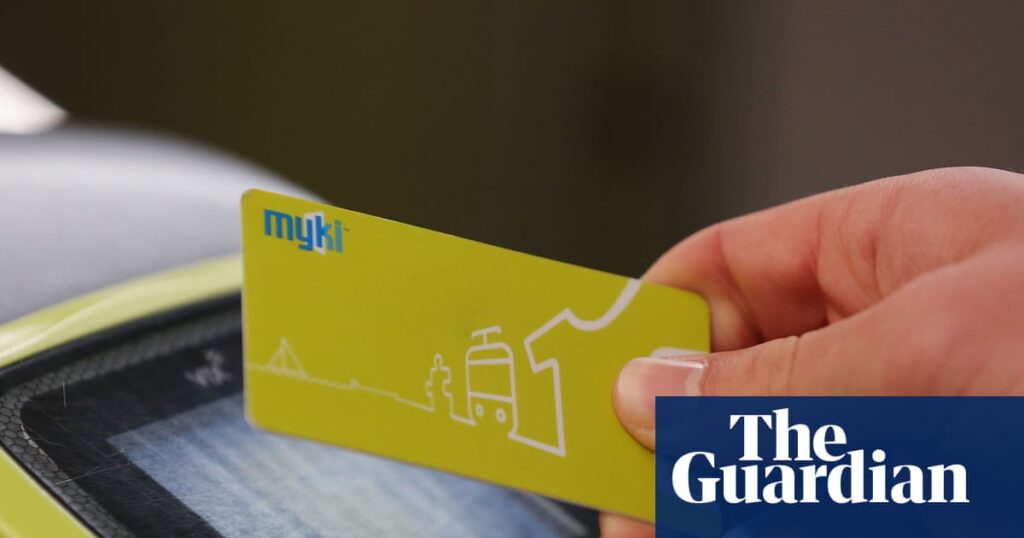
Victorian public transport users will continue to rely on Myki cards until 2027, as the full implementation of tap-and-go technology faces significant delays. This revelation comes from a recent report by the Victorian Auditor-General’s Office (VAGO), highlighting a dispute between the state’s transport department and the US-based firm Conduent, which has pushed the project back by 18 months and increased its cost by $136.8 million.
The delay is a source of frustration for many, including longtime public transport advocate Daniel Bowen, who expressed disappointment at Victoria’s lag behind other regions. “It’s frustrating that Victoria has fallen so far behind the rest of Australia and many jurisdictions worldwide in adopting contactless payments,” Bowen said.
Contract Disputes and Project Delays
In 2023, Conduent was awarded a $1.7 billion contract to upgrade the Myki system, enabling contactless payments via debit or credit cards, smartphones, or smartwatches. At the time, the then Public Transport Minister Ben Carroll heralded the change as a step into the “21st century,” noting that Sydney had introduced similar technology as early as 2017.
However, by June 2024, the Department of Transport and Planning (DTP) and Conduent were embroiled in a contract dispute, leading to a six-month “standstill,” according to the auditor general’s report. The report, tabled in parliament, noted that the department had been cautioned about Conduent’s “overly optimistic” delivery schedule, which lacked sufficient detail.
“Ultimately, the schedule was proven to be unrealistic,” the report stated. “DTP did not address these known issues before signing the contract. It instead deferred this work … which contributed to disputes.”
Challenges with Source Code and Intellectual Property
Further complicating the rollout was the slow handover of the existing Myki system’s source code, which Conduent required to operate both the old and new systems during the transition. The VAGO report highlighted “issues” concerning the ownership of the intellectual property rights for the code.
“Partly due to not receiving the source code, [Conduent’s] revised master schedule proposal asked to delay milestones in Phase 1 and Phase 2 by an average of 6.5 months,” the report reads.
Revised Timeline and Future Challenges
The audit outlines a revised timeline, with tap-and-go payments expected to be available for full-fare passengers by early 2026 (Phase 2), and for concession passengers and all regional areas by mid-2027 (Phase 3). The new system is anticipated to be fully operational by mid-2028, at which point the Myki system can be retired.
Despite being on track with the revised timeline, VAGO warned of “upcoming challenges” that could cause further delays. One such challenge is the “paused” secondary contract with HCLTech, valued at $34 million, intended to develop a system for concession fares using tap-and-go payments. HCLTech informed auditors that the “risk of further delay has now materialised,” as they had not been given a date to resume work, directly impacting Phase 3 timelines.
Policy Changes and Concession Complexities
Jeroen Weimar, the transport department’s secretary, explained that the work was paused due to policy changes, including the introduction of free travel for under-18s through the new youth Myki. Bowen, a former president of the Public Transport Users Association, noted that applying concessions to contactless systems remains a “complex” issue that other states have yet to fully resolve.
“Could we leapfrog Sydney and get it working before them? I wouldn’t be counting our chickens before they hatch, but it does seem like we’re in a reasonable position to make it work,” Bowen remarked.
He added that the government is being “cautious” with the tap-and-go rollout, referencing the 2009 transition to the Myki system as a “disaster.” “They don’t want to push it ahead too quickly because if it goes wrong, they’ll have egg on their face,” Bowen said.
Looking Ahead: Testing and Implementation
Despite the setbacks, some commuters have already begun testing the new technology, offering a glimpse of the future for Victorian public transport. As the state navigates these challenges, the focus remains on ensuring a smooth transition to a more modern and efficient payment system.
The Victorian public transport system’s journey towards a fully integrated contactless payment method continues to be a complex and evolving process. With the revised timeline in place, stakeholders remain hopeful that the eventual rollout will enhance the commuter experience across the state.