




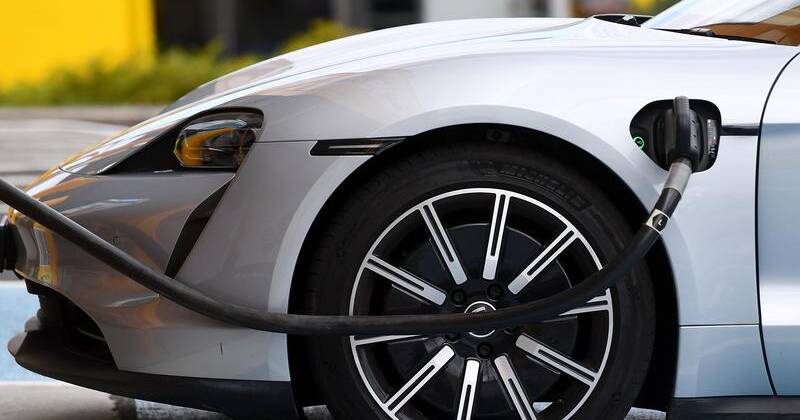
Next-generation quantum batteries being developed by Australian researchers could potentially recharge electric vehicles (EVs) faster than it takes to fill up a petrol tank, and even top up smartphones almost instantaneously. This groundbreaking prediction was made by the CSIRO’s quantum battery research team on Wednesday, following the publication of their proof-of-concept device.
The announcement comes at a time when Australian households have installed over 250,000 home batteries under a federal government discount scheme, and electric vehicles accounted for a record 11.8 percent of new car sales in February. Conventional batteries used in these applications are reaching the limits of their capabilities, according to James Quach, the CSIRO quantum batteries team lead.
Quantum Mechanics: The Key to Faster Charging
Dr. Quach explained that quantum batteries could become more powerful and charge faster by operating under the principles of quantum mechanics. “Potentially, when quantum batteries become viable, we could have super-fast charging processes where your phone could almost charge instantaneously,” he told AAP. “My ultimate ambition is a future where we can charge electric cars much faster than fuel petrol cars, or charge devices over long distances wirelessly.”
The CSIRO team has successfully created a proof-of-concept quantum battery to test the technology, with their findings published in the journal Light: Science and Applications. This world-first prototype charges wirelessly using a laser, converting light into an electric current, and demonstrated the ability to store energy for six times longer than the time it took to power up.
Overcoming Challenges and Scaling Up
Despite the promising results, significant hurdles remain before quantum batteries can reach their full potential. These include increasing the size and capacity of the technology and ensuring it can retain energy for extended periods. The research has come a long way since its theoretical inception in 2013, but further development will require collaboration with external groups and potential investors, including electric vehicle manufacturers.
“The pay-off is enormous and it’s something we need, especially as we move to renewable energy and the electrification of things,” Dr. Quach emphasized. “We’re looking at partners, either venture capital firms or other bodies who are looking at deep quantum tech, and another potential partner would be companies which have a financial interest in the next generation of quantum batteries.”
Implications for the Future
The development of quantum batteries could have far-reaching implications for the renewable energy sector and the broader transition to electrification. As traditional battery technology approaches its limits, quantum batteries offer a promising alternative that could significantly enhance the efficiency and speed of energy storage and transfer.
According to industry experts, the successful integration of quantum batteries into mainstream technology could revolutionize how we power our devices and vehicles, making renewable energy sources more viable and efficient. This development follows a global trend towards reducing carbon emissions and reliance on fossil fuels, aligning with international efforts to combat climate change.
As the CSIRO team continues to refine their technology, the world watches with anticipation. The potential for quantum batteries to transform our energy landscape is immense, and their successful implementation could mark a significant milestone in our journey towards a more sustainable future.