




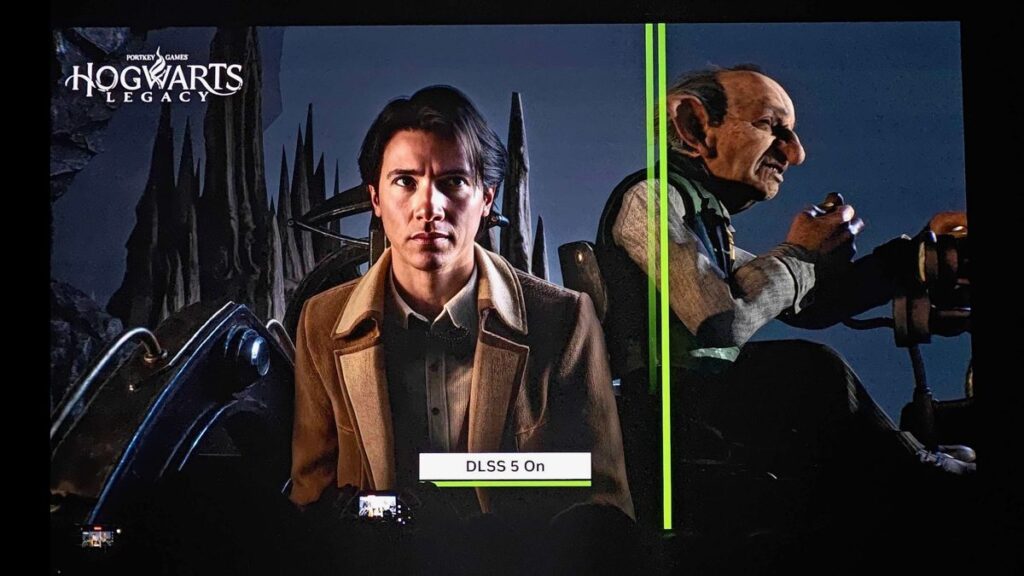
Nvidia has unveiled a tantalizing glimpse of its latest technology, DLSS 5, which promises to bring photorealistic graphics to PC games in real-time. The announcement was made by Nvidia’s CEO, Jensen Huang, during a keynote at the company’s annual GTC event. This comes just months after the GPU giant introduced DLSS 4.5 at January’s CES.
During the presentation, Huang showcased a video demonstration of several PC games with DLSS 5 both disabled and enabled. The transformation was remarkable. Characters that once appeared simplistic and flat were suddenly imbued with lifelike detail, featuring realistic skin textures complete with wrinkles and facial hair. The games highlighted included popular titles such as Starfield, Resident Evil Requiem, and Hogwarts Legacy.
The Technology Behind DLSS 5
While Huang’s presentation was more of a teaser, Nvidia has provided additional insights through a blog post. According to the company, DLSS 5 is designed to enhance a game’s visuals by taking color and motion vectors for each frame as input. An AI model then infuses the scene with photorealistic lighting and materials, ensuring consistency from frame to frame.
“DLSS 5 runs in real time at up to 4K resolution for smooth, interactive gameplay,” Nvidia stated.
To achieve this, Nvidia developed an AI model that comprehends complex scene semantics, including characters, hair, fabric, and translucent skin, as well as environmental lighting conditions such as front-lit, back-lit, or overcast. This sophisticated understanding allows DLSS 5 to function like a real-time AI-powered filter, adding intricate details to faces, clothing, and environments.
Industry Adoption and Developer Flexibility
Nvidia’s latest innovation has already garnered support from some of the top names in the gaming industry. Leading developers such as Bethesda, Capcom, Hotta Studio, NetEase, Tencent, Ubisoft, and Warner Bros. Games have all expressed plans to integrate DLSS 5 into their future projects.
Moreover, Nvidia has emphasized that game developers will have the ability to customize DLSS enhancements. This flexibility ensures that each game can maintain its unique aesthetic, allowing artists to decide where and how the enhancements are applied.
Implications for the Gaming Industry
The introduction of DLSS 5 could mark a significant turning point in gaming graphics, pushing the boundaries of what is visually possible in real-time rendering. By leveraging AI technology, Nvidia is setting a new standard for realism in video games, which could influence not only game development but also the hardware requirements for future gaming systems.
However, questions remain about potential trade-offs. While DLSS 5 promises to deliver stunning visuals, it is yet to be seen how it will impact frame rates and overall gaming performance. As the technology is slated for a fall release, gamers and developers alike are eager to learn more about its capabilities and limitations.
Looking Ahead
The unveiling of DLSS 5 is a testament to Nvidia’s continued commitment to innovation in the gaming sector. As the company prepares for the technology’s official launch, the gaming community will be watching closely to see how DLSS 5 performs in real-world scenarios. The potential for photorealistic graphics could redefine the gaming experience, offering players a level of immersion previously thought unattainable.
As we await further details, one thing is clear: Nvidia’s DLSS 5 is poised to be a game-changer, setting a new benchmark for visual fidelity in interactive entertainment.