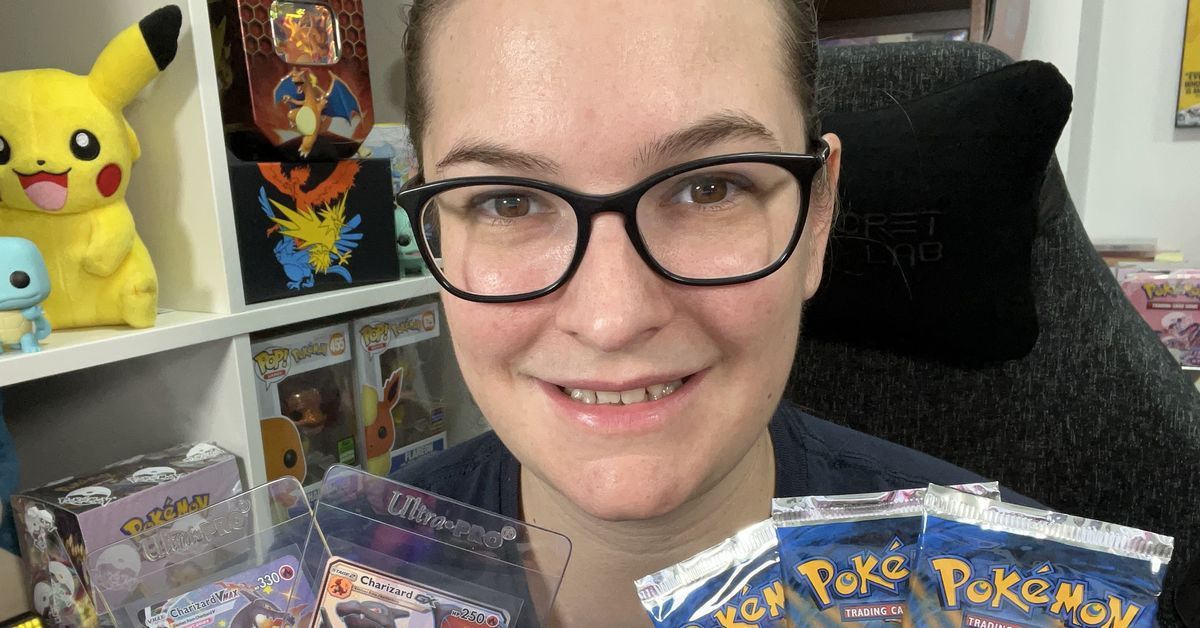



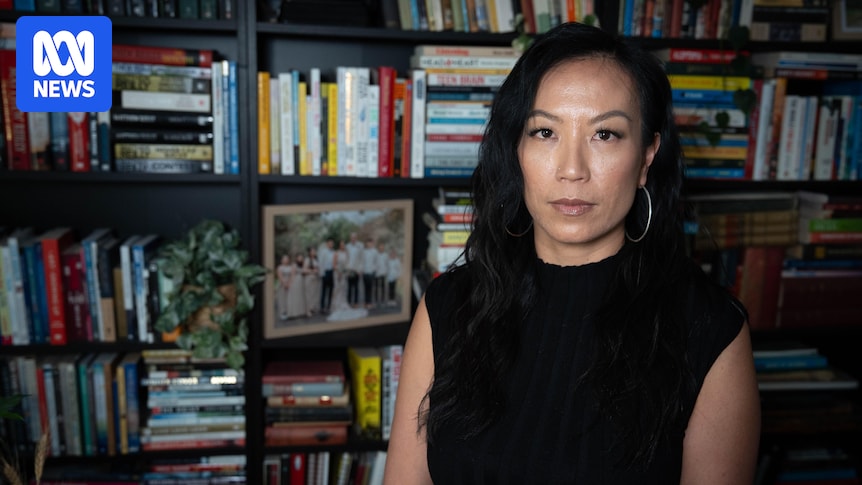
Adoptee Kimbra Butterworth was well into adulthood when she discovered she was a victim of an infamous Taiwanese baby smuggler. It was only through persistent family and media investigations, along with a stroke of luck, that she uncovered the truth. “I may never find my [biological] family because of all these circumstances that someone else did that was completely out of my control,” she lamented.
Adoption papers indicate that Ms. Butterworth was born in Taiwan in 1980, allegedly the fifth child of a family with the surname Chen. However, these names were falsified, leaving her in the dark about her biological parents’ true identities. “There was a couple of stories where [babies] were stolen out of prams in the marketplace,” she said. “What happens if I was one of the stolen children?”
The 45-year-old is among many inter-country adoptees who arrived in Australia from the 1970s onwards, as international adoption gained popularity. Decades later, these adoption programs are under increased scrutiny. This week, the federal government initiated an inquiry into Australia’s role in the adoption of thousands of children from South Korea, following damning investigations there that revealed a history of corruption, fraud, and child trafficking.
Calls for Broader Inquiry
Some adoptees have spoken of the horrid treatment they endured at the hands of their adoptive parents, including physical, sexual, and emotional abuse. They criticize Australian officials for failing to properly vet prospective parents and monitor the welfare of adopted children. These issues are not confined to South Korea, prompting Australians adopted from other countries to call on the federal government to expand its inquiry. It’s a call that has so far gone unanswered. “To be honest, it does hurt because you do want to be acknowledged,” Ms. Butterworth expressed.
Among the fraudulent documents and photos of her early life is an image of Ms. Butterworth being held by Julie Chu, an infamous smuggler jailed for running an illegal baby trafficking syndicate in the early 1980s. It took years of investigation by Ms. Butterworth’s family to confirm the adoption paperwork was illegitimate. During this time, the Adelaide family claims they were never contacted by state or government officials. “The government never contacted [my adoptive family], never checked up on them, never gave them information, never did an investigation to affirm or deny,” she recalled.
Historical Context and Systemic Failures
For many, Australia’s adoption program in past decades was designed to ensure Australian families could adopt a child, rather than prioritizing the welfare of the adoptee. Some, like Ms. Butterworth, have had loving, supportive families devastated to learn their adoption was based on a lie. However, other adoptees were placed into homes where their childhoods were rife with abuse.
Welfare checks from Australian authorities were often lackluster or absent, with some adoption papers concluding “no further supervision will be required” after just an initial assessment. The assumption that a child from a poor country would be better off in a wealthy nation like Australia led to a lack of checks and balances, many adoptees argue.
Lynelle Long, another adoptee, was taken from Vietnam in 1977 after her adoptive parents hired a government-connected lawyer to find a child. The paperwork on both the Vietnamese and Australian ends was never completed. It wasn’t until she applied for a driver’s license at 16 that she discovered her adoption had never been processed, meaning she was still technically under the care of the Australian immigration minister. She was sexually abused by her Australian father, and the adoption was recently annulled. “I did hold him to account through the courts,” Ms. Long explained. “He was found guilty and he’s actually on the sex offender registry.”
“These adoptees struggle with all sorts of abuse, whether that be emotional, sexual, physical, violence, neglect,” Ms. Long said. “I hear it on a daily basis and it breaks my heart every time.”
Inquiry into South Korean Adoption Program
A newly launched investigation by the Department of Social Services is examining Australia’s role in adoptions from South Korea between 1964 and 1999. Approximately 3,600 South Korean children were sent to Australia as part of a notorious program that earned the nation the reputation as the world’s greatest baby exporter. Extensive media investigations and a landmark report from South Korea’s Truth and Reconciliation Commission found the program was rife with fraud and corruption, including babies being stolen.
Australia’s federal Minister for Social Services, Tanya Plibersek, acknowledged past adoption practices were “extremely damaging” but would not commit to further investigations, stating the Korean investigation was a first step. “We know that there were some shocking practices in the past within Australia and between countries,” she said.
While the Australian government was ultimately responsible for bringing adoptee children into the country, the assessment of adoptive family eligibility and suitability was delegated to the state governments. Critics of the program say parents at the time were advised to treat their adoptee children as if they were Australian, without any acknowledgment of their cultural identities. Stories of isolation and racism were common at a time when Australia was far more monocultural.
“Our attitudes and processes have completely changed over the decades,” Ms. Plibersek stated. “We understand much better now that adoption can be very difficult for the children who are adopted and certainly very difficult in cases where children were stolen, abducted, sold, trafficked.”
Future Prospects and Ongoing Struggles
The lack of commitment and timeline for widening the investigations has frustrated other inter-country adoptees, who feel their voices are being ignored. Gabbie Beckley was adopted from Sri Lanka in 1981, a time when the country was plagued by poverty and civil war. With the help of her adoptive parents, she found her biological parents at the age of 19, only to learn a heartbreaking revelation.
“[My birth mother] was promised money and saris and things by the brokers and by the people in Sri Lanka organizing the adoption,” she said. “But she didn’t receive any of those things. Having those promises taken away and being left with nothing — in the same destitute position she was when we were born — made her life still really hard.”
Ms. Beckley knows many other Sri Lankan adoptees will never be so fortunate to find their birth parents due to fabricated paperwork and other dubious practices. In 2008, the Sri Lankan health minister admitted to the existence of illegal baby farms. She understands the heartbreaking position her mother was in and is angry at the system that enabled exploitation and fabrication.
“There was a lot of people that got rich by selling children,” Ms. Beckley said, urging the federal government to expand the scope of its inquiry.
Kimbra Butterworth is planning a journey to Taiwan as she tries to uncover her past. However, she has had to accept she may die never knowing the truth. “There’s a number of us who have over multiple decades — over 20, 30 years — have been fighting for some of our rights to be recognized,” she said. “Just to be seen, for the issues to be seen.”